
Harvest Moon Shines Near Saturn in Stunning Celestial Display
Skywatchers worldwide witnessed the annual Harvest Moon appearing exceptionally bright and close to the planet Saturn. The celestial event captivated onlookers across various continents.

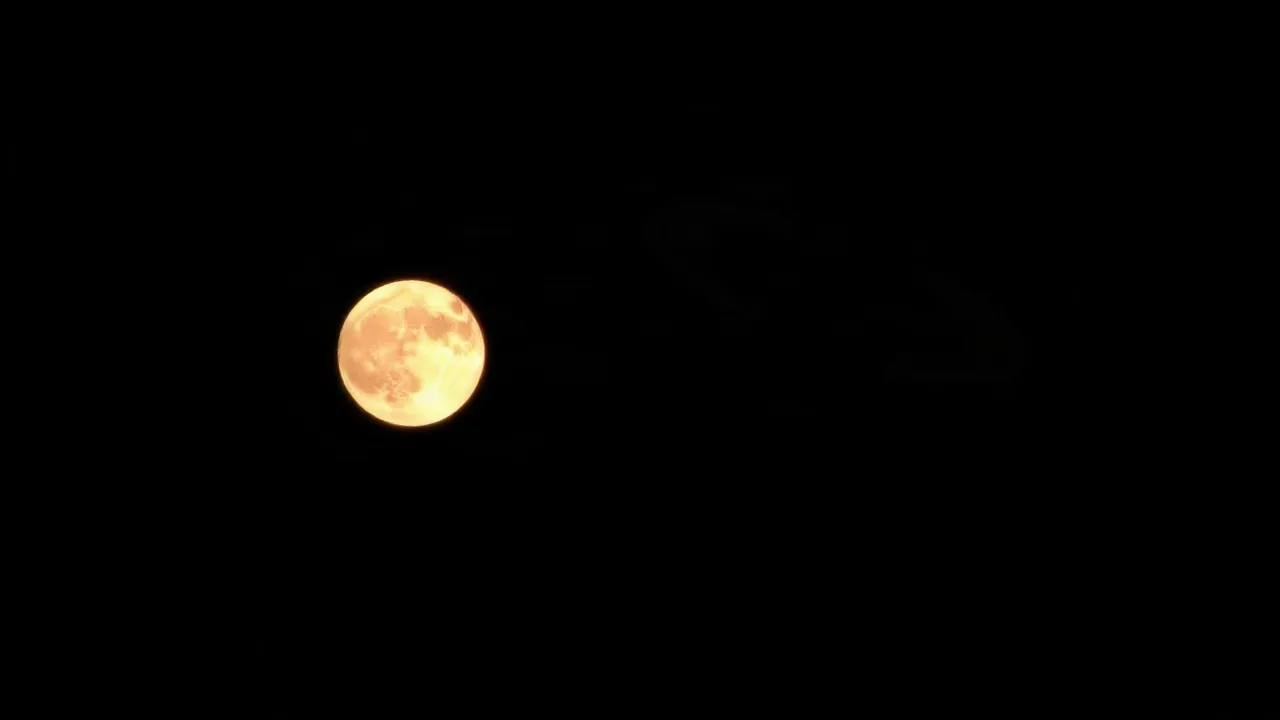
The annual Harvest Moon illuminated the night sky on September 27, 2026, offering a spectacular celestial partnership with the planet Saturn visible to observers around the globe. This year's display was particularly notable, with the moon appearing larger and brighter than usual due to its proximity to Earth, and its golden hue lending itself to the 'harvest' moniker.
Across continents, from the United Kingdom to the United States, amateur and professional astronomers alike shared breathtaking images of the moon positioned near the ringed planet. The Harvest Moon, which is the full moon closest to the autumnal equinox, traditionally signals the start of the harvest season. Its appearance alongside Saturn provided a rare and memorable treat for stargazers.
Social media platforms were flooded with photographs capturing the moonrise. Many images showcased the distinct golden or orange tint of the moon, a common phenomenon when the moon is low on the horizon, as its light passes through more of Earth's atmosphere. The clarity of Saturn, often visible as a tiny bright speck near the moon, added another layer of wonder to the event.
A Celestial Alignment
While the moon and Saturn appeared close in the sky, it's important to note this was an effect of perspective from Earth. Saturn is, on average, about 10 astronomical units (AU) from Earth, meaning 10 times the distance from the Earth to the Sun. In September 2026, Saturn was approximately 8.5 AU away. The moon, by contrast, orbits Earth at an average distance of just 238,900 miles. This significant difference in distance means the celestial pairing was purely a visual spectacle, not a physical proximity.
This event serves as a reminder of the vastness and beauty of our solar system and the captivating phenomena that can be observed from our planet. Events like these inspire a greater appreciation for astronomy and the night sky. Many people who might not typically look up were drawn to witness this particular event due to its widespread coverage and the striking visuals presented.
The Harvest Moon's appearance is tied to the lunar cycle and its timing relative to the Earth's tilt and orbit around the Sun. The autumnal equinox in 2026 occurred on September 22, making the full moon of September the Harvest Moon. This alignment is a consistent astronomical occurrence, but the added presence and apparent proximity of Saturn made this year's event especially noteworthy.
Skywatchers are encouraged to continue observing the night sky. Upcoming astronomical events, such as meteor showers and planetary conjunctions, will offer further opportunities to connect with the cosmos. The Harvest Moon phenomenon, while annual, always offers unique viewing conditions depending on atmospheric clarity and the moon's precise position relative to other celestial bodies.