
Interstellar Raspberry Sugar Found: Clues to Life's Origins
Astronomers have detected erythrulose, a sugar found in raspberries, in a molecular cloud near the galaxy's center. This 'true sugar' could offer vital clues about how life originated on Earth.

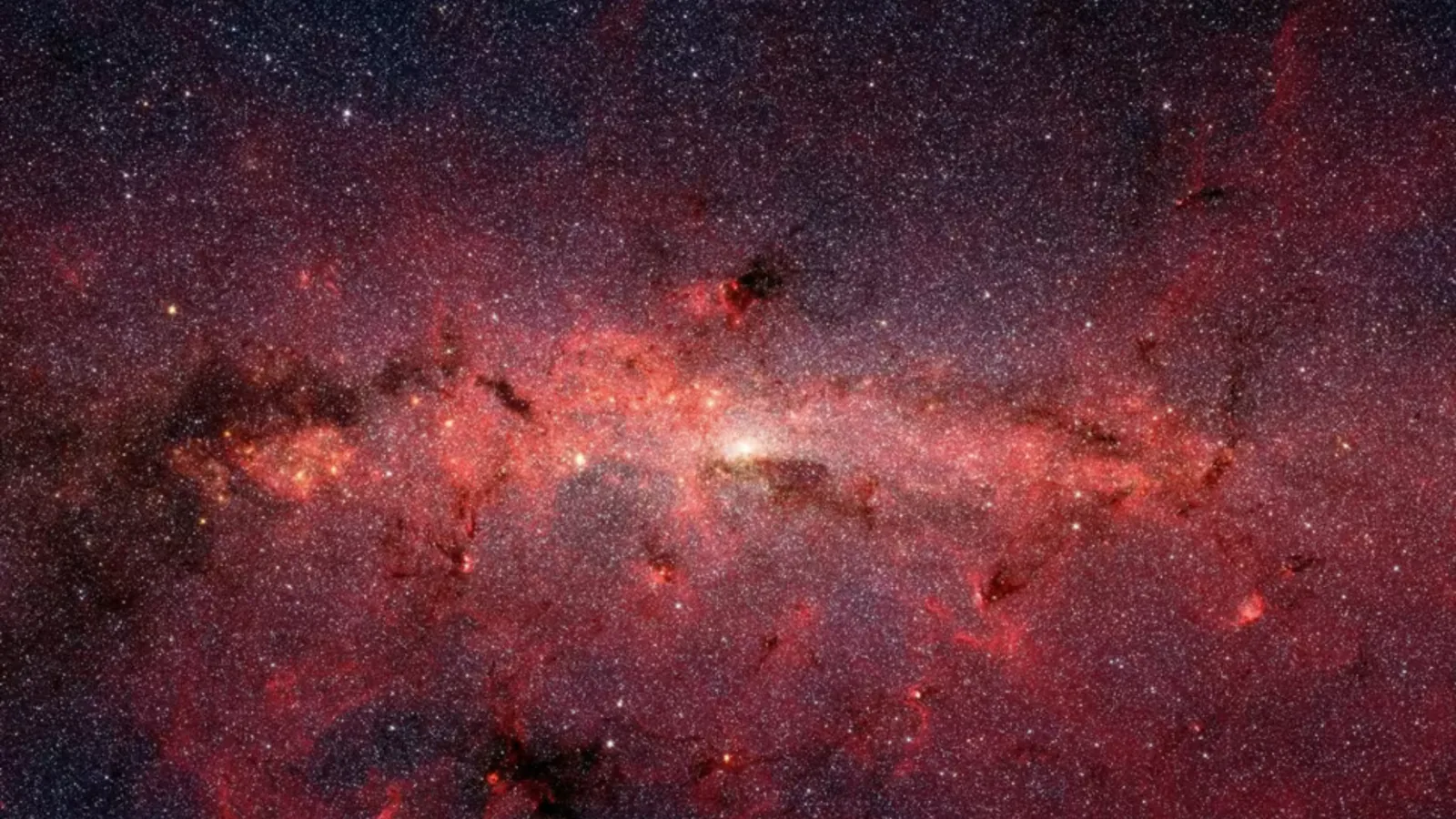
Astronomers have detected a sugar compound, commonly found in raspberries, swirling in interstellar space near the center of the Milky Way. The sugar, known as erythrulose, was identified within a vast molecular cloud, marking the first instance of a "true sugar" being discovered in the interstellar medium—the diffuse matter that exists between star systems. Scientists believe this finding could provide crucial insights into the origins of life, potentially revealing how the necessary building blocks for life's emergence might have traveled across the cosmos.
The detection of erythrulose is particularly significant because it represents a "true sugar"—meaning its molecular structure contains a spine of at least three carbon atoms, with erythrulose having four. While other sugar-like compounds have been found in space before, including in samples returned from asteroid Bennu by NASA's OSIRIS-REx mission in 2023, this marks the first confirmed "true sugar" in the vast expanse between stars. This discovery opens the door to finding other essential sugars, such as ribose, a key component of RNA, and other molecules vital for life's genesis.
Cosmic Sugar as Life's Feedstock
Carlos Briones, a co-author of the study, expressed excitement about the discovery, stating, "The detection of erythrulose is very exciting because it opens up the possibility of discovering in space other sugars such as ribose, which is part of RNA, and other important molecules for the origin of life." Lead author Izaskun Jiménez-Serra, an astronomer at the Center for Astrobiology in Madrid and the Spanish National Research Council, added, "Our work shows that sugars can form naturally in space." Erythrulose's chemical properties make it a potential precursor to nucleic acids, the fundamental molecules that carry genetic information in DNA and RNA. This suggests that such interstellar sugars could have provided the initial "feedstock" for the very first nucleic acids to form.
The implications for understanding life's origins are profound. Stars and planets form within massive molecular clouds of dust and gas. If compounds like erythrulose are present in these stellar nurseries, they could be incorporated into asteroids and comets. These celestial bodies, in turn, could deliver these life-essential molecules to nascent planets through collisions. Evidence already suggests that Earth's early life may have been seeded by materials delivered via asteroid impacts billions of years ago. The presence of interstellar sugar in these delivery vehicles could have played a pivotal role in kickstarting biological processes on early Earth during a period of intense bombardment.
This latest finding builds upon previous astronomical observations and sample analyses. Over 25 years ago, sugar was detected at the center of the Milky Way, and more recently, asteroid samples brought back to Earth contained sugars. However, pinpointing a "true sugar" directly within the interstellar medium itself is a novel achievement. The research team utilized advanced radio telescopes to detect the spectral signature of erythrulose amidst the complex chemistry of the molecular cloud. Future observations aim to search for other complex organic molecules in similar environments, further illuminating the chemical pathways that could lead from simple interstellar matter to the origins of life.
The astronomical community is eager to expand on this discovery. Understanding the prevalence and variety of organic molecules in interstellar space is key to piecing together the puzzle of abiogenesis—the process by which life arises from non-living matter. The discovery of raspberry sugar, or erythrulose, in such a widespread cosmic setting underscores the potential for the universe to be rich in the ingredients necessary for life, suggesting that the journey from basic chemistry to complex biology might be a common cosmic theme.