
Gravitational Constant 'Big G' Measurement Mystery Persists
A decade-long effort to precisely measure Newton's gravitational constant, 'Big G,' has concluded with results that conflict with previous findings, deepening a scientific enigma.

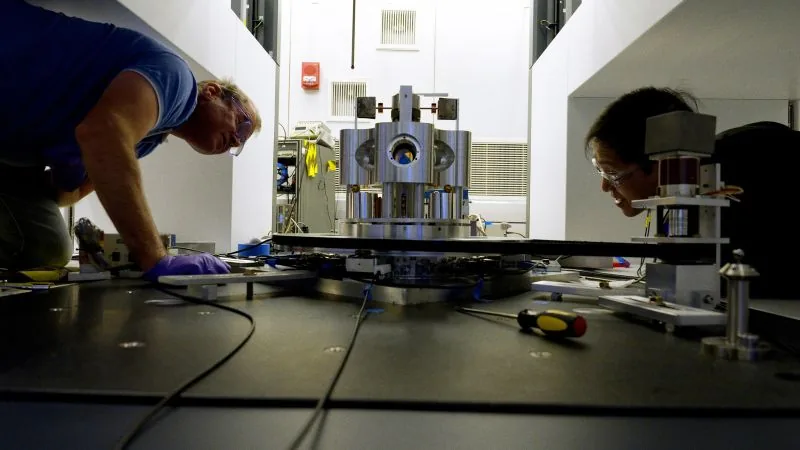
Scientists have announced the inconclusive results of a ten-year endeavor to measure Newton’s gravitational constant, the fundamental force responsible for universal attraction, revealing a persistent mystery in physics. The most ambitious attempt to date to determine the precise strength of gravity between two masses yielded a value that deviates from prior experimental outcomes, including the experiment it aimed to replicate. Physicist Stephan Schlamminger, who led the recent experiment initiated in 2016 at the National Institute of Standards and Technology in Gaithersburg, Maryland, described the process as challenging. "I think every measurement is an opportunity to learn and every measurement brings light into this darkness," Schlamminger stated, reflecting on the arduous task.
Fundamental constants are critical benchmarks that define the behavior of the universe and remain invariant across time and space. These include the speed of light and Planck’s constant, essential in quantum physics. "They are baked into the fabric of the universe," Schlamminger explained. "It’s quite beautiful, because they are the same over generations. If you ever talked to an extraterrestrial, they would have the same concept." For over 225 years, researchers have attempted to measure the gravitational constant, known colloquially as Big G. The initial experiment was conducted by Henry Cavendish in 1798, long after Isaac Newton first described the force of gravity. Despite numerous attempts, scientists have struggled to achieve a precision for Big G comparable to other constants like the speed of light or Planck’s constant. The Committee on Data for Science and Technology (CODATA) provides recommended values for these constants, but its current figure for Big G has a significant uncertainty, which Schlamminger called an "embarrassment for the active metrologist." Metrology, the science of measurement, is crucial for scientific, economic, and trade trust, underpinning many societal functions, from utility billing to trade transactions.
Why Measuring Gravity is So Difficult
The difficulty in accurately measuring gravity stems from several factors, according to Christian Rothleitner, a physicist at Germany’s National Metrology Institute, who was not involved in the latest research. Firstly, gravity is an inherently weak force compared to electromagnetic or nuclear forces. While we perceive it as strong on Earth due to planetary mass, a small magnet can exert a far greater force than the gravitational pull between typical laboratory masses. Secondly, experiments require masses to be placed within a confined laboratory space, meaning the gravitational forces generated are consequently small. "Small masses in turn only generate small gravitational forces." Furthermore, isolating the gravitational force exerted by intended masses from interference by other objects in the laboratory environment presents an extreme challenge. "The problem with the Big G measurements are that the values are all very scattered, so the results of the measurements are not consistent with each other," Rothleitner noted, leaving room for speculation about the underlying causes of these discrepancies.
Over the past four decades, numerous attempts have been made to measure Big G. Instead of adding another potentially inconsistent data point, Schlamminger and his team opted to replicate an experiment conducted by the International Bureau of Weights and Measures in France. The replication utilized a sensitive torsion balance, a device that detects minute forces by measuring the twist of suspended masses, operated under vacuum conditions. Schlamminger dedicated years to calibrating the equipment and mitigating environmental factors like temperature and pressure that could skew results. To prevent bias and ensure the integrity of the replication, a colleague introduced a random offset to the masses, concealing the actual measurement value from Schlamminger until the experiment’s completion. This blind measurement approach aimed to prevent preconceptions from influencing the outcome.
Despite initial enthusiasm, the research proved dispiriting at times. "It felt to me like it was like a random number generator," Schlamminger admitted. "I felt like I was going to a casino every day to work." The secret envelope containing the offset was finally opened in July 2024, revealing the team's findings. While the initial numerical value for Big G, 6.67387x10⁻¹¹ m³/kg·s², was within a reasonable range, Schlamminger expressed disappointment. The team's result was 0.0235% lower than the reference experiment and at odds with the CODATA value. "It’s small in the grand scheme of things, but it’s pretty embarrassing when it comes to these fundamental concepts," he stated. The findings were published on April 16 in the journal Metrologia. Ian Robinson, a fellow at the National Physical Laboratory in the UK, who was not involved in the study, commented that the research addressed "some extremely obscure problems" and produced a new result, potentially aiding precise measurements in other fields involving very small forces.