
Enceladus Plumes Hint at Microbial Life Possibility in Saturn's Moon
New research suggests that microbial life could potentially thrive within the subsurface ocean of Saturn's moon Enceladus. Analysis of salt grains from its plumes offers clues to habitability.

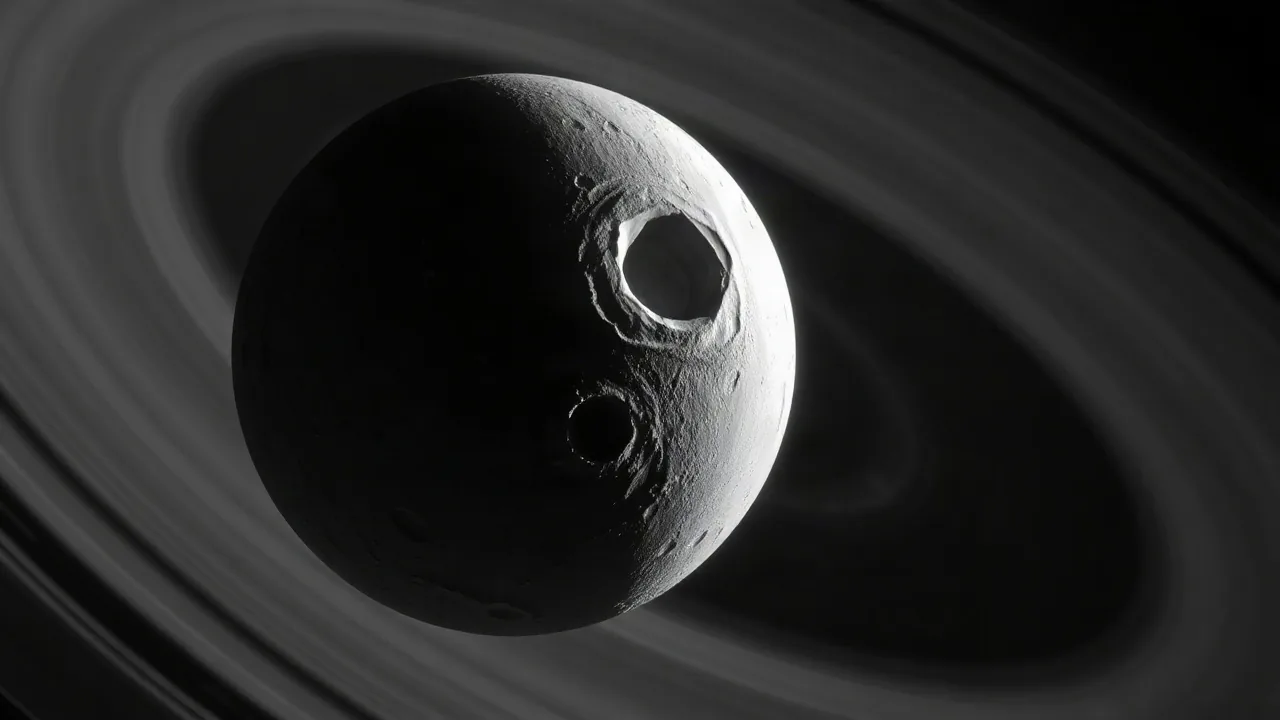
Scientists have presented new evidence suggesting that microbial life might be able to survive within the vast, hidden ocean beneath the icy shell of Saturn's moon, Enceladus. The findings, based on analyses of salt grains ejected from the moon's subsurface ocean, point to conditions that could support life as we know it, fueling the ongoing search for extraterrestrial biology.
The research focuses on the composition of ice grains collected by the Cassini spacecraft during its flybys of Enceladus. These grains, originating from the moon's global ocean, contain salts and organic molecules. A recent study published in the journal 'Nature' detailed how the specific composition of these salt-rich grains could be indicative of a long-lived liquid water environment with a chemical energy source, crucial ingredients for life.
Enceladus Ocean's Habitability Examined
The possibility of life on Enceladus has long been a topic of scientific fascination. The moon is known to possess a subsurface ocean that interacts with a rocky core, potentially creating hydrothermal vents similar to those on Earth's ocean floor. These deep-sea vents on Earth teem with life, deriving energy from chemical reactions rather than sunlight. Scientists are particularly interested in whether similar chemosynthetic processes could be occurring within Enceladus's ocean. The presence of specific mineral compositions within the salt grains, such as carbonates, suggests that the moon's ocean is not only saline but also has a sustained chemical gradient that could power microbial ecosystems.
Dr. Emily Carter, a planetary scientist not involved in the study, commented, "The detailed analysis of these salt grains provides some of the most compelling evidence yet that Enceladus could harbor life. It moves us from speculating about habitability to assessing the actual potential for biological processes occurring right now."
The findings indicate that the ocean on Enceladus is likely alkaline, a condition that favors the production of methane by methanogenic microbes. These microbes, common in Earth's deep oceans and hydrothermal vents, consume hydrogen and carbon dioxide to produce methane. The Cassini mission's data has previously revealed the presence of methane and other simple organic molecules in the plumes emanating from Enceladus, aligning with this hypothesis.
The ongoing exploration of Saturn's moons, particularly Enceladus, represents a significant frontier in astrobiology. Future missions are being conceptualized to directly sample the plumes and potentially land on the surface to search for biosignatures – definitive evidence of life. Understanding the chemical pathways and environmental conditions that could support life is paramount for designing these future missions and interpreting their findings. The work on Enceladus's ocean chemistry builds upon decades of research into extremophiles on Earth, organisms that thrive in harsh conditions, demonstrating life's remarkable adaptability.
The scientific community is cautiously optimistic. While the presence of life has not been confirmed, the chemical signatures detected in the plumes of Enceladus strongly suggest that the conditions necessary for life's existence are present. This makes the icy moon a prime target in the search for life beyond Earth, offering a unique opportunity to answer fundamental questions about our place in the universe. The prospect of finding life within our own solar system, on a small moon orbiting Saturn, continues to drive scientific inquiry and inspire new generations of researchers.