
Magic's Ixalan Set Design: Lessons on Theme and Execution
Magic: The Gathering's lead designer reflects on the challenges and decisions behind "The Lost Caverns of Ixalan," emphasizing how mechanical themes must serve the set's core needs.

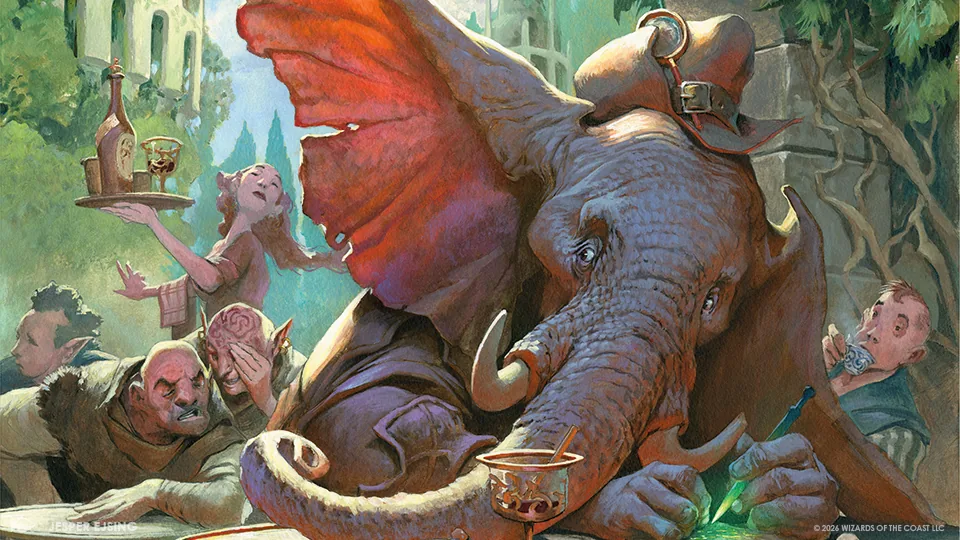
In the latest installment of his "Lessons Learned" series, Magic: The Gathering's lead designer, Mark Rosewater, details the intricate design process behind the 2023 set, The Lost Caverns of Ixalan. Rosewater, who often shares insights via his weekly podcast "Drive to Work" and blog, uses this article to dissect a specific set's development, highlighting a key realization: the mechanical theme must ultimately serve the broader needs of the set itself.
Rosewater admits that The Lost Caverns of Ixalan presented a unique challenge, representing a period where he felt the design process "lost its way." While most sets evolve from initial "Vision Design" concepts, this particular set underwent significant alterations late in its development. A primary catalyst for these changes was a creative decision to relocate the set's setting from a new plane to the established world of Ixalan, a move that occurred later than typical for such a fundamental shift.
The core issue, Rosewater explained, stemmed from the set's initial Vision Design. "Fundamentally, the entire point of vision design is to determine the core identity of a set," he stated. While elements from the initial vision remained, The Lost Caverns of Ixalan struggled to establish a cohesive identity. Rosewater, as the lead vision designer, took responsibility for this challenge. The initial concept revolved around an underground setting, an idea the team had explored for years, aiming for unique visuals and drawing inspiration from adventure and resource-acquisition video game tropes. The team opted for a path that skewed younger, hoping to attract a new audience, a decision Rosewater initially deemed sound.
The "Color Matters" Theme's Journey
Rosewater's personal ambition for the set was to reintroduce the "color matters" theme, a concept deeply rooted in Magic's early mechanics. He recalled how colors and land types were once central to card interactions, influencing mechanics like protection, fear, and landwalk. Over time, such mechanics were often streamlined due to being too swingy, either irrelevant or game-dominating. However, Rosewater saw the underground setting as a perfect canvas for reviving this intricate element of the game's identity. He drew inspiration from earlier Magic sets, like the Shadowmoor block, which experimented with multicolor mechanics.
During the Vision Design phase, the team explored various ways to implement "color matters." This included using five iconic gems—opals, sapphires, jet, rubies, and emeralds—as resources that produced single-colored mana, functioning similarly to Treasure tokens but with a specific color identity. These gems were intended for crafting powerful magic items, a concept influenced by video games. A mechanic called "illuminate" (later appearing as "vivid" in Lorwyn Eclipsed) was designed to reward players based on the variety of colors among their permanents. The design team also incorporated twobrid costs and cards that could change or generate off-color mana to further reinforce the theme.
The Vision Summit, a crucial feedback session where the Vision Design team presents their work to the rest of R&D, proved to be a turning point. Feedback from the Play Design team indicated concerns about the complexity of managing five different colored Treasure-like tokens, predicting a hyper-fast play environment and a potential overshadowing of the crafting mechanic. Consequently, the Vision Design team pivoted. They shifted from artifact tokens to counters, which were generated through a new "dig" mechanic that exiled cards from the graveyard. While the crafting aspect was retained, the overarching "color matters" theme was ultimately abandoned in favor of focusing on card types. The set also incorporated elements specific to the Ixalan plane, such as the "explore" mechanic and Dinosaur tribal synergies, to better align with its new setting.
Reflecting on the experience, Rosewater concluded that his primary misstep was an overzealous focus on integrating a specific theme rather than ensuring that theme was the optimal choice for the set's needs. "I was so enamored with trying to make 'colors matter' fit that I didn't ask myself, 'Is 'colors matter' the best fit?'" he noted. This introspection underscores a vital principle in game design: the mechanical elements must serve the narrative and strategic goals of the game, not the other way around.