
Google Reveals Noto 3D Emoji Design Principles for Android
Google has detailed the design process behind its new 3D Noto emoji, emphasizing expressive character over hyper-realism. User studies informed the shift to full-body depictions and the avoidance of complex props.

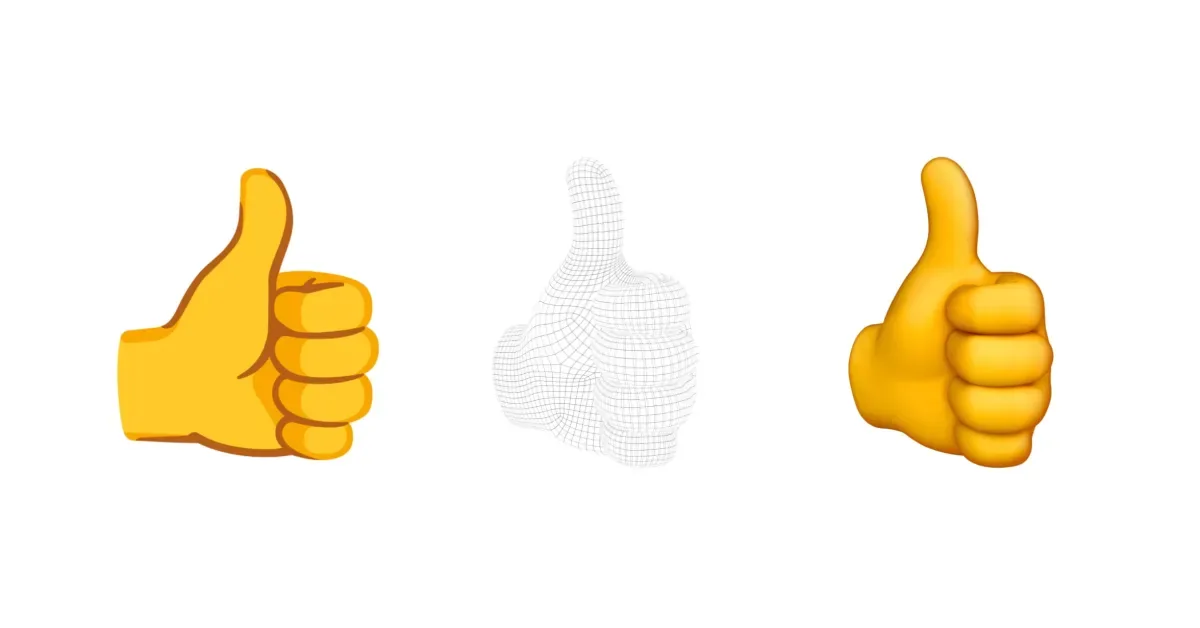
Google has unveiled the design philosophy guiding its newly rendered 3D emoji for Android devices, coinciding with World Emoji Day. All 3,977 emoji characters have undergone a complete transformation into three-dimensional representations. According to Google, their emoji style has historically prioritized expressiveness rather than strict photorealism, a principle that continues with the move to 3D. The company stated that these new designs achieve dimension without sacrificing a playful aesthetic, aiming for a design that has "a pulse and a soul" rather than appearing like sterile industrial models.
The design team emphasized that anatomical perfection is not the goal, citing the example of a kangaroo, which, in reality, can appear intimidating. Through illustration, Google aims to capture the authentic, whimsical spirit of such subjects. To ensure the new designs resonate with users, the company conducted extensive user studies to assess how changes might impact human connection. These studies revealed key insights, including a strong user preference for full-body animal emoji over simple heads and a finding that adding props can hinder comprehension. Furthermore, even minor alterations, like changing the direction of a wink, could inadvertently cause confusion or even distress.
Design Challenges and Solutions
The transition from 2D drawings to 3D models presented unique architectural questions for the design team. They grappled with fundamental aspects such as the appearance of the back of a smiley face, debating whether it should be a concave mask, a solid sphere, or a flat disc. Color contrast was another significant consideration. Google acknowledged that emoji featuring darker skin tones can be challenging to view in dark mode. To address this, they developed an AI-powered contrast analysis tool. This tool meticulously examines each emoji at the pixel level, identifies areas with insufficient contrast ratios, and proposes high-contrast solutions for designers to implement.
The Noto Emoji 3D collection is slated for an initial rollout on Pixel phones later this year, with broader availability across all Google products to follow. In a move that underscores their commitment to open collaboration, Google is making all 3D emoji models available as open-source .OBJ files. This allows developers and enthusiasts to utilize and modify the assets, fostering innovation within the broader digital communication landscape.