
Next-Gen Chip Technology Drives Hardware Innovation Forward
Advanced processors and semiconductor breakthroughs are reshaping computing across industries. Learn how next-generation chips are powering AI, data centers, and consumer devices.

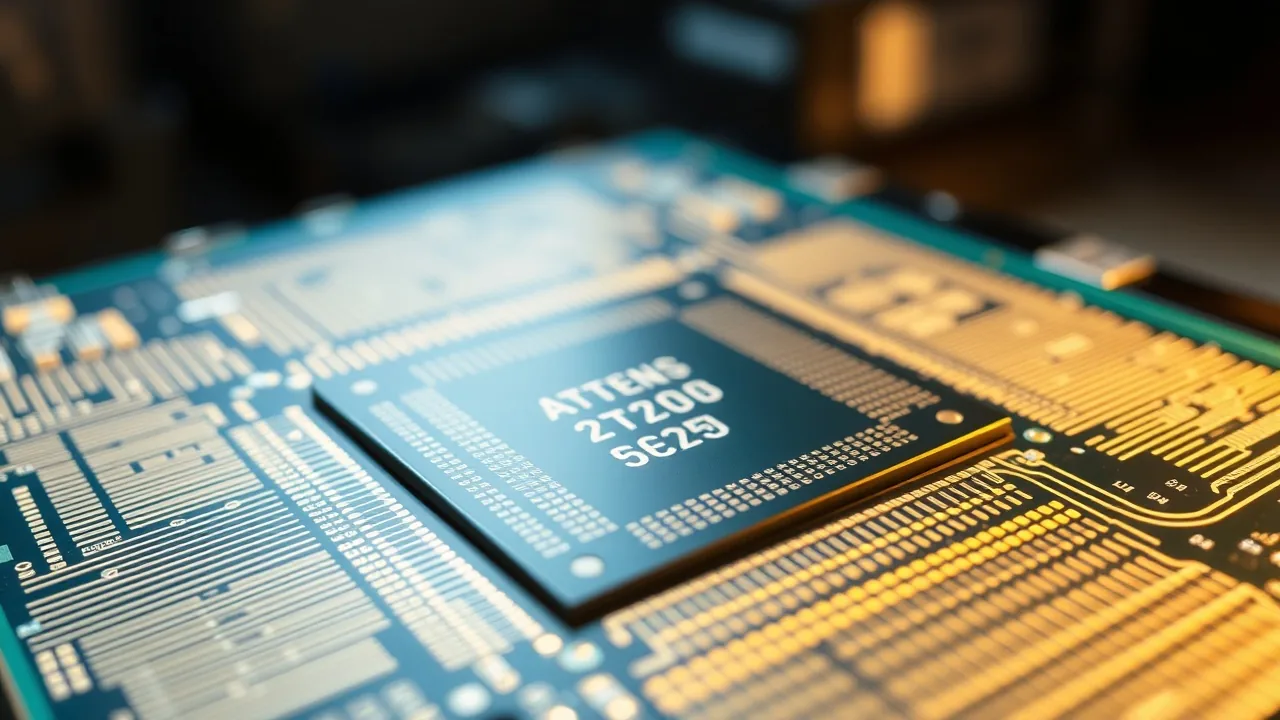
The semiconductor industry is experiencing a transformative shift as manufacturers race to pack more transistors into smaller spaces while reducing power consumption. This race has accelerated dramatically over the past 18 months, with companies like Intel, AMD, and TSMC announcing process improvements that promise significant gains in performance and efficiency for everything from smartphones to enterprise servers.
Kyle Loftis, a senior analyst at Gartner's semiconductor research division, recently noted that "the convergence of AI workloads and edge computing requirements has fundamentally changed how engineers approach chip design. We're no longer optimizing for single-threaded performance alone." This shift reflects a broader industry recognition that modern applications demand specialized hardware capabilities built directly into silicon.
The Architecture Shift in Modern Processors
Today's leading processors represent a departure from traditional designs. Rather than pursuing ever-higher clock speeds, manufacturers now integrate specialized cores for different workloads. A single chip might contain performance cores for demanding tasks, efficiency cores for routine operations, and dedicated accelerators for machine learning inference.
The latest generation of semiconductor technology includes:
- 3-nanometer and smaller process nodes enabling 40-60% power efficiency gains
- Advanced packaging techniques that stack multiple dies vertically to increase compute density
- Built-in security features at the silicon level to counter emerging threats
- Specialized tensor processing units for artificial intelligence workloads
- Enhanced memory bandwidth controllers to reduce data access bottlenecks
These innovations address real constraints. Data centers consume roughly 1-2% of global electricity, and optimizing processor efficiency has direct environmental and economic consequences. A 40% improvement in watts-per-compute translates to millions of dollars in operational savings for cloud providers.
Where This Technology Matters Most
The impact of advanced microelectronics extends far beyond desktop computers. In data centers, hyperscalers like Amazon Web Services and Google are deploying custom-designed chips optimized for their specific workloads. AWS's Graviton processors, now in their third generation, deliver competitive performance at lower cost than standard options.
Consumer devices are equally transformed. Flagship smartphones shipping in 2024 use chips manufactured at 4-nanometer scales, delivering 25-30% better battery life compared to 2022 models. Autonomous vehicles require hardware capable of processing gigabytes of sensor data per second, pushing automotive chip designers to adopt techniques previously seen only in enterprise silicon.
The automotive sector particularly exemplifies this pressure. Modern electric vehicles contain 10-15 separate microcontroller units, each requiring specific performance and reliability characteristics. A single failure in automotive-grade computer hardware can have safety implications, driving manufacturers to invest heavily in redundancy and fault tolerance.
Challenges and the Road Ahead
Despite remarkable progress, significant hurdles remain. The physics of transistor miniaturization becomes exponentially more difficult at each node. Manufacturing yields drop, and defect rates require aggressive quality control measures. The cost of building leading-edge fabs now exceeds $20 billion per facility.
Geopolitical factors complicate the landscape. Taiwan's dominant position in advanced chip manufacturing has made supply chain resilience a priority for governments worldwide. The United States, European Union, and others have launched initiatives to develop domestic tech innovation capacity, though catching up will require years and substantial capital investment.
Software optimization must keep pace with hardware advances. A more powerful chip only delivers value if applications can effectively use its capabilities. The rise of heterogeneous computing, where different cores handle different tasks, creates software engineering challenges that the industry is still learning to address efficiently.
Industry leaders expect this rapid pace to continue through 2027. Process improvements will likely slow after that, as physical limitations become the dominant constraint. At that point, innovation will shift emphasis toward specialized architectures, advanced packaging, and chiplet-based designs that combine components from different manufacturers.
For enterprises and consumers, this transition period offers genuine opportunities. The diversity of chip designs means hardware can be selected to match specific workload characteristics. Cost, performance, and efficiency are increasingly decoupled, allowing optimization for what matters most to individual use cases.