
MIT Robot Mimics Puffins for Dual Air and Water Flight
MIT engineers have developed a novel aerial-aquatic robot inspired by diving seabirds, capable of seamlessly transitioning between flying and swimming. The half-pound device could revolutionize environmental monitoring.

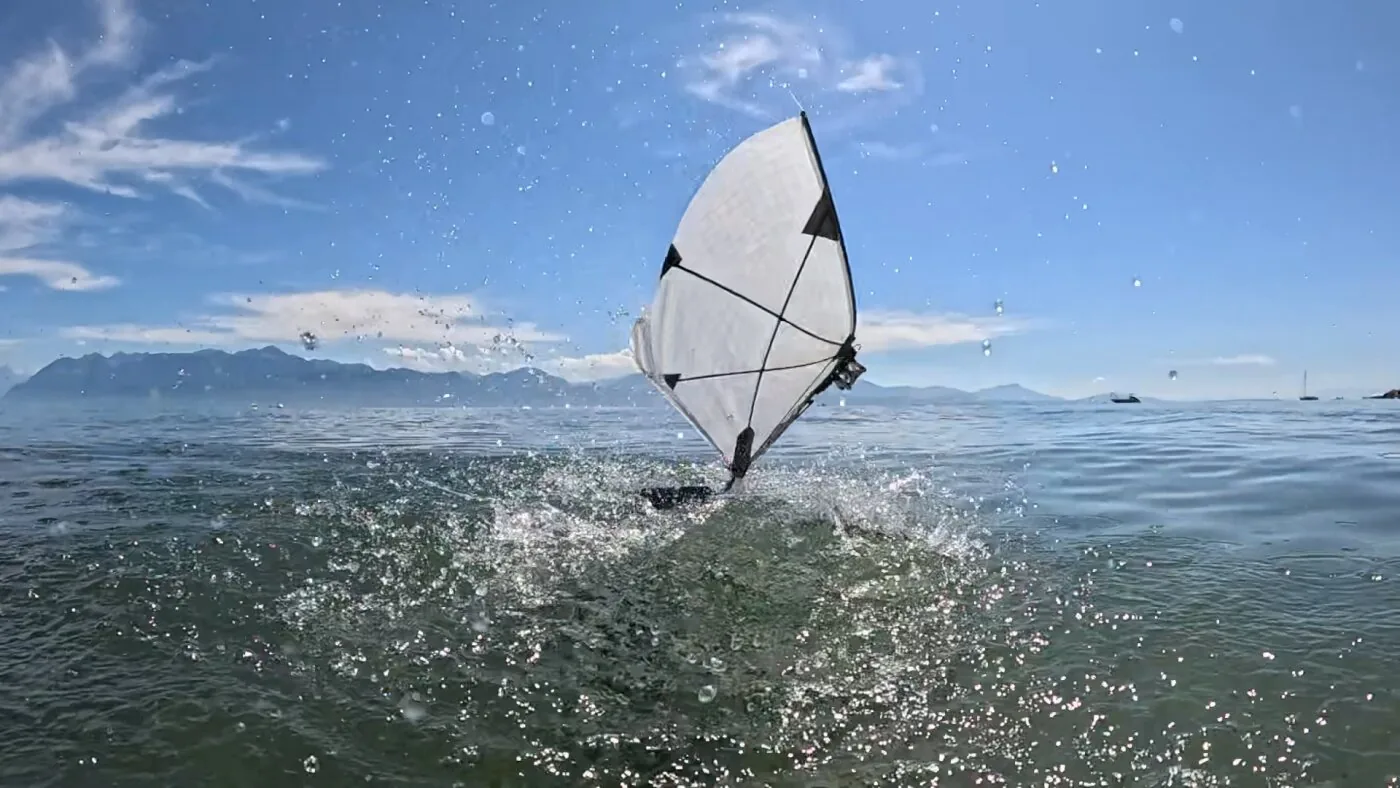
Researchers at the Massachusetts Institute of Technology (MIT) have engineered a groundbreaking robot that can both fly through the air and swim through water, mimicking the remarkable abilities of diving seabirds like the Atlantic puffin. The development, detailed in the journal Science, marks a significant advancement in robotics, potentially enabling new methods for environmental observation and data collection in complex aquatic and aerial environments.
The aerial-aquatic robot, weighing approximately half a pound with a wingspan of nearly three feet, was designed to overcome the immense challenges of moving through mediums with vastly different densities. "These puffins solve this really challenging task of moving in air, in water despite the huge difference in density," explained Raphael Zufferey, a mechanical engineer leading the project at MIT. "We wanted to see if we could build a bird-sized robot that could also move through both mediums and transition between them." This capability has not been achieved before in robotic systems.
Glenna Clifton, an animal movement biologist at the University of Portland who was not involved in the research, praised the robot's design. "This is a beautiful robot," she stated. "She says the robot offers insights into what makes the flight biology of diving birds unique. It also has many potential applications including observing the coastal ocean and monitoring something like a remote coral reef." The robot could potentially travel to distant locations, such as a coral reef or a pod of whales, and then collect valuable water samples and data.
Engineering a Bio-Inspired Dual-Medium Machine
The creation of this unique robot spanned two years, with engineers tackling the fundamental difficulty of designing a wing that could operate efficiently in both air and water. "Thinking of a wing that could operate in both [air and water] somewhat efficiently seems implausible," Zufferey admitted. Despite this perceived hurdle, the team persisted, basing the robot's structure on diving birds but making crucial modifications.
One significant departure from biological models was the omission of legs. "In robotics, legs are tricky to build, control, and achieve the desired movement in the robot," Zufferey noted. "Instead, we thought, 'can we go from the water straight to the air simply with the wings themselves?'" Another key design choice was to forgo foldable wings, a feature common in many diving birds, to avoid the added complexity of joints and motors. "You need to add joints, you need to add motors. So instead we rely on wing flexibility," Zufferey said.
The robot's body, which houses its motor and battery, is intentionally open, allowing water to flood the internal components. This necessitates individual waterproofing for each electronic part. This design choice, however, ensures the robot is light enough for flight while also achieving neutral buoyancy in water, preventing it from sinking or floating. For aerial stability and propulsion, the robot utilizes a tail mechanism, and its wings are constructed from a translucent nylon fabric reinforced with carbon fiber struts.
The robot achieves flight by flapping its wings five to six times per second. However, to transition from water to air, it must increase its wing-flapping rate to ten times per second, generating the necessary speed and thrust. This rapid flapping is crucial for overcoming the water's resistance, a feat most diving birds achieve by using their legs to gain initial momentum on the water's surface. Zufferey pointed out that the kingfisher is a rare biological exception, being exceptionally light.
During a demonstration filmed at Lake Geneva, Switzerland, the robot successfully launched from the water into the air in less than a second, emitting a sound akin to a bird taking flight. The researchers optimized launch angles and wing dimensions. They estimate that a single charge allows the robot to fly for approximately four miles or swim for just over a mile—a distance that surpasses the swimming and running segments of a sprint triathlon.
Clifton remarked on the robot's performance, calling it "a monumental step in the performance at both swimming, flying, and transitioning between the two." Future applications envisioned by Zufferey include monitoring harmful algal blooms, assessing fish stocks, and studying coastal erosion. The team plans to integrate various onboard sensors to enable sophisticated data collection capabilities. This ongoing work on robots, continually refined through experimentation, remains deeply inspired by the elegance and efficiency found in the natural world, providing hope and direction for future robotics research.