
Lenovo's Expandable Screen Laptop Concept Nears Reality
Lenovo unveiled its Project Swan concept, an expandable screen laptop that grows from 14 to 17 inches. This thin-and-light notebook brings advanced display technology closer to consumer products.

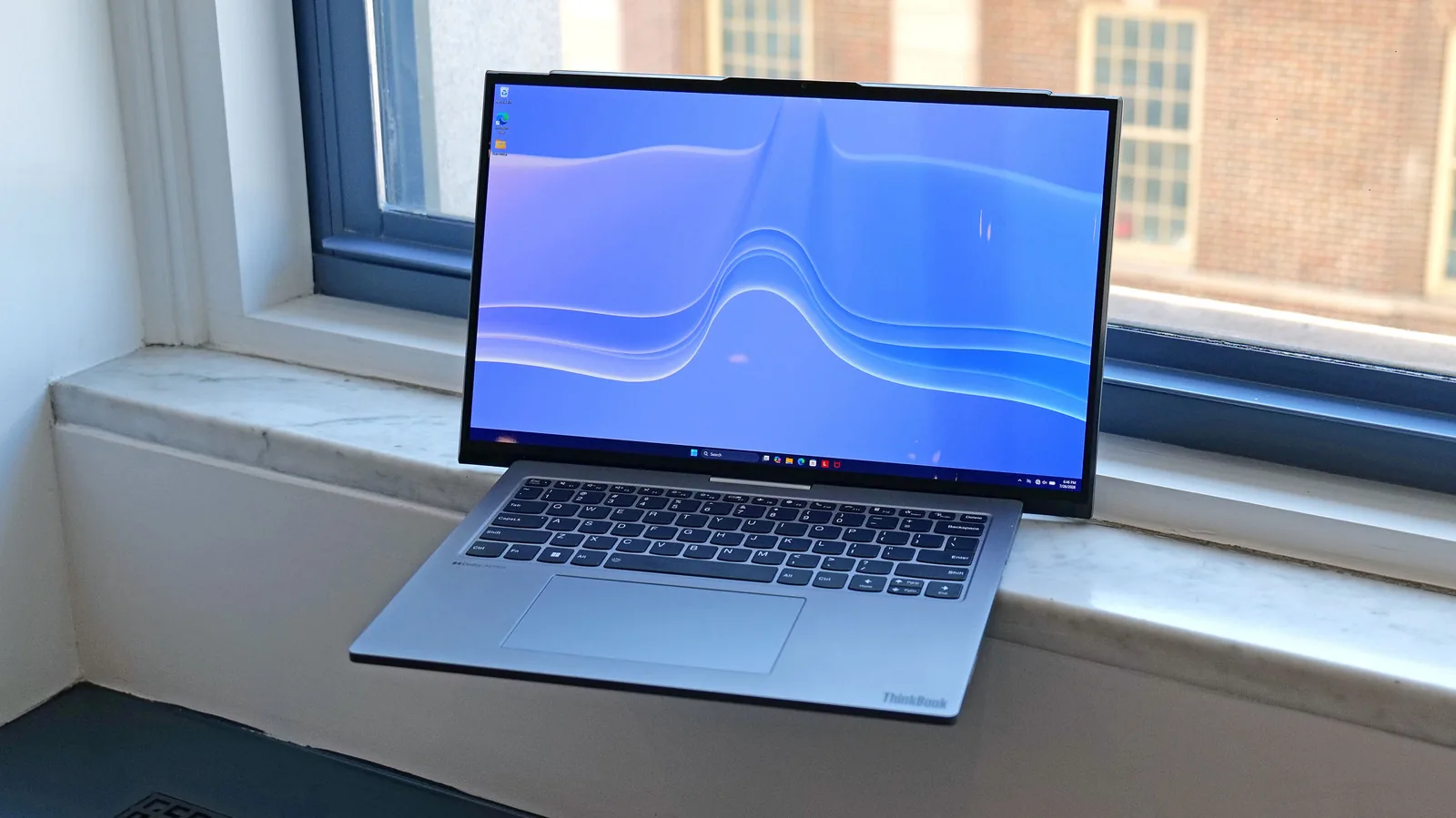
At IFA 2026, Lenovo showcased its innovative Project Swan concept, a thin-and-light laptop featuring an expandable display that blurs the lines between concept and consumer-ready hardware. This device, measuring a mere 17.9mm thick and weighing 3.5 pounds, aims to provide enhanced productivity for users, particularly those on the go or lacking dual-monitor setups.
The core innovation of Project Swan lies in its screen, which can expand from a standard 14 inches to a wider 17 inches with the press of a button. While this increase might seem modest, it significantly boosts screen real estate for multitasking. During a hands-on demonstration, the wider display facilitated seamless side-by-side viewing of documents, akin to using a desktop dual-monitor configuration. This expandable screen technology, previously explored in gaming concepts like the Legion Pro Rollable, is now being integrated into a more traditional productivity notebook.
Beyond Expandable Displays: Ultra-Thin Laptops
Beyond the Project Swan, Lenovo also presented its Project AeroBlade concept, which pushes the boundaries of laptop thinness. This concept leverages Frore Systems' AirJet solid-state cooling technology instead of traditional fans. This innovative approach allows for a laptop measuring just 10mm thick and weighing 1.8 pounds, rivaling the thinness of some high-end smartphones.
The AirJet system functions by vibrating a piezoelectric membrane to generate airflow, offering a quieter, more energy-efficient, and less dust-prone cooling solution compared to conventional fans. Lenovo suggests this solid-state cooling not only enhances reliability due to fewer mechanical parts but also contributes to the exceptionally slim profile of the AeroBlade concept.
Despite its impressive technological advancements, Lenovo has not announced concrete plans for the commercial release of either Project Swan or Project AeroBlade. However, these prototypes offer a compelling glimpse into the future evolution of laptop design and functionality. The company's consistent demonstration of cutting-edge concepts at events like IFA underscores its role in driving innovation within the laptop industry.
The Project Swan's design prioritizes a user-friendly experience, featuring a large touchpad, a responsive keyboard, and essential built-in components such as a webcam and speakers. Although it is equipped with only two USB-C ports, this is a forgivable limitation for a concept device. When the screen is not extended, the expandable nature of the display remains virtually undetectable, maintaining a clean aesthetic. The only visual indicator of the rollable panel is a slight ripple at the extension point, a minor compromise for the enhanced functionality. The integration of this expandable screen technology, combined with a standard form factor, suggests that large-screen portable computing may soon become more accessible.
The development of these advanced concepts highlights Lenovo's commitment to exploring new form factors and technologies in the portable computing space. While consumer availability remains uncertain, the existence of working prototypes like Project Swan and Project AeroBlade signals a tangible progression towards more versatile and compact computing devices. These innovations represent a significant step in bridging the gap between experimental technology and practical applications, promising a future where user needs for both portability and screen space are better met. This forward-thinking approach is characteristic of major technology showcases, pushing the industry toward next-generation hardware solutions.