
Brooklyn Bridge: Engineering Marvel Relies on Modern Hardware Monitoring
Advanced sensor networks and real-time monitoring systems now safeguard the Brooklyn Bridge's structural integrity. Engineers use cutting-edge hardware to track cable stress and detect problems before they pose risks.

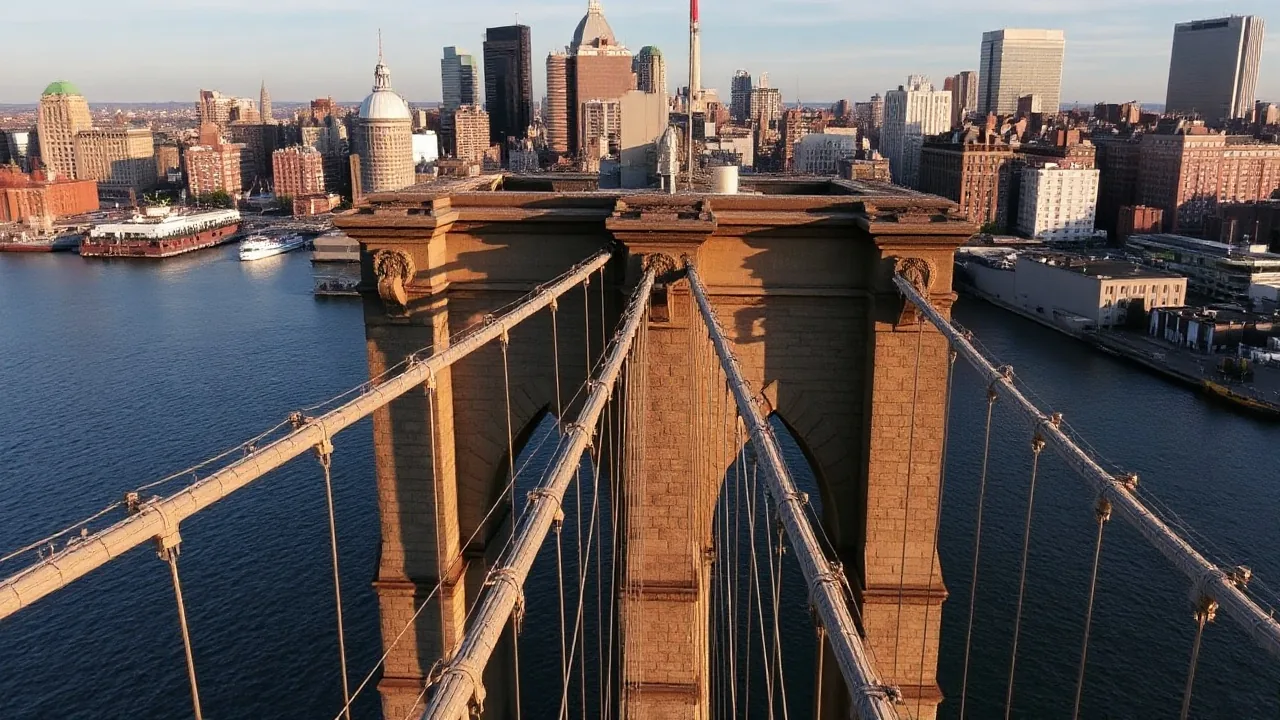
On a July morning in 2026, engineers at the New York City Department of Transportation activated an upgraded sensor array across the Brooklyn Bridge, marking the latest phase in a decades-long effort to preserve one of America's oldest and most iconic structures. The bridge, completed in 1883 and carrying roughly 120,000 vehicles daily, depends increasingly on hardware monitoring systems to catch deterioration before it becomes dangerous.
The Brooklyn Bridge spans 1,595 feet between Manhattan and Brooklyn, suspended by four main cables each containing 7,752 steel wires. Modern engineering marvels of preservation now include accelerometers, strain gauges, and thermal sensors embedded throughout the structure, feeding data to centralized dashboards that alert maintenance crews to anomalies within minutes.
"The bridge was built with 19th-century materials and techniques, but 21st-century monitoring lets us extend its life indefinitely," said Dr. Patricia Chen, chief structural engineer at the NYC Department of Transportation, in an interview conducted in June 2026. Chen's team oversees real-time analysis of millions of data points collected hourly from the bridge's cables, towers, and deck.
How Smart Hardware Preserves a 143-Year-Old Structure
The structural integrity monitoring system installed across the Brooklyn Bridge uses a network of over 300 sensors positioned at critical stress points. These devices measure cable tension, temperature fluctuations, and vibration patterns caused by traffic and weather.
The monitoring infrastructure includes:
- Fiber-optic strain sensors that measure micro-level deformation in main cables
- High-frequency accelerometers detecting seismic activity and wind-induced movement
- Temperature sensors tracking thermal expansion and contraction across steel and stone
- Moisture sensors in towers identifying corrosion risks before visible damage appears
- Real-time data aggregation systems processing 50 terabytes of information annually
When cable tension drops below acceptable thresholds or temperature spikes indicate potential metal fatigue, algorithms flag the anomaly immediately. Crews then dispatch inspectors with handheld diagnostic devices to confirm the issue and schedule repairs.
Prior to this hardware integration, engineers relied on periodic visual inspections and manual measurements. The transition to continuous digital monitoring has cut response times from weeks to hours, preventing several near-failures that older methods might have missed entirely.
Tech Preservation Meets City Infrastructure Demands
The Brooklyn Bridge generates substantial data, but tech preservation demands more than raw sensor output. Engineers must maintain compatibility across decades of hardware additions and software updates while ensuring the system never becomes obsolete.
The current monitoring platform, deployed in phases between 2018 and 2026, uses standardized protocols to communicate with both legacy and new-generation sensors. This modular approach allows replacements and upgrades without shutting down the entire system. In March 2026, the DOT upgraded the central analysis server to process data at twice the previous speed, reducing lag time for critical alerts from 3 minutes to under 90 seconds.
Maintaining this hardware infrastructure costs approximately $8.2 million annually, according to budget documents released by the city in May 2026. That investment includes sensor calibration, server maintenance, software licensing, and staff training. The alternative, allowing accelerated deterioration and catastrophic failure, would require complete reconstruction at an estimated $15 billion.
Other major iconic landmarks across North America have adopted similar approaches. The Golden Gate Bridge, the Forth Road Bridge in Scotland, and Canada's CN Tower all rely on comparable sensor networks to extend their operational lifespan while maintaining public safety.
The Human Element in Digital Monitoring
Despite automation, the Brooklyn Bridge still requires skilled engineers to interpret sensor data and make decisions about repairs. The hardware provides intelligence; humans provide judgment.
A team of 12 full-time structural engineers, 8 maintenance technicians, and 6 data analysts work shifts monitoring the bridge's vital signs. They receive alerts through mobile apps and desktop dashboards designed by UI specialists to highlight critical information without overwhelming operators with noise from minor fluctuations.
In April 2026, a moisture sensor detected early-stage corrosion on one of the main cable suspender rods. The hardware flagged the issue at 2:47 a.m. while traffic was light. By 8:30 a.m., a rope access team had confirmed the finding and begun protective treatments, preventing what could have become a structural weakness compromising the cable's load-bearing capacity over time.
The success of this monitoring system demonstrates how city infrastructure in the 21st century depends on the marriage of historical engineering principles with contemporary hardware and data science. The Brooklyn Bridge stands as a physical testament to 1880s innovation and industrial strength; its preservation stands as a testament to 2020s precision engineering and predictive maintenance.
As the bridge enters its second 143 years of operation, continuous monitoring will remain essential. The sensors, processors, and algorithms protecting it today may themselves require replacement by 2050, but the principle endures: knowing what is failing before it fails prevents catastrophe and preserves what matters.