
AI Sports Analytics Transform Paraguay vs France Match Prediction
Machine learning models are now dissecting every tactical detail of international soccer matchups, reshaping how teams prepare for high-stakes games like Paraguay versus France in 2026.

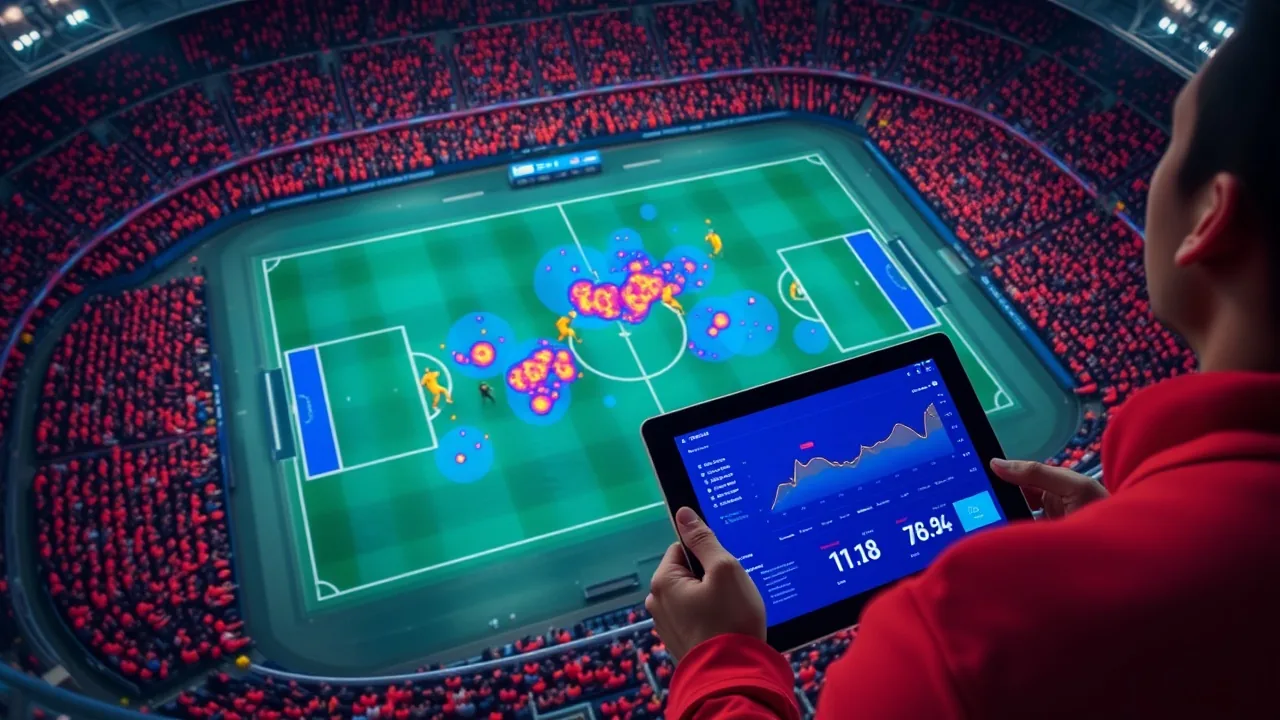
When Paraguay and France square off in the 2026 FIFA World Cup, coaches and analysts will have access to AI-powered insights that would have been impossible just five years ago. Real-time player performance metrics, predictive formation shifts, and injury risk assessments are now standard tools in elite soccer operations, fundamentally changing how teams prepare for international fixtures.
The shift began in earnest around 2023, when major European clubs started embedding machine learning into their scouting and match analysis workflows. By 2026, the technology has matured enough that national federations across South America and Europe are competing to deploy the most sophisticated systems. Paraguay's coaching staff and France's established technical apparatus are both leveraging these tools ahead of their tournament clash.
"The volume and granularity of data we can extract from a single 90-minute match has increased 10-fold in the past three years," said Marcus Chen, senior sports science consultant at the International Football Analytics Collective, in a June 2026 interview. "Teams that can synthesize that data into actionable intelligence gain a measurable edge in positioning and player substitution timing."
How Machine Learning is Reshaping Match Preparation
Machine learning models now ingest dozens of variables from live broadcast feeds: player sprint distances, passing accuracy under pressure, defensive coverage gaps, and set-piece positioning patterns. Algorithms identify weaknesses within seconds of footage being recorded, allowing coaching staff to adjust tactics mid-game or refine training drills between matches.
For Paraguay, which lacks the financial resources of European powerhouses, AI analytics level the playing field. The Paraguayan Football Association partnered with a Madrid-based analytics firm in early 2026 to deploy predictive models across their squad. These systems flag which France players are most likely to drift wide in the 60th to 75th minute, when fatigue typically peaks, enabling Paraguay's midfield to exploit those gaps.
France, conversely, uses predictive modeling to stress-test their own formations. Their technical staff runs thousands of simulated match scenarios against Paraguay's known tactical preferences, testing defensive responses and counter-attack sequencing. The French Football Federation's AI suite, upgraded in May 2026, processes video from Paraguay's recent qualifying matches and friendlies to build a continuously updated threat model.
Tactical Intelligence and Real-World Application
One concrete example: AI systems flagged that Paraguay's left fullback has a 34% tendency to move infield when defending counterattacks, leaving the left flank exposed. France's analytics team can now drill their right-wing players to exploit that gap, feeding crosses into space rather than directly to feet. Paraguay's coaching staff, aware of their own vulnerability through the same AI feedback, can counter by adjusting their fullback's positioning or rotating personnel.
This cyclical intelligence feed creates an arms race in tactical adaptation. Both teams enter the match with not just video clips and gut instinct, but quantified probabilities. When France's manager considers substituting a forward in the 65th minute, an AI dashboard shows him the likelihood of that tactical shift improving goal-scoring opportunity rate against Paraguay's specific defensive setup.
Soccer analysis firms like StatsBomb, Wyscout, and Instat have made their platforms indispensable. Paraguay's technical staff uses these platforms to compare their players' metrics against France's roster. A Paraguayan midfielder with a 91st-percentile pressing effectiveness rating gains confidence knowing the data backs his aggressive defensive approach against French attackers.
The economic divide remains significant, though. France's federation invests roughly $2.8 million annually in AI-driven analytics infrastructure, whereas Paraguay allocates approximately $320,000 to the same function. However, cloud-based analytics platforms have democratized access in 2026, allowing smaller federations to punch above their weight if their coaching staff can interpret the data effectively.
The 2026 World Cup as a Testing Ground
The Paraguay versus France fixture will be one of dozens in the 2026 tournament where AI-powered insights shape tactical decisions in real time. With 48 teams competing (expanded from the traditional 32), the sheer volume of matches creates unprecedented data generation opportunities. Every game feeds into a global repository of machine-learning training data, making the 2026 World Cup the largest AI analytics case study in soccer history.
Injury prediction models have become particularly valuable. AI systems now estimate the risk of a player sustaining a muscle injury within 7 to 14 days based on workload metrics, recovery patterns, and historical injury data. France's medical team may bench a key defender for 20 minutes against Paraguay based partly on an algorithm flagging elevated injury risk, a decision that would have seemed overly cautious a decade ago but now carries statistical backing.
AI sports analytics are also shifting how scouts evaluate emerging talent. Younger players on both rosters are being assessed not just by video review but by standardized performance benchmarks, allowing Paraguay to identify undervalued talent from smaller clubs and France to refine their academy pipeline.
The integration of AI into high-stakes international soccer is no longer speculative. It is happening now, on fields across South America and Europe, with Paraguay and France among the competitors shaping how machine intelligence will define the beautiful game in tournaments to come.