
Apple Smart Home Camera Reportedly Promises Privacy Without Video
Apple is reportedly developing a smart home camera designed to enhance security by identifying individuals without capturing video footage, a move prioritizing user privacy.

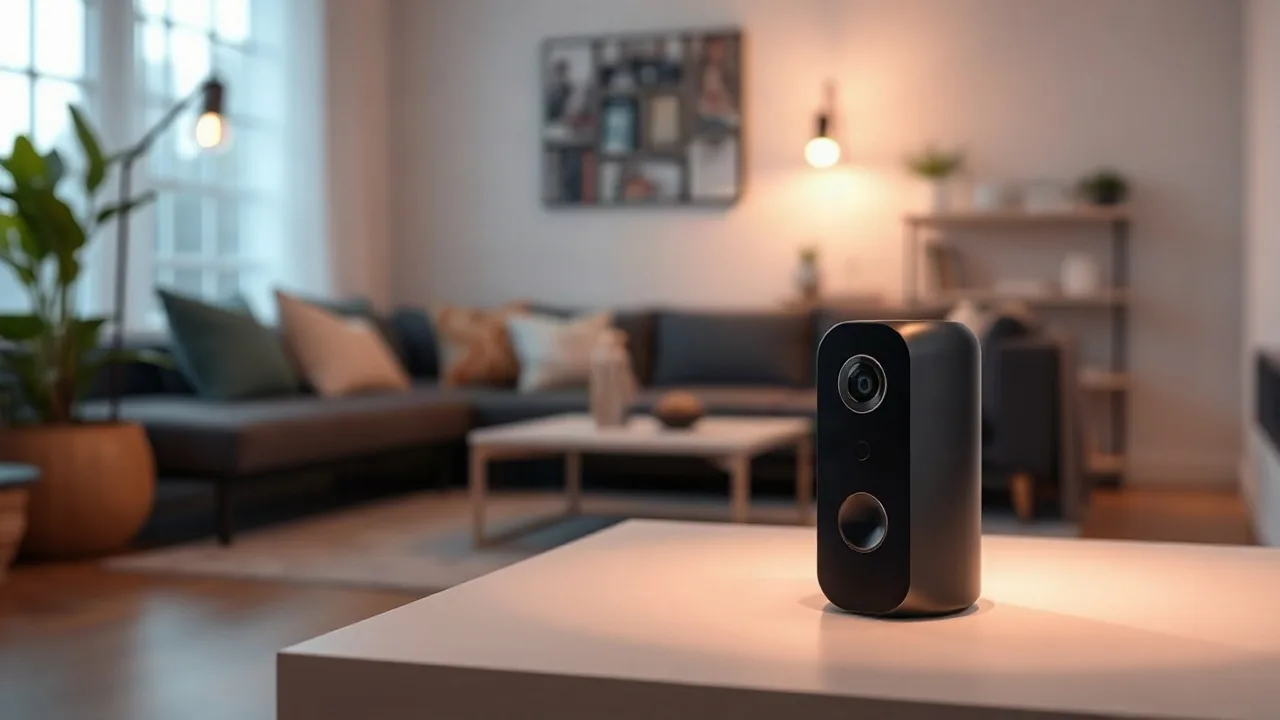
Apple is reportedly working on a new smart home camera that aims to offer security features without continuously recording video, a significant departure from existing market offerings. The device, according to sources familiar with the project, would focus on identifying individuals and notifying users of their presence rather than streaming or storing visual data. This approach, if realized, would represent Apple's latest effort to differentiate its products by emphasizing user privacy.
The proposed camera would likely leverage advanced sensor technology and possibly artificial intelligence to detect and recognize people within a home environment. Instead of sending video feeds to a user's device or cloud storage, the camera could send alerts like "Jane is home" or "A stranger is at the door." This would allow users to stay informed about their home's activity without the constant privacy concerns associated with traditional video surveillance devices.
Privacy-First Design Principles
The development of such a privacy-centric device aligns with Apple's long-standing commitment to protecting user data. The company has often positioned its products as more secure and private than those of its competitors, particularly in areas like mobile device encryption and web browsing. Introducing a smart home camera that avoids video recording would further bolster this image, appealing to consumers who are increasingly wary of ubiquitous surveillance.
This move could also be seen as a strategic response to growing public and regulatory scrutiny of smart home devices. Numerous reports over the years have highlighted security vulnerabilities in smart cameras, leading to unauthorized access and privacy breaches. By designing a camera that inherently limits the collection of sensitive visual information, Apple might be seeking to preemptively address these concerns and set a new standard for the industry.
The technology behind such a device would need to be sophisticated. It might involve a combination of motion detection, infrared sensors, and perhaps even facial recognition capabilities processed locally on the device to ensure privacy. The challenge would be to make the identification process accurate and reliable enough to be useful without resorting to the extensive data collection that characterizes current smart cameras.
The potential impact on the smart home market could be substantial. If Apple's privacy-focused camera proves successful, it might pressure other manufacturers to rethink their own product designs. The market has been dominated by companies like Amazon (Ring) and Google (Nest), whose cameras primarily rely on video recording. A successful alternative could shift consumer preferences towards solutions that offer security without compromising privacy.
While details remain scarce, the project is reportedly in its early stages of development. It remains to be seen how Apple will integrate this new device into its existing HomeKit ecosystem and what its pricing strategy will be. However, the fundamental concept of a smart home camera that safeguards privacy by minimizing data collection signals a potentially significant evolution in smart home technology.