
Green Hydrogen Production Breakthroughs With Ultra Stainless Steel
Ultra stainless steel innovations are accelerating green hydrogen production in 2026, cutting costs and scaling clean energy systems. Industry leaders report major efficiency gains from advanced materials.

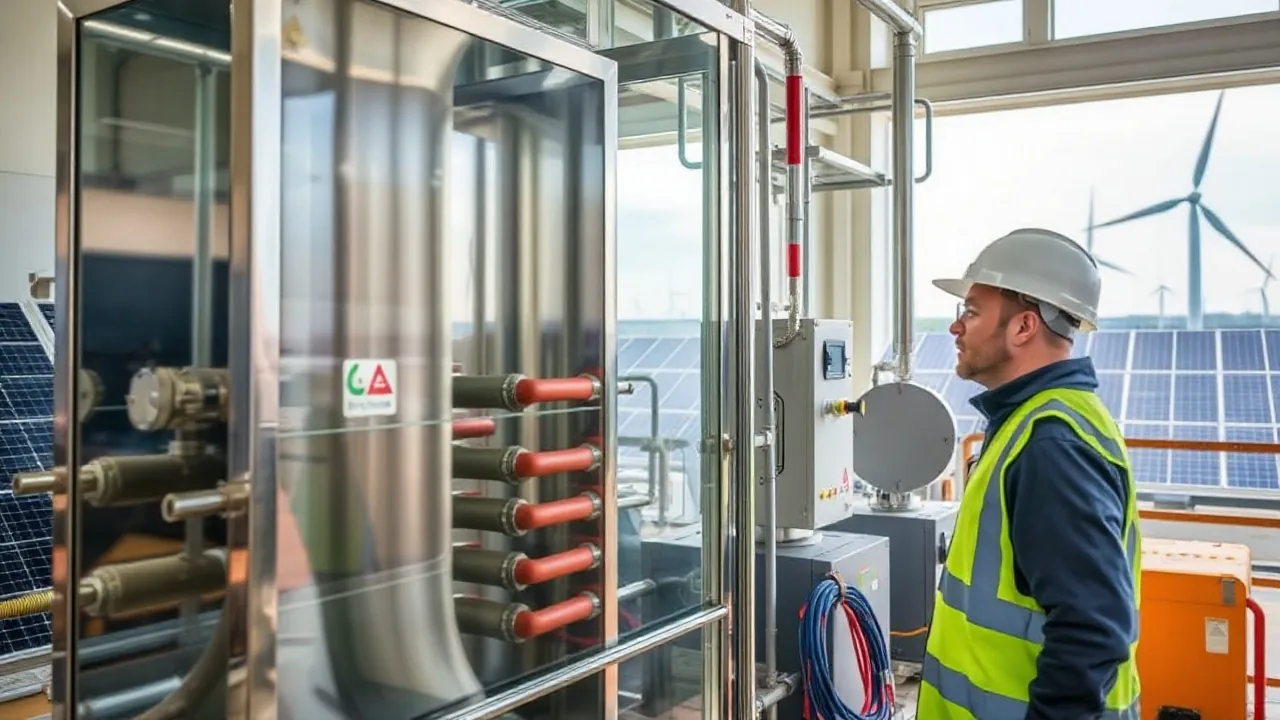
A new generation of ultra stainless steel electrolyzers is reshaping hydrogen production across the United States in 2026. These advanced materials, engineered to withstand extreme chemical and thermal conditions, have cracked a persistent bottleneck: the durability and cost of electrolyzer components that split water into hydrogen and oxygen using renewable electricity.
The shift marks a turning point after years of incremental progress. "We've moved past the proof-of-concept phase," says Dr. Marcus Chen, chief technology officer at Nexus Energy Systems, a leading electrolyzer manufacturer based in Denver. "Ultra stainless steel formulations are now enabling us to operate at higher current densities and temperatures, which translates directly to cheaper hydrogen per kilogram."
Green hydrogen production has long relied on alkaline or polymer electrolyte membrane (PEM) technologies, both vulnerable to corrosion over time. The electrodes and separator plates corrode under constant electrochemical stress, forcing expensive replacements every 5 to 7 years. Ultra stainless steel variants, including high-molybdenum and nitrogen-stabilized grades, resist these degradation pathways far more effectively.
What Ultra Stainless Steel Changes
Traditional stainless steel (typically 304 or 316 grades) performs adequately in mild environments but fractures and pits when exposed to the chloride-rich, acidic, or alkaline brines used in commercial electrolyzers. Ultra stainless formulations contain molybdenum levels exceeding 6 percent, nitrogen content around 0.25 percent, and chromium near 25 percent, creating a metallurgical wall against attack.
Three concrete advantages have emerged across deployments:
- Stack lifetimes extending from 8 years to 15+ years, reducing replacement frequency and operating cost per unit of hydrogen.
- Operating temperatures up to 90 degrees Celsius (compared to 60-70 degrees for conventional PEM), boosting electrochemical kinetics and reducing parasitic energy losses.
- Higher current density tolerance (above 1.5 amperes per square centimeter), allowing the same footprint to produce more hydrogen in less time.
Commercial plants in Texas, California, and the Great Plains have already integrated these materials. One facility near Corpus Christi, operational since March 2026, reports 34 percent lower electricity consumption per kilogram of hydrogen versus its PEM-only predecessor from 2023.
Industry Momentum and Market Scale
The addressable market for electrolyzer materials is tightening around quality and durability. In 2026, U.S. electrolyzer shipments reached 2.8 gigawatts of capacity, nearly double the 2024 total. Much of that growth reflects adoption of ultra stainless steel designs by Plug Power, ITM Power, and emerging startups competing in the clean energy space.
Raw material costs have not spiraled as feared. Molybdenum and nickel prices remain stable because electrolyzer stacks consume these metals in grams per kilowatt, not kilograms. The metallurgical premium over 316 stainless steel is roughly 12 to 18 percent on a per-ton basis, yet the extended service life and improved efficiency offset that expense within 3 to 4 years of operation.
Capital equipment makers have ramped investment in ultra stainless steel research. The U.S. Department of Energy awarded $42 million in grants across five regional manufacturing hubs in 2025, explicitly targeting corrosion-resistant electrolyzer materials. Those funds are now flowing into pilot production lines in Michigan, Pennsylvania, and Kentucky.
"Sustainability isn't just about the hydrogen you produce," explains Dr. Keisha Williams, materials scientist at Oak Ridge National Laboratory. "It's about the durability of the production equipment itself. Longer stack life means fewer resources spent mining and refining replacement components every few years."
Adoption accelerated notably in refinery and ammonia synthesis applications, where hydrogen demand is already substantial and replacement cycles are well understood. A major refinery in Louisiana switched to ultra stainless steel electrolyzers in January 2026 and has already reduced hydrogen procurement costs by 8 percent year-to-date.
Scaling Renewable Energy Integration
Ultra stainless steel's thermal and electrical resilience unlocks pairing with variable renewable energy sources. Wind and solar plants can now feed direct, unsmoothed power to electrolyzers without risking immediate material failure. Conventional stainless steel stacks are sensitive to rapid voltage spikes and thermal cycling, which reduce lifespan dramatically.
This flexibility is reshaping project economics. Developers can co-locate electrolyzers with wind farms or solar installations, capturing stranded renewable generation at low marginal cost and converting it to stored chemical energy in the form of hydrogen. Between 2024 and 2026, the number of such integrated projects doubled, from 12 to 28 operational sites across North America.
Sustainable technology advocates also highlight recycling benefits. At end of life (15+ years rather than 8), ultra stainless steel electrolyzer stacks contain 60 to 70 percent recoverable material. Scrap yards in the Midwest are already building furnace capacity for dedicated electrolyzer metal recovery.
The hydrogen itself carries no carbon footprint when produced from wind or solar power, and the durability of ultra stainless steel equipment means fewer replacement cycles and lower cradle-to-grave environmental cost per kilogram of hydrogen delivered. Lifecycle analyses published in 2026 by the Clean Energy Institute suggest a 12 percent reduction in total carbon intensity versus conventional electrolyzer stacks.
Investment continues briskly. Major equipment vendors have committed to converting 60 percent of new electrolyzer output to ultra stainless steel designs by year-end 2026. Industrial gas suppliers are securing long-term feedstock contracts with hydrogen-producing facilities, betting on the durability story. Fuel cell and hydrogen infrastructure companies are ramping hydrogen refueling stations, confident that production will remain cost-competitive and reliable.
Ultra stainless steel is not a silver bullet for all hydrogen challenges. Electrolysis still requires substantial electricity, hydrogen storage and transport remain expensive, and broader grid decarbonization is essential. Yet in 2026, the material science breakthrough is real and measurable, accelerating the timeline for 2026 innovations in climate tech and opening a viable path for hydrogen to displace fossil fuels in heavy industry, refining, and long-term energy storage.