
Green hydrogen production transforms steel industry with clean innovation
Steel mills are adopting green hydrogen to cut carbon emissions and meet sustainability goals. This shift is reshaping how the industry produces one of the world's most essential materials.

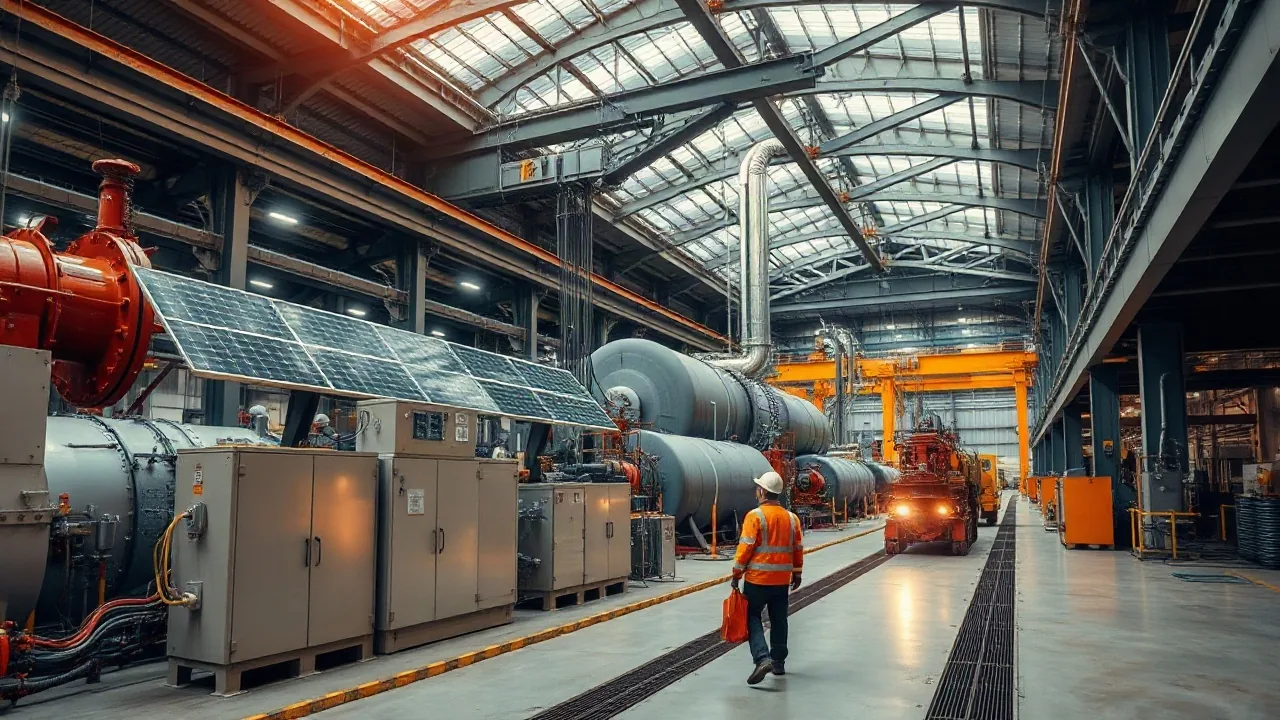
ArcelorMittal, the world's largest steelmaker, announced in October 2026 that its Hamburg facility will begin operations using green hydrogen production processes by mid-2027. The switch marks a turning point for an industry responsible for roughly 7% of global carbon dioxide emissions, signaling that decarbonization is moving from pilot projects to commercial scale.
Steel production traditionally relies on coal-fired blast furnaces that generate enormous carbon footprints. The new hydrogen-based methods replace carbon with hydrogen gas derived from renewable electricity, eliminating the industry's single largest source of greenhouse gas.
"We are not waiting for perfect technology," said Martine Verlaan, Director of Sustainability at ArcelorMittal Europe, in a recent industry briefing. "The business case for clean energy in steel is now compelling because renewable electricity costs have fallen 60% in five years. We cannot afford to delay."
The economics and infrastructure challenge
Green hydrogen production requires three critical inputs: abundant renewable power, water, and industrial-scale electrolyzers. The cost of producing green hydrogen has dropped to around $4.50 per kilogram in regions with cheap wind and solar, versus $6.00 to $7.00 for gray hydrogen (produced from natural gas). By 2026, this price parity is driving investment.
The infrastructure barrier remains steep. Steel facilities need dedicated pipelines or truck transport for hydrogen, plus massive electrolyzers built nearby. Germany's government allocated 5 billion euros in 2024 to accelerate this build-out, and similar commitments are underway in the United States through the Inflation Reduction Act's hydrogen tax credits.
Global steelmakers are not moving uniformly. Nippon Steel in Japan has been testing hydrogen reduction since 2020 and expects commercial viability by 2028. Swedish company H2 Green Steel, founded in 2021, aims to produce 2.5 million tons of steel industry output annually using only renewable hydrogen by 2030. Meanwhile, Chinese mills, which produce over half the world's steel, are investing cautiously in hydrogen pilots while expanding coal capacity in parallel.
Sustainability and market drivers
The shift is driven partly by regulation and partly by customer demand. The European Union's Carbon Border Adjustment Mechanism, which took effect in 2023, penalizes high-carbon imports. This incentivizes steelmakers inside and outside Europe to reduce emissions or face tariffs. American automotive and appliance manufacturers are increasingly specifying low-carbon steel in contracts, creating market pull.
- Global green steel capacity is projected to reach 65 million tons by 2030, up from 2 million tons in 2024.
- Production costs for hydrogen-based steel are expected to decline 15-25% as electrolysis technology matures and renewable electricity becomes cheaper.
- The steel industry estimates it will need 50-75 gigawatts of dedicated renewable power to fully decarbonize, equivalent to the output of roughly 15 large nuclear plants.
Innovation in sustainability is also attracting investment capital. In September 2026, a consortium of European pension funds pledged 2 billion euros to green steel projects, signaling that institutional investors view the transition as low-risk and essential.
The technical hurdles are not trivial. Hydrogen-based smelting produces different metallurgical properties than coal-based processes, requiring steel mills to re-engineer decades-old production workflows. Quality control, energy intensity per ton, and cycle time all demand careful tuning. Industry analysts expect 18 to 36 months of operational learning before mills hit full efficiency.
Environmental benefits extend beyond carbon. Hydrogen smelting eliminates coal dust, reduces water consumption in cooling, and eliminates many toxic byproducts. This makes mills quieter, safer workplaces and eases permitting in densely populated regions like the Rhine Valley in Germany.
The transition will reshape labor patterns. Green hydrogen steel production requires fewer blast furnace operators but more technicians trained in electrochemistry and renewable energy systems. Major European steelmakers have already launched retraining programs to prepare their existing workforces, though unions remain concerned about net job losses in legacy coal regions.
By late 2026, the momentum is unmistakable. Investment banks are modeling steel's hydrogen transition as inevitable, not speculative. The question is no longer whether green hydrogen will transform steel, but how fast and which regions will capture the economic gains. Early movers in Europe and Japan are positioning themselves as premium producers, while developing nations face pressure to leapfrog coal-era infrastructure and adopt hydrogen from the start.