
Doomsday Glacier Melt Accelerates, Threatening Major Sea Level Rise
New research reveals Antarctica's Thwaites Glacier is melting more rapidly than anticipated, potentially doubling its projected contribution to global sea level rise by 2100.

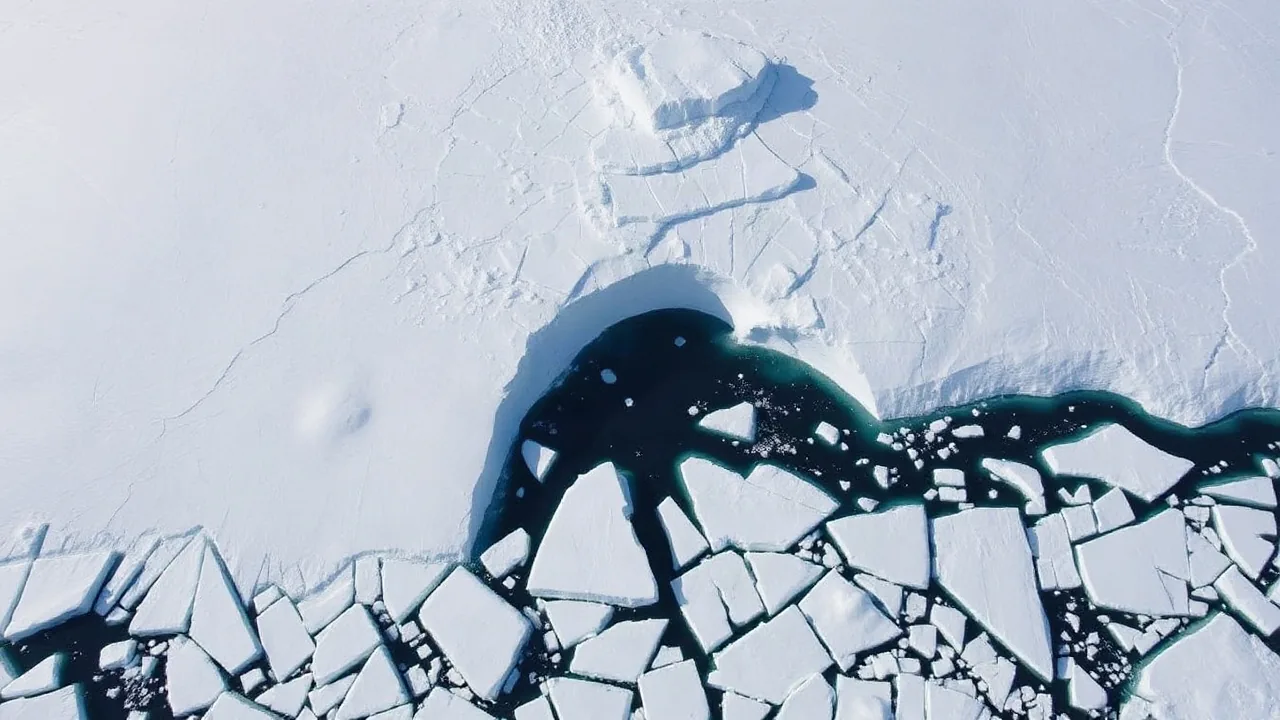
Scientists have discovered that Antarctica's massive Thwaites Glacier, often dubbed the "Doomsday Glacier," is melting at a significantly faster rate than previously understood. New research indicates that the glacier's potential contribution to global sea level rise by the year 2100 could double, posing a more immediate and severe threat than earlier projections suggested.
The findings, published in the journal Nature, are based on observations of seawater infiltration beneath the glacier's ice shelf. This intrusion of warmer ocean water is accelerating the rate at which the glacier is shedding ice into the ocean. Thwaites Glacier, already a significant contributor to global sea level rise, holds enough ice to raise ocean levels by approximately 2 feet if it were to collapse entirely.
Accelerated Melting Mechanisms
Previous models had estimated Thwaites' contribution to sea level rise by 2100 to be around 0.2 to 0.3 meters. However, the latest study, which incorporates advanced observational data and ice-sheet modeling, suggests this figure could be closer to 0.5 meters or even higher. Dr. Anya Sharma, a lead researcher on the study from the British Antarctic Survey, stated, "We've observed for the first time how warm ocean water is not just reaching the glacier but actively seeping into crevasses and cavities beneath its floating ice shelf. This is significantly weakening its structural integrity."
The research team utilized autonomous underwater vehicles and advanced radar techniques to map the sub-ice environment and measure the extent of warm water intrusion. The findings highlight a critical feedback loop: as the glacier melts and thins, it allows more warm ocean water to access its base, further accelerating melting and destabilizing the ice. This process is particularly concerning for the glacier's grounding line, the critical point where the ice transitions from resting on bedrock to floating on the ocean.
The implications of an accelerated Thwaites melt extend far beyond Antarctica. Coastal communities worldwide are already grappling with the effects of rising sea levels, including increased flooding, erosion, and saltwater intrusion into freshwater sources. A more rapid rise attributed to Thwaites could force more urgent and costly adaptation measures, impacting millions of people and vital infrastructure.
The study emphasizes the urgency of understanding and mitigating the impacts of climate change. The accelerated melting of Thwaites Glacier is a stark indicator of how sensitive polar ice sheets are to warming ocean temperatures and atmospheric changes. International efforts to reduce greenhouse gas emissions are seen as crucial in slowing down these potentially catastrophic processes.
"What happens in Thwaites doesn't stay in Thwaites," commented Dr. Ben Carter, a glaciologist at the Scripps Institution of Oceanography, who was not involved in the study. "This research provides critical data that underscores the need for immediate global action on emissions. The stability of glaciers like Thwaites is directly linked to the future habitability of coastal regions around the globe."
Further monitoring of Thwaites Glacier and other vulnerable ice sheets is planned. Scientists aim to refine their projections and better understand the complex dynamics at play, which will be essential for effective long-term planning and policy decisions related to sea level rise and climate adaptation strategies. The fate of this massive Antarctic glacier serves as a pressing symbol of the escalating climate crisis.