
AI in Future Mobility: Smarter Transportation Systems Emerge
Artificial intelligence is reshaping urban transportation in 2026, powering autonomous vehicles and intelligent traffic management systems. Cities worldwide are deploying AI-driven networks to reduce congestion and improve safety.

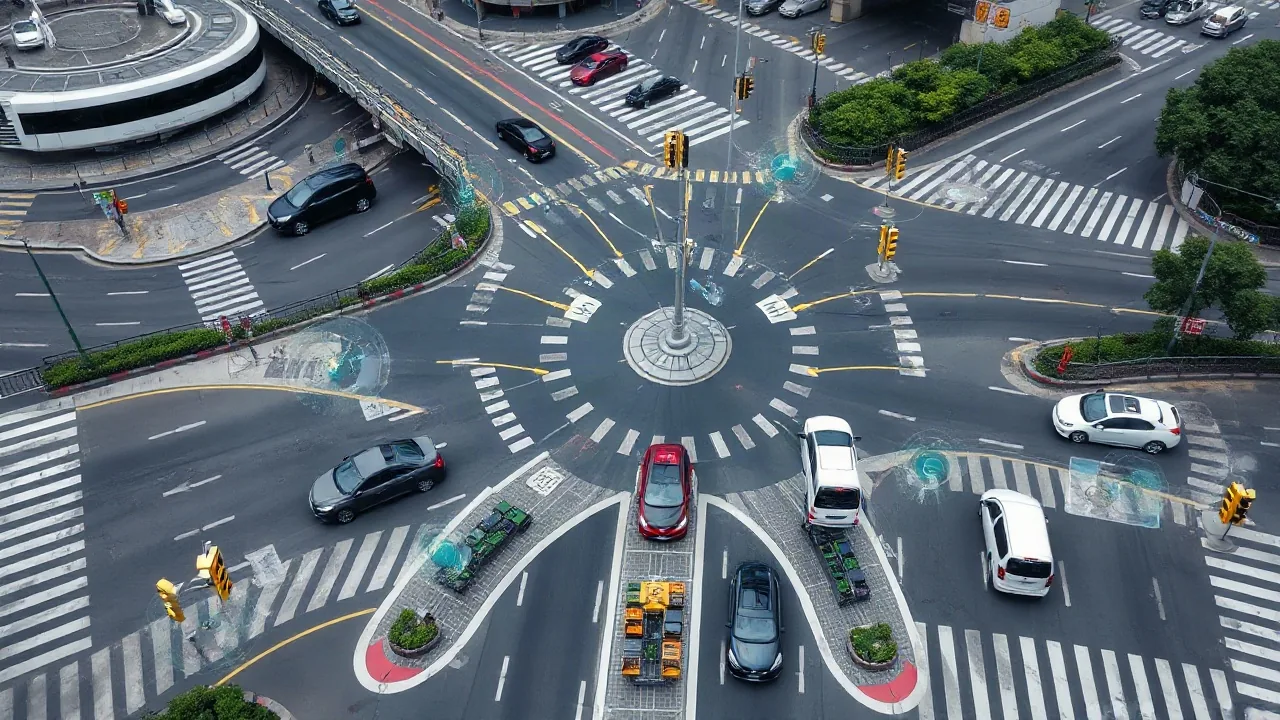
San Francisco's Department of Transportation deployed a new AI-powered traffic signal network on September 8, 2026, marking a milestone in how cities coordinate urban movement. The system, which processes real-time vehicle and pedestrian data across 4,200 intersections, represents the latest evolution in how artificial intelligence is fundamentally reshaping transportation infrastructure.
The three-year development effort cost $127 million and reflects growing municipal investment in intelligent systems. Unlike traditional static timing, the AI network adapts signal duration, pedestrian crossing windows, and emergency vehicle priority in seconds based on actual traffic flow, weather, and incident reports.
"What we're seeing across North America is a shift from reactive traffic management to predictive systems," said Dr. Margaret Chen, director of transportation technology at the Urban Institute, in a recent interview. "Cities that deploy these networks now will have competitive advantages in reducing emissions and commute times by 2028."
Autonomous Vehicles and Real-World Deployment
Autonomous vehicles are moving from pilot programs into limited commercial service in 2026. Waymo has expanded robotaxi operations to 19 cities as of August 2026, while Cruise continues testing in controlled zones despite previous setbacks. Neither company dominates; competition remains intense.
The vehicles rely on multiple AI systems working in concert. Computer vision models process camera feeds and LIDAR data to identify pedestrians, cyclists, and road hazards. Prediction algorithms forecast how other road users will behave in the next 5-10 seconds. Path-planning systems calculate safe, legal routes in real time.
Regulatory approval remains uneven. California's Department of Motor Vehicles approved limited driverless taxi permits for three operators in June 2026, while Texas and Florida are still developing frameworks. Federal guidelines from the National Highway Traffic Safety Administration, released in March 2026, set safety benchmarks but left enforcement to states.
Insurance companies are adjusting premium models. State Farm and Allstate both launched separate rate tiers for autonomous and human-driven vehicles in September 2026, reflecting differing accident frequency and severity data. Early claims data show autonomous fleets have 40% fewer minor collisions but require expensive repairs when incidents occur.
Smart City Integration and Data Architecture
Smart cities are integrating transportation technology into broader urban systems. Denver, Austin, and Boston are running pilot programs where traffic signals, public transit, parking systems, and emergency services share real-time data through secure cloud networks.
These integrated platforms deliver measurable results. Denver reported a 12% reduction in average commute time and 8% improvement in traffic incident response time after implementing its system in March 2026. Boston's transit authority used AI-driven crowd flow analysis to reduce peak-hour delays on the Red Line by 15% within four months of deployment.
Data privacy emerged as the central challenge. Sensor networks collecting information about vehicle location, speed, and routing patterns raised concerns from civil liberties groups. In July 2026, California passed the Transportation Data Privacy Act, requiring cities to anonymize location data after 90 days and prohibiting sale to third parties without explicit opt-in consent.
The infrastructure demands are substantial:
- Edge computing nodes at traffic signals and transit hubs process local data in real time
- Fiber optic networks connecting 10,000+ sensors across urban areas
- Cloud platforms handling 500+ terabytes of daily traffic and vehicle data
- Cybersecurity systems protecting against intrusion and manipulation
Costs remain steep. A fully integrated smart transportation network for a city of 500,000 residents runs $180 million to $300 million depending on existing infrastructure. Federal grants through the Infrastructure Investment and Jobs Act have funded 23 major projects since 2022, but state and local budgets must cover most expansion.
Workforce and Industry Transformation
Employment patterns in transportation are shifting rapidly. The Bureau of Labor Statistics reported that ride-share and taxi driving positions declined by 8% in the first half of 2026 compared to 2025. Truck driving, the largest transportation occupation, faces slower but steady pressure from autonomous long-haul testing.
Retraining programs are emerging unevenly across regions. Seattle and Pittsburgh launched city-funded initiatives offering 16-week certification programs for autonomous vehicle fleet management and AI maintenance roles. Rural areas have fewer options, creating geographic disparities in workforce adaptation.
Counterintuitively, AI deployment is also creating jobs in new categories. Demand for AI trainers, sensor calibration specialists, and transportation data analysts grew 34% year-over-year in the first six months of 2026. These roles typically require technical education beyond high school but don't always demand four-year degrees.
Public transportation agencies are expanding AI applications beyond autonomous operation. Predictive maintenance systems analyze bus and train components in real time, reducing unexpected breakdowns by 28% according to data from transit authorities in Philadelphia and Minneapolis. Scheduling algorithms optimize routes based on passenger demand patterns rather than fixed timetables, increasing ridership by 7-12% in pilot zones.
The transition to AI-driven mobility is uneven across the country. Coastal metropolitan areas and Sun Belt tech hubs are moving fastest, while rural regions and small cities lag due to funding constraints and infrastructure gaps. Nevertheless, by September 2026, every state has at least one active autonomous vehicle program or smart traffic initiative, signaling that the shift is nationwide.