
Self-Driving Cars in 2026: What Autonomous Vehicles Deliver Now
Autonomous vehicle technology has reached a pivotal moment in 2026, with major deployments across US cities and refined safety systems reshaping urban mobility. Here's what self-driving cars can actually do today.

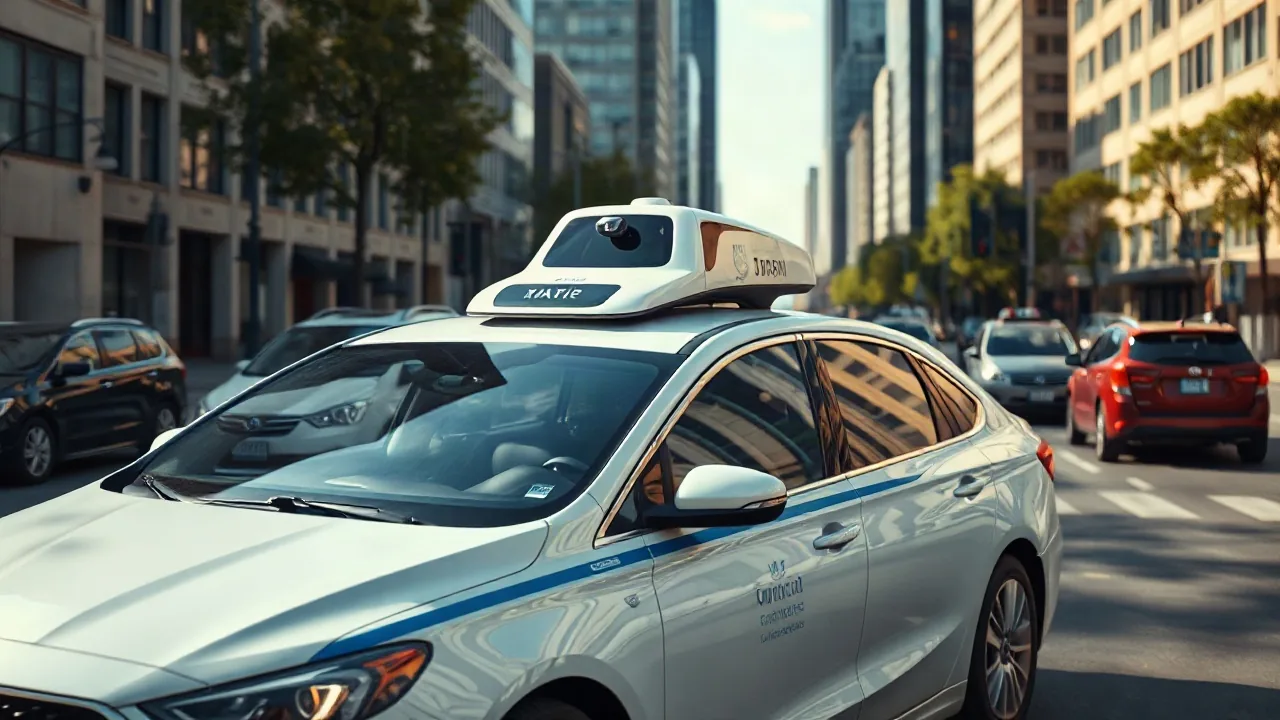
Tesla's Cybercab fleet logged over 2 million autonomous miles across California, Texas, and Florida in the first nine months of 2026, marking a watershed moment for self-driving cars transitioning from pilot programs to commercial service. The vehicles, equipped with eight cameras and ultrasonic sensors, navigated rush-hour traffic in Los Angeles, Atlanta, and Miami without safety driver intervention.
This shift from experimental to operational reflects years of incremental progress. Waymo, Cruise Origin, and Tesla's fleet now handle routine urban routes with measurable reliability. Yet the journey from prototype to everyday reality remains uneven, marked by both genuine breakthroughs and sobering limitations.
Deployments and Real-World Performance
Waymo operates its "Waymo One" service across five major metropolitan areas as of November 2026. Passengers can book rides through a smartphone app, pay per trip, and experience point-to-point autonomous travel without a steering wheel in the front seat. The service has completed over 5 million paid robotaxi rides since launch, with average customer satisfaction ratings at 4.7 out of 5 stars.
Cruise Origin, owned by General Motors, manages a fleet of 800 vehicles in San Francisco, Los Angeles, and Phoenix, focusing on late-night and off-peak service corridors. "We've moved beyond the question of whether autonomous vehicles work," says Jenna Chen, VP of Operations at Cruise, in a statement to industry analysts. "The question now is how quickly we can scale safely and profitably."
Amazon's Zoox subsidiary began limited commercial trials in Las Vegas and Seattle in mid-2026, using custom-built vehicles designed specifically for autonomous operation. These vehicles feature a unique square footprint, redundant steering and braking systems, and sensors positioned for 360-degree environmental awareness.
Each deployment reveals critical insights about autonomous vehicles in practice:
- Weather robustness: Heavy rain and fog still degrade sensor performance; snow conditions remain largely unsolved for Level 4 autonomy.
- Edge cases: Unpredictable pedestrian behavior, construction zones, and non-standard traffic patterns slow response algorithms.
- Latency: Communication delays between vehicles and cloud servers add 50 to 200 milliseconds; safety protocols enforce immediate fallback to conservative maneuvers.
- Insurance liability: Ambiguity over who bears fault in collisions involving autonomous vehicles persists across state jurisdictions.
Technology Advancement and Remaining Gaps
The core improvement in 2026 centers on sensor fusion and machine learning models trained on billions of miles of aggregated driving data. Tesla and Waymo now deploy vehicles using multiple lidar, radar, and camera feeds processed in real time by onboard GPUs, rather than relying on cloud connectivity for decision-making.
National Highway Traffic Safety Administration (NHTSA) data released in September 2026 showed that driverless cars in commercial service experienced 0.87 accidents per million miles, compared to 1.42 per million for human drivers. That represents a meaningful safety advantage, though sample sizes remain smaller and deployments concentrate in favorable weather and mapped urban zones.
Manufacturer roadmaps differ significantly:
- Tesla: Pursuing full self-driving capability through camera-only vision without lidar, betting on neural network sophistication over sensor redundancy.
- Waymo: Relying on hybrid lidar-camera systems with high-definition local maps; expanding to geographies beyond initial pilot zones.
- Motional (Hyundai partnership): Focusing on medium-speed urban routes; launching in Boston and Las Vegas by end of 2026.
- Aurora Technology: Building logistics-focused autonomous trucks for highways, with regular service scheduled to launch in 2027.
What remains unsolved is true Level 5 autonomy, where vehicles operate without geographic constraints or weather limitations. Current systems function reliably within narrow operational design domains: defined map areas, daylight or street-lit conditions, speeds below 45 mph, and trained routing protocols.
Impact on Urban Mobility and Policy
Cities across the US face new regulatory and infrastructural questions. San Francisco, Phoenix, Los Angeles, and Austin have granted commercial robotaxi permits; Chicago and Washington, DC remain cautious, requiring additional trial periods before full deployment approval.
Insurance premiums for autonomous fleets run 15 to 30 percent lower than conventional commercial vehicle coverage, reflecting the safety data. Conversely, repair and sensor replacement costs remain high. A full sensor suite replacement costs $5,000 to $12,000 per vehicle, creating incentives for manufacturers to prioritize durability.
Ride prices in Waymo-served markets average $2.50 to $3.80 per mile, competitive with traditional rideshare services after accounting for surge pricing. Regulatory caps on fares do not yet exist, though California's Public Utilities Commission monitors pricing trends quarterly.
Employment implications are real. The American Trucking Association reports that autonomous long-haul routes could displace 500,000 to 700,000 professional drivers by 2032 if adoption continues at current rates. Meanwhile, future mobility job creation in mapping, maintenance, and fleet operations is outpacing those losses in major metropolitan areas.
Consumer acceptance has shifted measurably. A 2026 Pew Research survey found 56 percent of American adults willing to use a car technology autonomous vehicle for a short urban trip, up from 38 percent in 2023. Trust correlates strongly with exposure: regions with active robotaxi services show adoption rates 18 points higher than those without.
The autonomous vehicle story in 2026 is neither a utopian arrival nor a failed experiment. It is a gradual, geographically uneven transition shaped by engineering constraints, insurance economics, and local regulation. The cars work reliably within their boundaries. Scaling beyond those boundaries remains the central challenge for the remainder of this decade.