
Nobel Laureate Rudolph Marcus, Who Explained Chemical Reactions, Dies at 102
Rudolph Marcus, a Nobel Prize-winning chemist known for his groundbreaking work on electron transfer theory, has died at 102. His theories provided crucial insights into fundamental chemical processes.

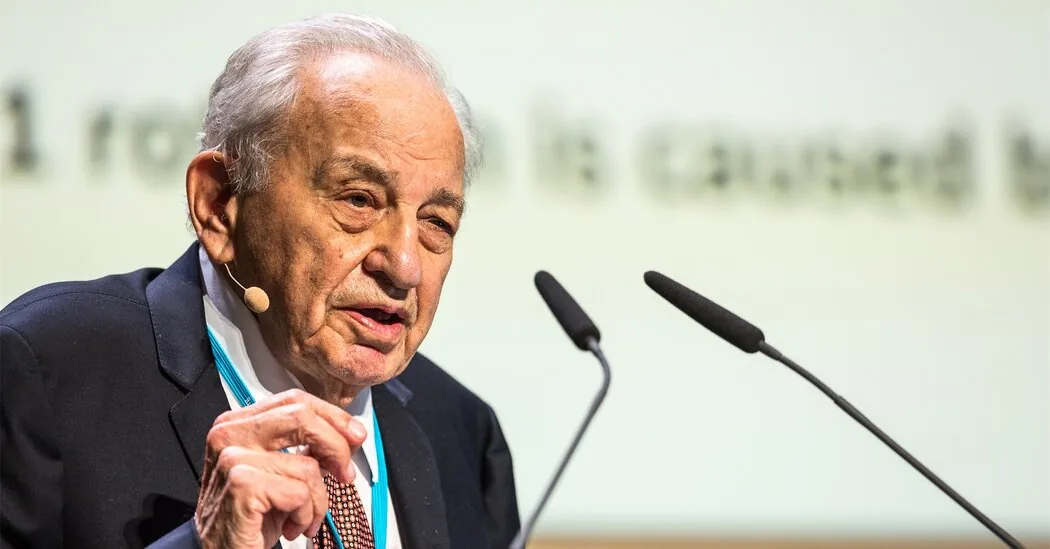
Rudolph Marcus, a Nobel laureate chemist whose theoretical work illuminated the intricate mechanisms of electron transfer reactions, died Thursday at his home in Pasadena, California. He was 102. Marcus, a Canadian-born American citizen, had been a distinguished professor at the California Institute of Technology (Caltech) since 1978. His death was confirmed by Caltech, where he was a towering figure in theoretical chemistry.
Marcus was awarded the 2001 Nobel Prize in Chemistry for his development of a theory that precisely described the rate of electron transfer reactions in chemical systems. This theory proved fundamental to understanding a vast array of natural and artificial processes, including photosynthesis, cellular respiration, and the generation of light by organisms like fireflies. His work provided a theoretical framework for phenomena that were previously difficult to explain quantitatively.
Sarah Reisman, the chair of the chemistry and chemical engineering division at Caltech, emphasized the profound impact of Marcus's research. "It provides a simple theory for one of the most fundamental processes in chemistry and has been applied to understand reactions ranging from small-molecule catalysts to proteins involved in photosynthesis," Reisman stated in an email. The theory’s elegance and applicability across diverse scientific fields underscored Marcus's unique contribution to chemistry.
A Life Dedicated to Scientific Puzzles
Unlike many chemists who focus on laboratory experiments, Marcus was a pure theorist. He discovered early in his career that his inclination was towards conceptualizing and explaining phenomena rather than conducting empirical research. In a 2016 interview with The Electrochemical Society, Marcus reflected on his lifelong fascination with puzzles. "It all comes back to the puzzles, I think, and the enjoyment of puzzles as a child," he explained. "Only now the puzzles are scientific puzzles." This intrinsic curiosity drove his pursuit of understanding the fundamental forces governing chemical reactions.
Born in Montreal, Canada, in 1923, Marcus pursued his higher education in the United States. He earned his bachelor's degree from McGill University in 1943 and his Ph.D. in chemistry from Yale University in 1949. Before joining Caltech in 1978, he held faculty positions at the University of Illinois and the University of Utah. His early theoretical work in the 1950s and 1960s laid the groundwork for his Nobel Prize-winning contributions.
The significance of electron transfer theory extends far beyond academia. It has informed the design of new catalysts for industrial processes, the development of more efficient solar cells, and a deeper understanding of biological systems. For instance, the ability to precisely model how electrons move between molecules is critical for creating artificial photosynthesis systems that could one day provide clean energy. Similarly, understanding electron transfer in biological systems is key to unraveling the complexities of diseases and developing new therapeutic strategies. The impact of his theories continues to resonate in ongoing research across biotech and health and green technology initiatives.
Rudolph Marcus's legacy is not only defined by his Nobel Prize but by the countless researchers his work has inspired. His ability to abstract complex scientific problems into elegant theoretical models set a standard for theoretical chemistry. He leaves behind a body of work that will continue to be foundational for scientific discovery for generations to come, impacting fields from materials science to biotechnology.