
Denisovans: Chinese Cave Reveals Ancient Human Tool Use
A Chinese quarry has yielded fossils and tools offering new insights into Denisovans, an extinct human relative. Finds suggest sophisticated bone tool crafting and hunting skills.

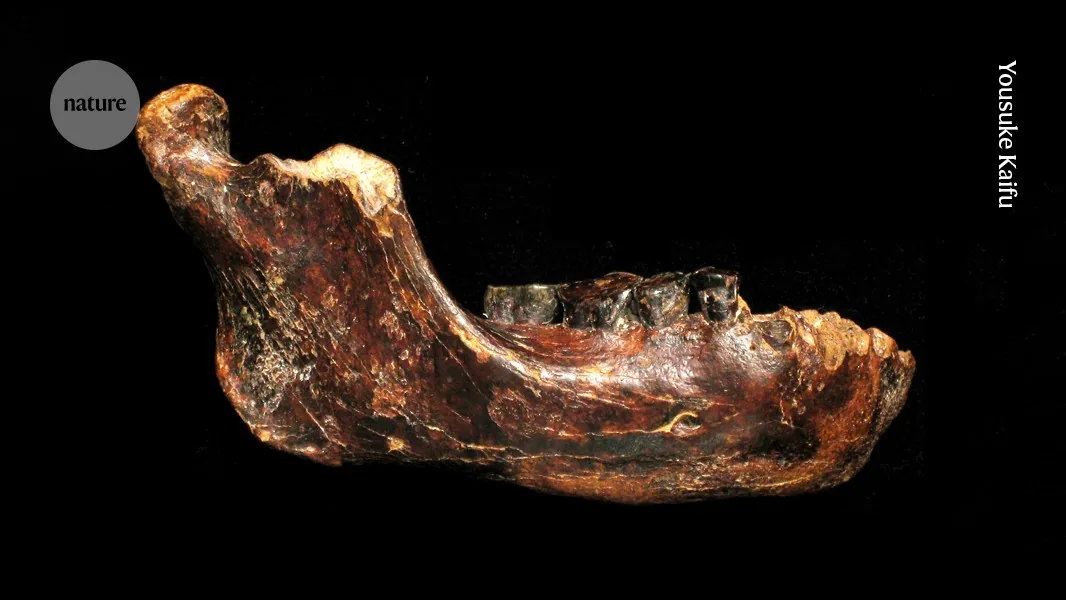
An extensive collection of fossils and artifacts unearthed in an abandoned quarry in southwestern China's Yunnan Province is providing an unprecedented look into the lives of the Denisovans, an enigmatic ancient human species. The discoveries, detailed in the journal Nature, include bone tools remarkably similar to those made by Neanderthals and evidence suggesting Denisovans were adept hunters of large game.
The site, Bianfu Cave within the quarry, has yielded a rich sequence of archaeological evidence spanning thousands of years. Scientists estimate that Denisovans occupied the area for a significant duration, potentially from 167,000 to 134,000 years ago, based on protein analysis of five fossilized bone fragments. These fragments include pieces of skull, a portion of a lower arm bone, and two teeth. The quantity and context of the remains suggest this was not a transient presence but a long-term habitation.
The Denisovans, first identified in 2010 through genetic analysis of a finger bone found in Denisova Cave, Siberia, have long been a puzzle for paleoanthropologists. Their physical characteristics and behaviors have been pieced together primarily through genetic data and limited fossil evidence. Previous discoveries, such as jawbones from the Tibetan Plateau and Taiwan, had already expanded their known geographical range. The 2025 confirmation of a Denisovan skull found in Harbin, northeastern China, further solidified their presence across Asia.
New Insights into Denisovan Capabilities
The artifacts recovered from Bianfu Cave are particularly significant. Among the discoveries are meticulously crafted bone tools that bear a striking resemblance to those produced by Neanderthals, indicating a shared technological heritage or independent innovation. The presence of animal bones, including those of deer, alongside these tools strongly suggests that the Denisovans at this site were skilled hunters. This rich assemblage provides one of the clearest pictures to date of Denisovan behavior and technological capabilities over an extended period.
“This site’s the full package,” said Ben Marwick, an archaeologist at the University of Washington in Seattle, who was not involved in the study. “It’s the first site that we have with a long, rich sequence that’s uniquely associated with Denisovans.” The significance of the discovery lies in its ability to connect specific behaviors and tools to this elusive human relative, moving beyond purely genetic identification.
Qiaomei Fu, a palaeogeneticist at the Institute of Vertebrate Paleontology and Paleoanthropology in Beijing and lead author of the protein analysis, highlighted the importance of the stratigraphic layering of the fossils. “This is not just an occasional fossil,” Fu stated, emphasizing that the placement of the remains within different sediment layers points to a sustained occupation. She also noted that the southwestern location of Bianfu Cave is geographically pertinent, being closer to regions where interbreeding between Denisovans and early modern humans may have occurred.
The genetic legacy of the Denisovans is still evident today. Populations in regions like Papua New Guinea and surrounding islands carry some of the highest percentages of Denisovan DNA, a testament to ancient interactions between our ancestors and this extinct hominin group. The ongoing discoveries in China continue to refine our understanding of these early human relatives, painting a more detailed picture of their lives, skills, and interactions within the broader human evolutionary story.