AI HealthTech Advances Medical Diagnosis in 2026
Artificial intelligence is reshaping how doctors diagnose disease, with 2026 marking major breakthroughs in accuracy and speed. Leading health systems report faster patient outcomes and reduced diagnostic errors.

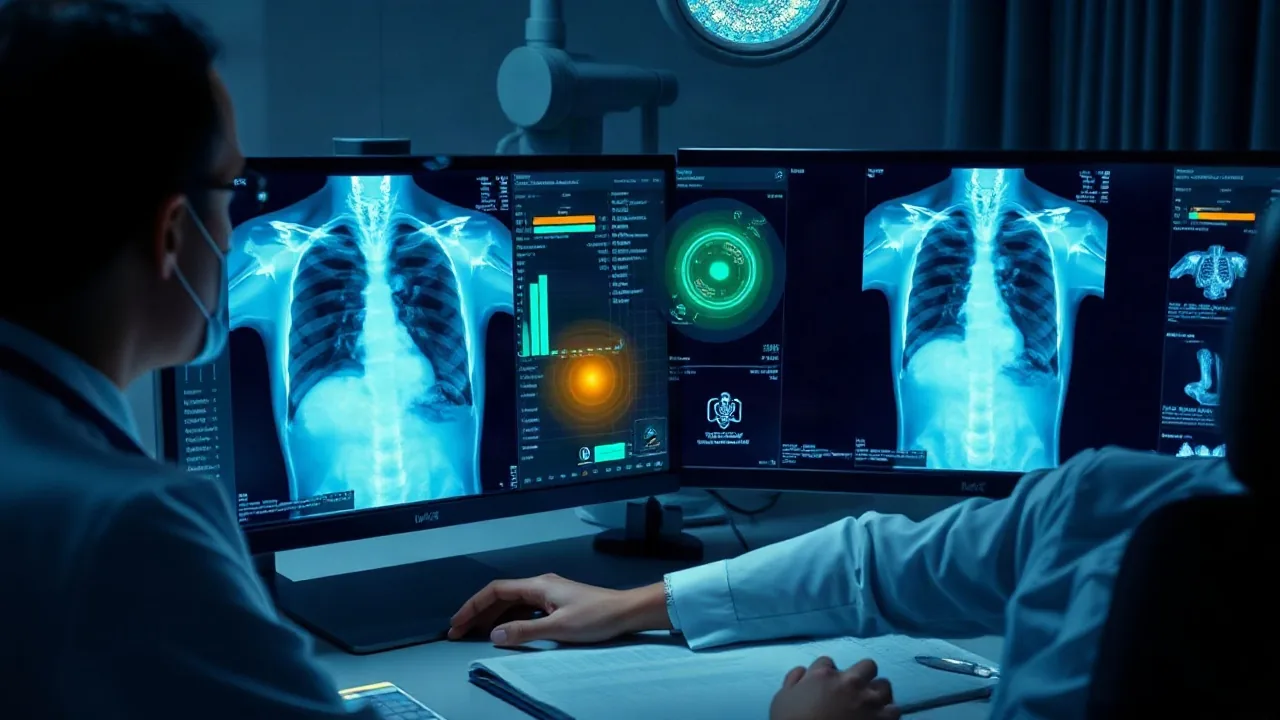
A radiologist at Johns Hopkins Medical Center in Baltimore spent 15 minutes reviewing a chest X-ray on Tuesday morning in late October 2026. An AI HealthTech platform flagged a subtle lung nodule within seconds, prompting immediate follow-up imaging that caught early-stage cancer. This scene now plays out hundreds of times daily across major US hospitals, marking a fundamental shift in how medical diagnosis operates in 2026.
The adoption curve has accelerated sharply this year. The American Medical Association reported in September 2026 that 68 percent of major teaching hospitals now deploy AI diagnostic assistants for radiology, pathology, and cardiology. Two years ago that figure stood at 31 percent.
How AI Systems Are Improving Diagnostic Accuracy
Healthcare technology firms have trained deep neural networks on millions of anonymized patient images and lab results. These systems learn patterns that human eyes often miss, particularly in early-stage cancers, cardiac abnormalities, and infectious diseases.
Dr. Sarah Chen, Chief of Diagnostic Radiology at Massachusetts General Hospital, told reporters in October 2026: "Our AI system caught a breast cancer case that our senior radiologist initially read as benign. The software identified microcalcifications at the boundary of normal variation. We now flag those cases for secondary review as standard protocol." Chen oversees deployment of AI in medicine across MGH's five-hospital network.
Quantifiable improvements are now documented. A peer-reviewed study published in the New England Journal of Medicine in July 2026 found that AI-assisted radiologists achieved 94 percent sensitivity for detecting early breast lesions, compared to 87 percent for radiologists alone. The same study showed diagnostic time fell from an average of 12 minutes to 4 minutes per case.
Key benefits emerging across health systems include:
- Reduced diagnostic errors in pathology slide analysis by 23 percent on average
- Faster turnaround on critical lab results (average 40 percent speedup)
- Consistent application of screening criteria across geographic regions
- Flagging of incidental findings that human readers might overlook during high-volume shifts
Patient Care and Efficiency Gains in Real Practice
The practical impact on patient care extends beyond speed. When diagnosis happens faster, treatment initiation accelerates. A Cleveland Clinic oncology unit reported in August 2026 that AI-assisted pathology reviews reduced the time from biopsy to treatment plan by an average of 8 days.
For patients with time-sensitive conditions like sepsis or myocardial infarction, this matters profoundly. Emergency departments at 47 hospitals in the Midwest now use AI-powered EKG and blood-culture analysis to flag high-risk patients within two minutes of arrival. Standard manual review took 12 to 18 minutes.
Workflow efficiency gains free up clinicians to focus on complex cases and patient communication. A survey of 340 radiologists conducted by the Radiological Society of North America in September 2026 found that 71 percent reported lower burnout since deploying AI assistants, citing reduced repetitive workload and more time for mentoring residents.
However, integration remains uneven. Rural hospitals and smaller clinics often lack infrastructure or capital to adopt these systems. The American Hospital Association estimates that only 18 percent of community hospitals under 200 beds currently operate AI diagnostic tools, compared to 89 percent of large academic centers.
2026 Medical Advancements and Remaining Challenges
Recent 2026 medical advancements in AI diagnostic systems show continued progress, but regulatory and training hurdles persist. The FDA cleared 47 new AI diagnostic algorithms in the first nine months of 2026, a pace that reflects both innovation and increased regulatory clarity.
Key advances introduced this year include multi-modal systems that integrate imaging, genomics, and clinical history into unified risk scores. Tempus AI and Google DeepMind published results in May 2026 showing that integrated oncology platforms improved treatment selection accuracy by 19 percent versus imaging alone.
Training requirements remain a friction point. Most clinicians did not learn AI-assisted workflows in medical school or residency. Hospitals report spending $40,000 to $120,000 per clinical site on staff retraining and change management. Integration with existing electronic health records systems often requires custom engineering, adding three to six months to rollout timelines.
Liability and accountability raise ongoing questions. When an AI system flags an abnormality that a clinician dismisses, who bears responsibility if harm occurs? Legal frameworks remain unsettled. The American Medical Association issued guidance in April 2026 stating that physicians retain final diagnostic authority and cannot defer clinical judgment to AI, yet many AI vendors market their tools as requiring minimal physician review.
Data privacy and algorithmic bias also demand continued attention. Algorithms trained predominantly on images from white and Asian populations show lower diagnostic accuracy on Black and Hispanic patients for certain cancers, according to research from Stanford published in June 2026. Health systems are now mandating bias audits before deploying new AI systems.
Investment in AI HealthTech continues to accelerate. Venture capital and corporate funding into US-based AI diagnostic companies reached $4.8 billion in the first half of 2026, according to CB Insights, with significant contributions from established players like Philips Healthcare and Siemens Healthineers acquiring smaller AI startups.
Looking ahead, the trajectory is clear. AI-assisted diagnosis is no longer experimental; it is becoming standard infrastructure at well-resourced hospitals. The challenge for 2026 and beyond is ensuring equitable access, robust training, and rigorous oversight as these systems become embedded in daily clinical practice across America.