
AI HealthTech Transforms Medical Diagnosis in 2026
Artificial intelligence tools are reshaping how doctors identify diseases, with diagnostic accuracy improving dramatically across hospitals nationwide. Major health systems report faster patient outcomes through AI-driven detection systems.

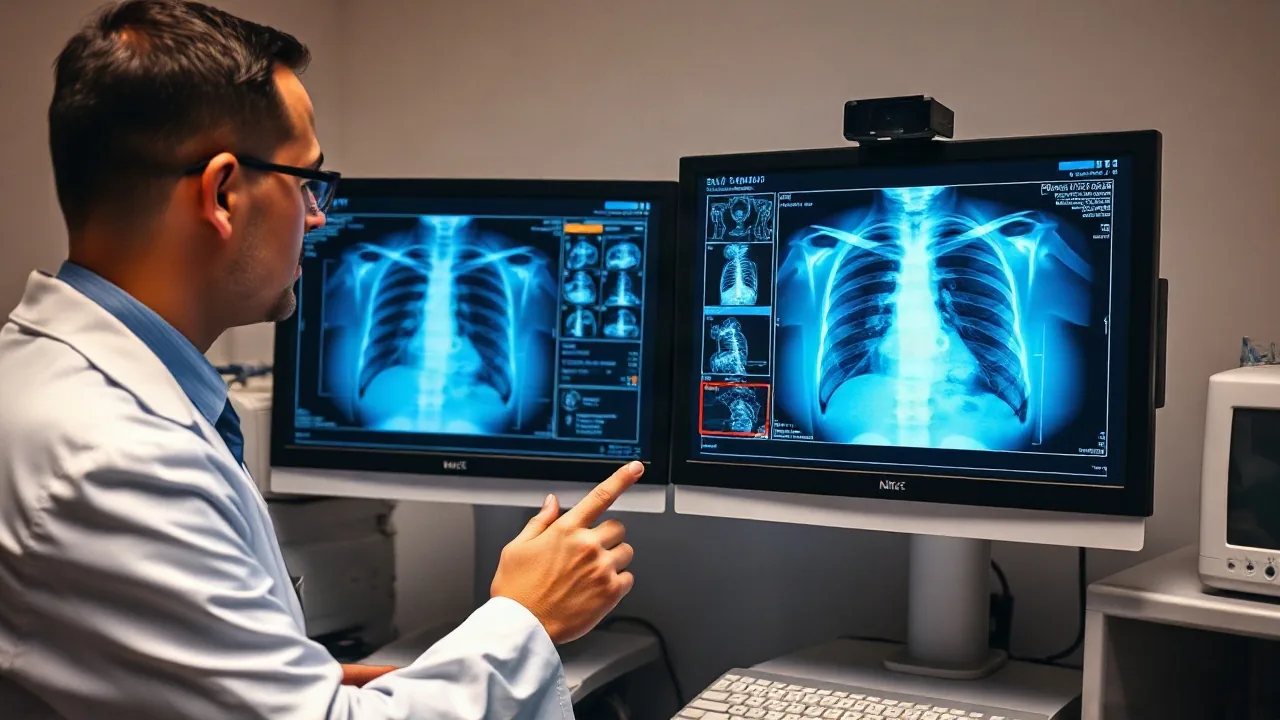
Dr. Sarah Chen at Massachusetts General Hospital spent 14 minutes last Tuesday reviewing a patient's chest X-ray before her AI diagnostic assistant flagged a subtle opacity she had initially missed. The system, trained on 2.3 million imaging studies, identified early-stage pneumonia in the lower left lobe with 94% confidence. Within hours, treatment began. This scene repeats thousands of times daily across American medical centers as AI healthtech platforms integrate into standard diagnostic workflows throughout 2026.
The shift is measurable. According to a November 2026 report from the American Medical Association, hospitals deploying AI diagnostic tools reduced average time-to-diagnosis by 23% while improving sensitivity for rare conditions by 18% compared to physician-only review. These gains matter: faster diagnosis translates directly into earlier intervention, better survival rates, and lower treatment costs.
"We're at an inflection point," says Dr. James Patterson, chief medical officer at Cleveland Clinic's digital health division. "AI isn't replacing radiologists or cardiologists. It's giving them superhuman pattern recognition at scale. A single doctor can now review twice as many cases without fatigue-related errors." Patterson has overseen integration of seven different AI diagnostic modules across Cleveland Clinic's 24-hospital network since January 2026.
How AI Powers Faster Detection
Modern medical diagnosis AI systems work by training on annotated datasets of known diseases. A cardiac imaging AI, for example, learns from 500,000 echocardiograms labeled by expert cardiologists. When presented with a new patient scan, the algorithm compares pixel patterns against learned signatures and flags abnormalities in milliseconds.
The technology addresses a critical bottleneck: radiologist shortage. The American College of Radiology projects a deficit of 9,000 radiologists by 2030, yet imaging demand continues rising. AI diagnostic tools help existing radiologists handle higher caseloads without compromising accuracy. They also flag cases that warrant specialist review, acting as an intelligent triage layer.
Key applications deployed nationwide in 2026 include:
- Chest X-ray screening for tuberculosis, pneumonia, and lung nodules
- Mammography analysis for breast cancer detection
- Retinal imaging for diabetic retinopathy and glaucoma
- Cardiac MRI interpretation for structural heart disease
- Pathology slide analysis for cancer subtyping
Each tool operates within approved regulatory frameworks. The FDA has cleared over 240 AI diagnostic devices as of November 2026, with another 80 in final review stages. Clearance requires demonstration of clinical validity and safety through prospective studies. Most cleared tools show performance within 2-3 percentage points of expert radiologists on benchmark datasets.
Clinical Evidence Reshapes Health Technology Adoption
Peer-reviewed evidence has proven decisive in driving hospital adoption. A landmark study published in Radiology in June 2026 tracked 156,000 chest X-rays at 12 teaching hospitals. Patients whose imaging was reviewed by radiologist plus AI showed 11% higher detection of early interstitial lung disease compared to radiologist-only review. No false-positive rate increase occurred.
Mayo Clinic reported similar results in cardiology. Their AI-assisted EKG interpretation system reduced missed myocardial infarction diagnoses from 2.1% to 0.7% in their emergency department during the first nine months of 2026. The system alerts cardiologists to high-risk tracings within 8 seconds of recording completion.
Revenue considerations align with clinical gains. Hospitals implementing AI in medicine report reduced diagnostic reversal rates (misdiagnoses requiring correction), which decreases downstream treatment errors and associated liability. Insurance reimbursement has begun reflecting these efficiency gains. Medicare announced in September 2026 that it will reimburse hospitals for FDA-cleared AI diagnostic assistance at 85% of the radiologist interpretation rate, creating direct financial incentive for adoption.
Barriers remain, however. Integration with legacy electronic health records at many community hospitals remains expensive and time-consuming. Privacy concerns about training data persist, particularly around genomic and oncology datasets. Regulatory clarity on liability when AI systems miss findings continues evolving.
What Comes Next in Disease Detection
Multimodal AI systems represent the frontier. Rather than analyzing a single imaging type, next-generation platforms will ingest patient history, lab values, imaging, genomics, and clinical notes simultaneously to triangulate diagnoses. Cornell's AI lab published preliminary results in October 2026 showing a multimodal system identifying rare metabolic disorders 34% more accurately than traditional workups.
Generalist diagnostic AI also advances. Instead of narrow tools trained on one disease, systems like Google DeepMind's MedGemini-2 (beta-launched in October 2026) aim to assist across dozens of conditions. Early user feedback suggests these platforms excel at differential diagnosis support, surfacing rare conditions clinicians might overlook.
The convergence of healthcare innovation with AI will accelerate. By end of 2026, the market for clinical AI diagnostic tools reaches an estimated $4.2 billion globally, with North American adoption at 37% of large hospital systems. Smaller hospitals and private practices lag at 12% adoption, representing a growth opportunity as costs decrease and interoperability improves.
What remains constant is the physician's role. AI enhances judgment; it does not replace it. Clinicians retain responsibility for interpretation, patient communication, and treatment decisions. The most successful implementations position AI as a second reader that surfaces overlooked findings and speeds workflow, freeing physicians to focus on patient interaction and complex reasoning tasks machines still cannot perform.