
New Research Explores Baby Consciousness
Recent scientific advancements are shedding new light on the complex question of whether infants possess consciousness, examining brain activity and developmental milestones to understand their inner world.

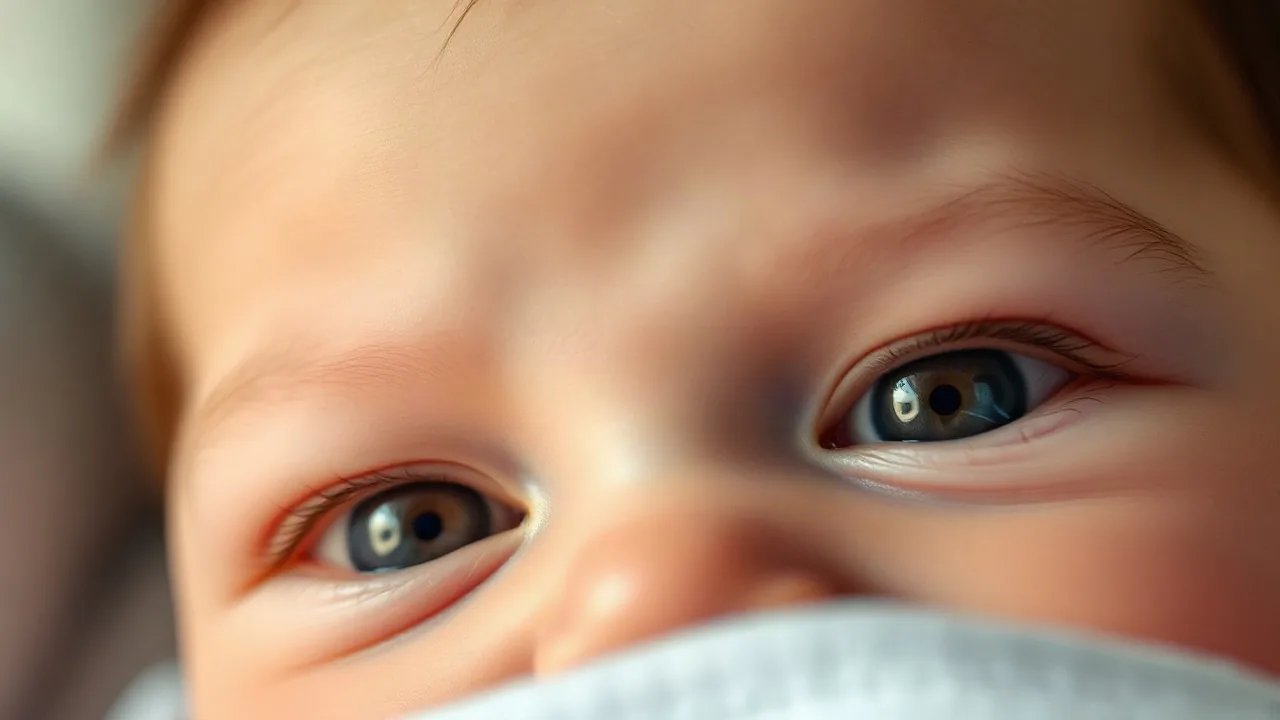
Scientists are increasingly probing the intricate question of whether infants are conscious, utilizing advanced neuroimaging techniques and behavioral studies to decipher the developing minds of the youngest humans. The ongoing research challenges long-held assumptions and seeks to establish a scientific basis for understanding early awareness. This exploration into infant consciousness is not merely an academic exercise but holds profound implications for infant care, developmental psychology, and even ethical considerations surrounding newborns.
Historically, the ability to form memories or exhibit self-awareness was considered a marker of consciousness, leading many to believe that infants, lacking these capabilities, were not truly conscious. However, modern neuroscience suggests a more nuanced view. Studies using electroencephalography (EEG) and functional magnetic resonance imaging (fMRI) are revealing sophisticated patterns of brain activity in newborns and even fetuses, indicating that complex neural processing is occurring. Researchers are observing responses to external stimuli, the development of sensory processing, and early forms of learning, all of which could be interpreted as precursors or manifestations of consciousness.
Understanding the Developing Brain
The investigation into baby consciousness is complex due to the inherent challenges in directly communicating with non-verbal subjects. Researchers rely on indirect measures, correlating observed behaviors with neural activity. For instance, studies have shown that infants can differentiate between their mother's voice and a stranger's, and exhibit distinct physiological responses to pleasant and unpleasant stimuli. Dr. Evelyn Reed, a leading developmental neuroscientist at Stanford University, stated, "We are seeing evidence of sophisticated neural networks activating in response to the environment, suggesting an emergent awareness that goes beyond simple reflexes. The question is no longer *if* they are conscious, but *how* they are conscious."
Contextualizing this research requires understanding the rapid pace of brain development in the first year of life. The human brain triples in size from birth to age one, forming billions of neural connections. Neuroscientists hypothesize that consciousness might not be an all-or-nothing phenomenon but rather an emergent property that develops gradually alongside these neural structures. This perspective suggests that even rudimentary forms of consciousness, characterized by basic sensory experience and emotional states, may be present in infants.
The ethical dimensions of this research are also significant. If infants are indeed conscious, even in a nascent form, it impacts how medical professionals and parents should interact with them, particularly in sensitive situations like neonatal intensive care. Understanding their potential capacity for suffering or experiencing the world could lead to changes in pain management protocols and the overall approach to infant well-being. The ongoing consciousness research is pushing the boundaries of our understanding of the mind.
Further studies are exploring the role of sleep cycles in infant consciousness, as REM sleep, a period associated with vivid dreaming in adults, constitutes a significant portion of an infant's sleep. Researchers are also examining the development of interoception – the sense of the internal state of the body – and its potential link to subjective experience. The ultimate goal is to build a comprehensive picture of the infant's inner life, moving beyond the confines of behavior to grasp the subjective reality of early existence. This evolving scientific narrative promises to reshape our perception of infancy.