
Human Embryo Models Face Reality Check on Development Accuracy
New research highlights discrepancies between lab-grown human embryo models and actual embryonic development. Scientists are working to refine these models for a better understanding of early human life.

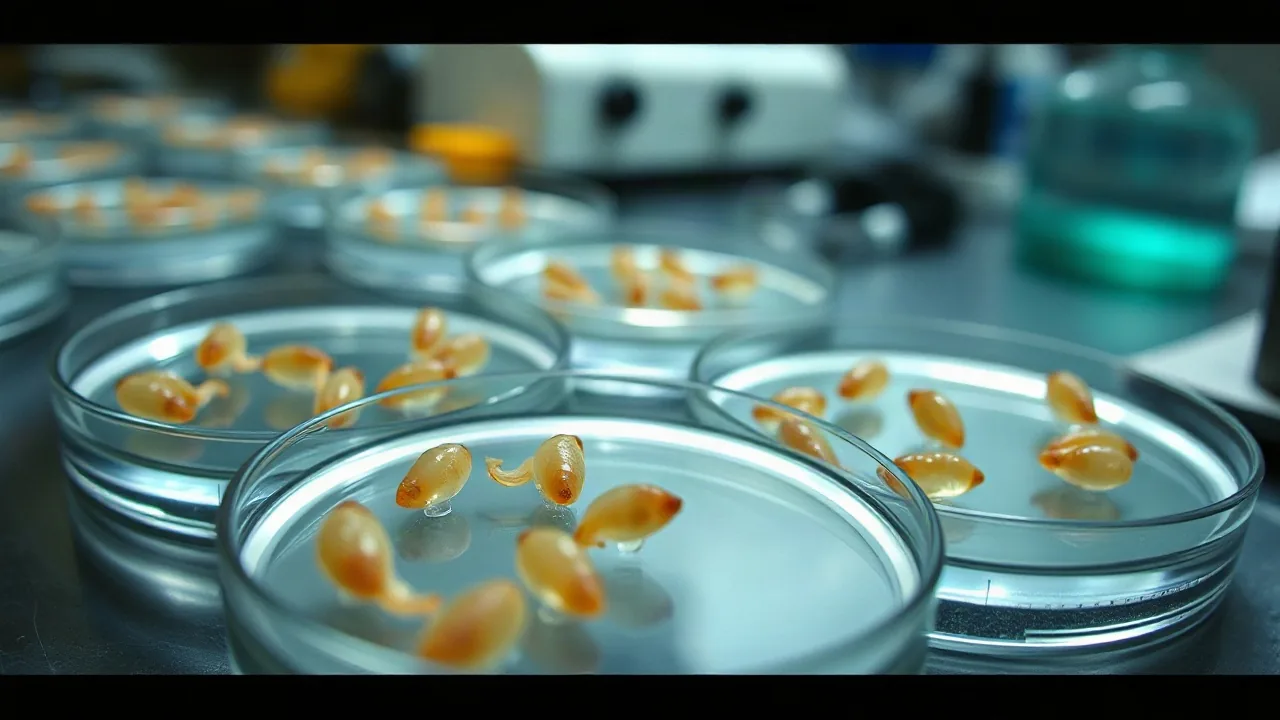
Scientists are urging a 'reality check' for increasingly sophisticated lab-grown human embryo models, as new computational benchmarks reveal significant gaps between these artificial structures and natural human development. While these models offer unprecedented opportunities to study the earliest stages of life, researchers caution that they do not yet fully replicate the complex biological processes occurring in vivo. The findings, published recently, underscore the ongoing challenges in accurately simulating human embryogenesis outside the body.
These advanced models, some of which mimic the appearance of embryos just days after fertilization, are crucial for understanding developmental disorders, infertility, and the effects of environmental factors on pregnancy. However, a new computational benchmark analysis has indicated that current models fall short in replicating key molecular and cellular dynamics that define early human development. This gap means that insights gleaned from these models may not perfectly translate to real-world scenarios, necessitating further refinement and caution in their interpretation.
Advancements and Limitations in Embryo Modeling
The development of these lab-grown models has accelerated rapidly, with researchers creating structures that resemble blastocysts—a critical stage of early embryonic development occurring about five to seven days after fertilization. These models, often derived from stem cells, have been engineered to exhibit many of the structural features and gene expression patterns observed in natural human embryos. For instance, specific studies have successfully guided stem cells to organize into structures that possess distinct cell types and organize in ways analogous to the developing embryo. This has opened doors for studying processes previously inaccessible due to ethical and practical limitations on observing early human development.
Despite these remarkable achievements, the recent computational benchmark study revealed that significant differences persist. The analysis compared gene expression data and cellular organization in both lab-grown models and naturally developing human embryos. It found that while some key developmental pathways are mirrored, others diverge considerably. This divergence is particularly noted in the precise timing of cellular differentiation and the establishment of crucial signaling centers that direct subsequent development. Dr. Sarah Chen, a lead researcher on the benchmark study, stated, "Our analysis shows that while we are getting closer, these models still don't capture the full spectrum of developmental events as they unfold naturally. There are subtle but important differences in gene regulation and cellular communication that need to be addressed."
The implications of these discrepancies are far-reaching. If the models do not accurately reflect natural development, conclusions drawn about human embryogenesis, potential drug testing, or the impact of environmental toxins could be skewed. This underscores the need for continuous validation and improvement of the models against real human embryonic data. The scientific community is now focused on incorporating more complex cellular interactions, extracellular matrix components, and precise temporal controls to enhance the fidelity of future models. The goal is to create systems that not only look like early embryos but also behave like them, providing a more reliable platform for scientific inquiry.
This ongoing research into human embryo models is vital for advancing reproductive medicine and our understanding of human origins. As technology progresses, scientists aim to bridge the gap between artificial constructs and natural biological processes, ensuring that future studies contribute accurate and actionable insights into the fundamental mechanisms of human development.