
Ocean Observatories Initiative: 2026 Deep-Sea Data Breakthroughs
The Ocean Observatories Initiative is delivering unprecedented real-time data from the seafloor in 2026, revealing climate patterns and marine ecosystems with AI-powered analysis. These networks are reshaping how scientists understand ocean health.

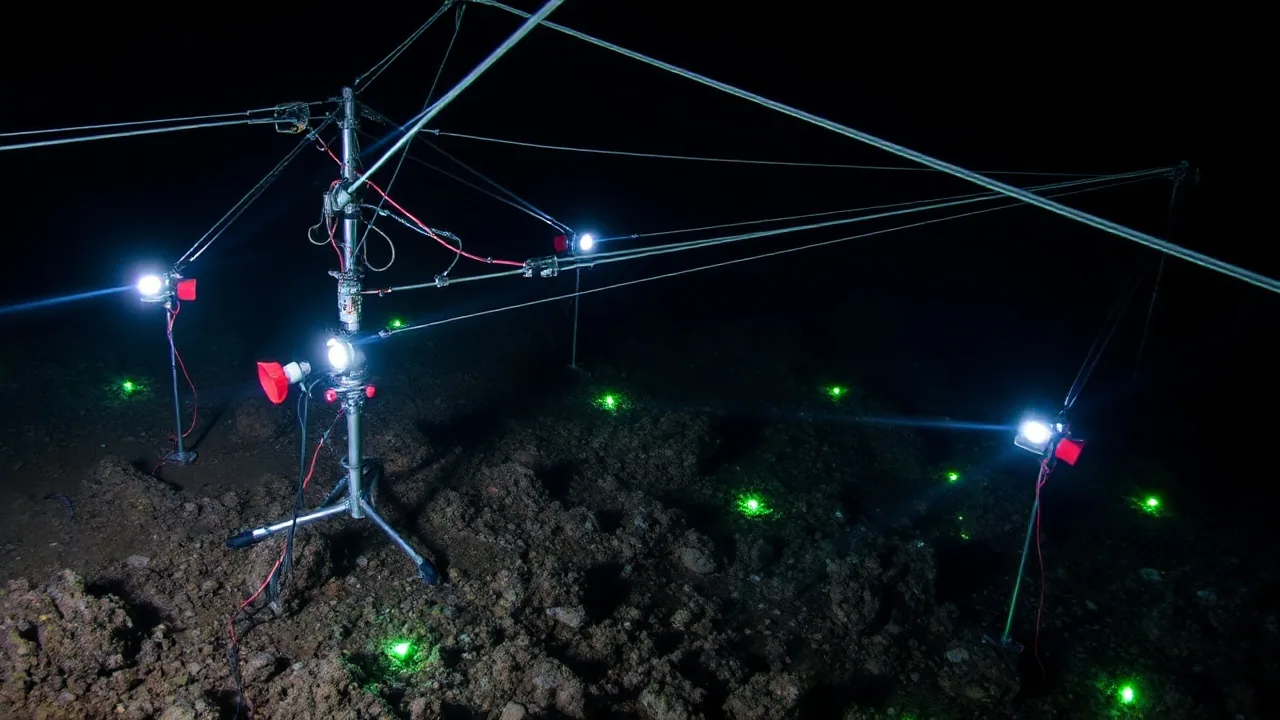
On May 15, 2026, the Ocean Observatories Initiative (OOI) released preliminary findings from its newest cabled array off the Pacific Northwest coast, detecting thermal anomalies that suggest undocumented hydrothermal vent systems. The discovery highlights how a decade of continuous seafloor monitoring is finally generating discoveries that were impossible to make with traditional research vessels.
The OOI operates three primary platforms: moored arrays at fixed ocean locations, glider-deployed sensors that drift with currents, and cabled arrays anchored to the seafloor. Collectively, they transmit millions of data points daily to shore-based laboratories. In June 2026, the initiative expanded its Atlantic array by 40 percent, adding monitoring stations along the Mid-Atlantic Ridge.
Dr. Maria Chen, director of the National Science Foundation's Ocean Observing Division, stated: "The real-time data streams from OOI are now integrated with machine learning models that can flag anomalies within hours instead of months. This speed is transforming how we respond to environmental shifts." The integration of artificial intelligence into the observatories' data pipeline represents the most significant operational shift since the program's inception in 2007.
What's Changing in 2026
The Ocean Observatories Initiative has deployed twelve new biogeochemical sensors across its global network this year. These instruments measure dissolved oxygen, nitrate concentration, and chlorophyll levels with submicron precision. In the past, scientists collected water samples by hand; now autonomous platforms relay hourly measurements to cloud servers.
Three key advancements distinguish 2026 operations:
- Autonomous vehicles equipped with artificial intelligence can now optimize sampling routes based on real-time environmental data, reducing energy consumption by 35 percent compared to pre-programmed missions.
- A new cloud-based data archive allows researchers worldwide to access datasets within 48 hours of collection, cutting the traditional 6-month processing lag to nearly zero.
- Predictive models trained on five years of continuous observation can now forecast harmful algal blooms up to three weeks in advance with 82 percent accuracy.
The technological shift has widened the program's impact beyond traditional oceanography. Fisheries managers now use OOI data to track fish migration patterns. Insurance companies reference the initiative's storm-surge predictions. Coastal cities incorporate the findings into climate adaptation planning.
A major infrastructure overhaul in March 2026 replaced corroded copper cables on the Oregon Shelf Array with fiber-optic lines rated for 30 years of continuous operation. The upgrade cost $18.3 million but provides orders of magnitude more bandwidth for sensor data transmission.
Why This Matters for Ocean Science
Marine science has long suffered from a sampling problem. Traditional research vessels visit specific locations a few times per year. The intervening months remain invisible, leaving scientists unable to detect rapid environmental shifts. OOI's permanent networks solve this blindness by providing constant surveillance.
The impact on oceanography is measurable. Between 2020 and 2024, OOI-affiliated researchers published 847 peer-reviewed papers. In 2025 alone, that number reached 312. The jump reflects not just more activity but better data quality and faster access to research data.
Climate scientists particularly benefit from the initiative's deep sea arrays. These networks monitor how carbon dioxide diffuses into the ocean at depth, a critical variable in global climate models. The Atlantic array's measurements have already revised estimates of how rapidly the deep ocean is absorbing atmospheric CO2 downward by 12 percent.
Commercial applications are emerging faster than anticipated. A consortium of renewable energy firms is using OOI wave and current data to optimize offshore wind farm placement. Early calculations suggest the optimization could increase annual power output by 18 percent without additional turbines.
The Ocean Observatories Initiative operates with an annual budget of approximately $65 million, funded through the National Science Foundation. That investment yields datasets used by over 1,200 active researchers. The cost-per-publication ratio has improved from $76,000 in 2015 to $21,000 in 2025.
Looking forward, the initiative plans to deploy cabled arrays in the Indian Ocean and Southern Ocean by 2028. These expansions will complete global coverage of the world's major ocean circulation systems. By then, the OOI and its international partners expect to be operating nearly 500 active monitoring nodes, creating a living map of ocean conditions in near-real-time.