
Zohran Mamdani on AI's Role in Political Discourse
New York State Assemblymember Zohran Mamdani examines how artificial intelligence is reshaping political communication and public opinion formation in 2026.

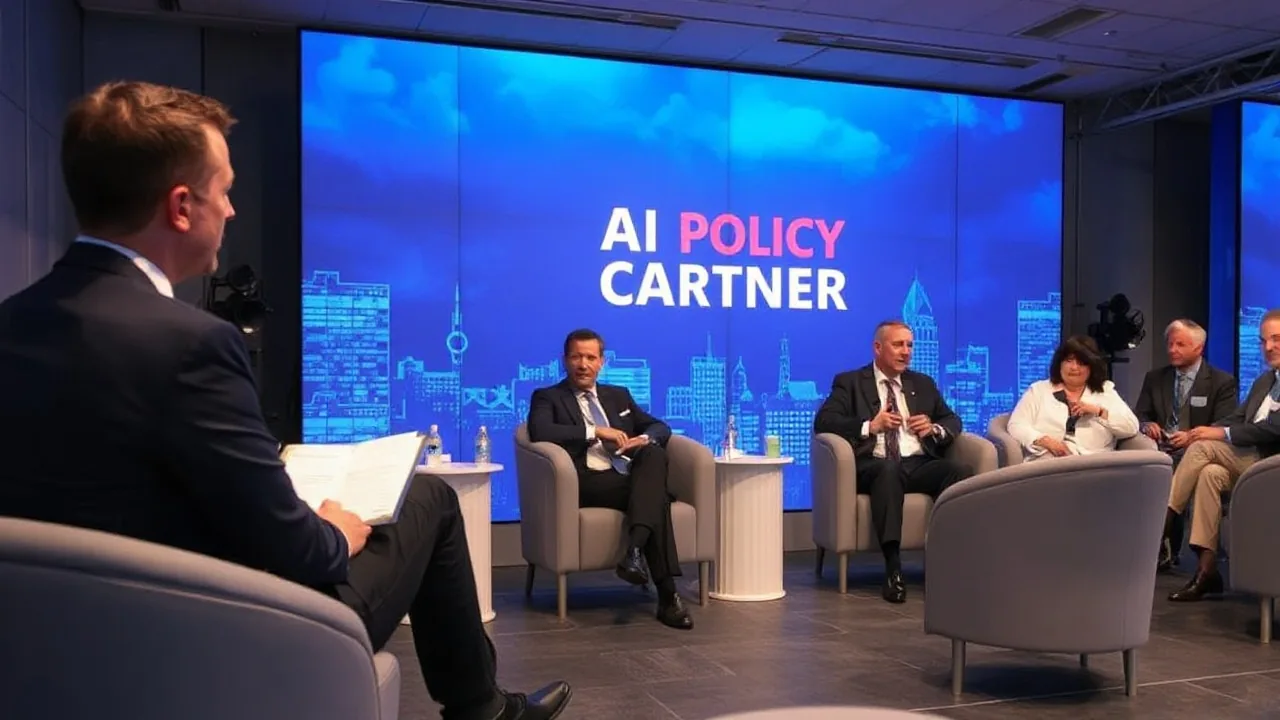
Zohran Mamdani, a New York State Assemblymember and political strategist, has become an increasingly visible voice analyzing how artificial intelligence is fundamentally altering the landscape of political discourse. His work intersects technology policy, electoral strategy, and civic engagement, offering practical insight into the mechanisms by which AI systems influence how Americans form political opinions and consume political content.
In interviews and public statements throughout 2026, Mamdani has highlighted the immediate effects of algorithmic amplification on political messaging. He emphasizes that the concentration of AI-driven content curation in the hands of a few major platforms creates asymmetric advantages for well-funded campaigns and well-connected political figures.
How AI Reshapes Political Communication
The deployment of machine learning models in political advertising and voter targeting has accelerated dramatically since 2024. Mamdani argues that these systems operate with minimal transparency, allowing campaigns to test thousands of message variations simultaneously and serve them only to voters most likely to respond. "What we're seeing is the industrialization of political persuasion," Mamdani stated in a 2026 policy forum. "AI doesn't just deliver messages; it learns which messages work on which individuals and optimizes for engagement, not truth."
This algorithmic targeting raises urgent questions about public opinion formation. When different voter segments see entirely different versions of a candidate's platform, traditional democratic accountability becomes difficult. A voter in Brooklyn may encounter a progressive economic message, while a voter in rural upstate New York sees the same candidate emphasizing law-and-order themes. Neither sees what the other sees, fragmenting the shared factual basis necessary for democratic deliberation.
Mamdani has specifically critiqued the lack of disclosure requirements around AI-generated or AI-modified political content. Campaign videos enhanced with deepfake technology, AI-written op-eds, and synthetic audio endorsements circulate with minimal labeling. The Federal Election Commission, he argues, has failed to establish clear rules governing these tools.
The Problem of Scale and Speed
One of Mamdani's central concerns is the sheer velocity and volume at which AI-powered political discourse can operate. A single AI system can generate thousands of unique pieces of campaign content, each calibrated for micro-targeted voter segments, in hours. Human fact-checkers, journalists, and voters cannot keep pace with this scale.
He points to documented cases from 2025 and 2026 where AI-generated misinformation spread through networks faster than corrections could circulate. Automated accounts amplified false claims about voting procedures, candidate positions, and election integrity. By the time mainstream media outlets had verified the claims as false, the false narratives had already shaped perceptions among millions of users.
The speed problem compounds in primary elections, where candidates have limited resources and must make rapid decisions about which voter outreach tactics work. AI systems promise to optimize this instantly. "But optimizing for engagement often means optimizing for divisiveness," Mamdani has cautioned. "The algorithm learns that controversy drives clicks, so it amplifies the most polarizing content."
What Change Might Look Like
Mamdani advocates for a regulatory framework that includes disclosure of AI involvement in political communications, independent audits of campaign targeting systems, and public funding mechanisms to reduce reliance on algorithmic micro-targeting. He has also called for stronger transparency requirements on platforms themselves, including algorithmic impact assessments specific to political content.
His policy recommendations center on three pillars:
- Mandatory labeling of AI-generated or AI-modified political content, similar to existing requirements for paid advertising
- Regular audits of campaign AI systems by independent third parties, with results made public
- Investment in public communication infrastructure that doesn't depend on algorithmic recommendation systems
Mamdani has also worked with technology ethicists and election officials to explore technical solutions. These include detection systems for synthetic media, algorithmic circuit-breakers that limit amplification of unverified claims, and voter education campaigns to help citizens recognize AI-influenced content.
Critics argue his proposals go too far and risk constraining campaign innovation. Tech industry advocates contend that disclosure requirements and audits create compliance burdens that disadvantage smaller, grassroots campaigns. Mamdani's counterargument is that the current system already disadvantages grassroots movements by concentrating power in the hands of wealthy campaigns with sophisticated data operations.
As of August 2026, several states have begun exploring legislation aligned with Mamdani's recommendations. Colorado and Virginia have passed limited transparency requirements for campaign AI use. Federal legislation remains stalled in Congress, caught between technology industry lobbying and genuine disagreement about implementation.
Mamdani's work reflects a broader shift in how political operatives, technologists, and policymakers are grappling with AI's role in elections. Unlike earlier concerns about social media echo chambers, the focus now is specifically on the capability of AI systems to generate, target, and amplify political content at scale. His analysis does not argue that AI in politics is inherently dangerous, but rather that deploying these powerful tools without transparency and accountability creates conditions for manipulation and erosion of democratic deliberation.