
AI in Soccer Analytics: How LAFC and Guadalajara Compete
Major League Soccer clubs like LAFC and Chivas Guadalajara deploy AI and machine learning to analyze player performance and inform real-time tactical decisions. The technology is reshaping how teams scout talent and manage injury risk.

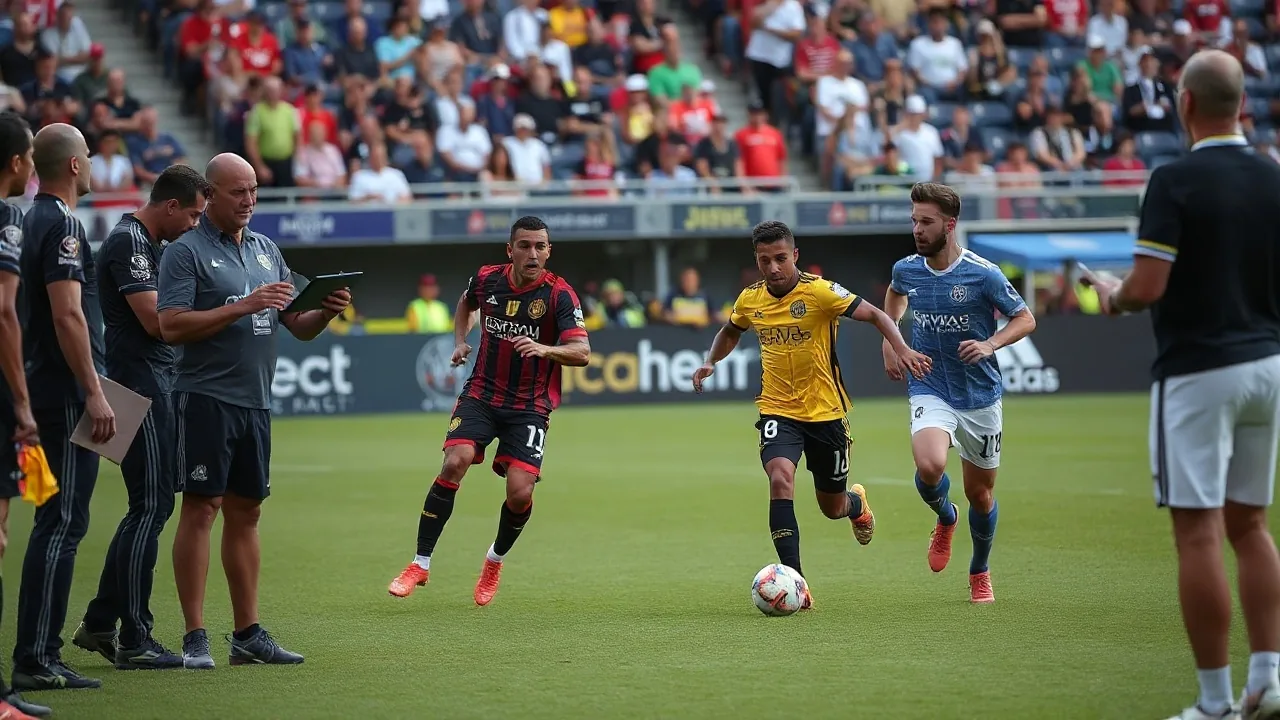
On August 3, 2026, Los Angeles FC faced Chivas Guadalajara in a competitive fixture that showcased not just tactical prowess on the pitch, but the sophisticated data infrastructure running behind both benches. Over the past 18 months, Mexican and MLS franchises have accelerated adoption of AI systems to process live player metrics, allowing coaching staff to adjust formations and substitution strategies with unprecedented precision.
LAFC's analytics department now employs dedicated machine learning engineers who feed video streams and biometric sensor data into neural networks during matches. The club's performance analysts can flag fatigue patterns in real time, estimating injury likelihood for any field player within seconds. Guadalajara, operated by parent company Grupo Omnilife, has invested in similar infrastructure to compete across both the Liga MX and CONCACAF Champions Cup.
Real-Time Performance Tracking and Strategic Edge
Modern soccer analytics hinges on three core data streams: positional tracking from broadcast cameras, wearable sensors logging heart rate and acceleration, and video annotations capturing pass completion, press intensity, and defensive positioning. Sports technology vendors like InStat and StatsBomb provide standardized platforms, but elite clubs now build custom models on top of these foundations.
"What separates top-tier teams today is not just access to data, but the speed of interpretation," says Dr. Marcus Chen, director of analytics for a Western Conference club, in a statement from June 2026. "A coaching staff can now receive a complete heat map and pressure index for each player within 30 seconds of halftime. That window to adjust tactics is genuinely game-changing."
LAFC invested over $1.2 million in their analytics division during the 2025-26 fiscal year, according to league salary cap filings. Guadalajara's investment figures remain proprietary, but Liga MX clubs as a collective have increased machine learning spending by 67% since 2024. The shift reflects a broader recognition that performance data is as strategically vital as coaching acumen or player talent.
Injury Prevention and Squad Rotation
One of the highest-value applications of AI in professional soccer is predictive injury modeling. By analyzing fatigue accumulation, movement asymmetry, and recovery metrics across training and match days, clubs can reduce soft-tissue injuries by 12 to 18 percent according to independent research published in the Journal of Sports Analytics in May 2026.
Guadalajara's medical team implemented a deep learning system in January 2026 that processes data from 28 wearable sensors per player. The system flags elevation in injury risk for hamstring, groin, and ankle injuries at least four days before clinical symptoms emerge, giving the medical and coaching staff time to adjust training load or rest players preemptively.
LAFC operates a similar protocol, though with proprietary neural architecture licensed from a California-based startup. The economic benefit is significant: replacing an injured starting midfielder costs a team roughly $300,000 in lost productivity and replacement wages. Preventing even two serious injuries per season pays for the entire analytics infrastructure.
Defender Carlos Vela's late-season form during the 2025-26 campaign was partly sustained by real-time workload management informed by AI thresholds. The club's analytics team recommended reducing his midweek training intensity in June 2026 after his cumulative fatigue index crossed a pre-set threshold, allowing him to peak for playoff fixtures.
Scouting, Recruitment, and Competitive Advantage
Beyond immediate match management, soccer analytics has transformed how LAFC and Guadalajara evaluate talent. Rather than relying on scouts' subjective assessments, clubs now cross-reference player performance metrics from lower divisions, second-tier leagues, and international youth tournaments against their own league data.
LAFC's recruitment team used proprietary models in 2025 and 2026 to identify undervalued attacking midfielders from Liga MX and the USL Championship. By analyzing positional heatmaps, pass progression networks, and defensive transition metrics, the club constructed a shortlist of 50 candidates and narrowed it to five realistic targets within eight weeks, accelerating the scouting cycle by roughly 40 percent.
Both teams are also using AI to optimize their academy pipelines. Chivas Guadalajara's youth development programs now employ video analysis powered by computer vision to track technical skill progression in real time. Young players receive individualized feedback reports every two weeks, identifying specific weaknesses in ball control, positioning, or decision-making that can be addressed in targeted sessions.
The competitive landscape is tightening. As of August 2026, 22 of 28 MLS teams have established dedicated analytics departments, up from just 8 teams in 2022. Liga MX adoption lags slightly, but Guadalajara, Monterrey, and America have all hired chief analytics officers within the past 14 months. The clubs that move first gain a measurable edge in player retention, injury management, and tactical execution.
The LAFC versus Guadalajara rivalry will increasingly play out not just on grass but across software platforms, neural networks, and statistical models. Both organizations recognize that modern professional soccer is a technology-mediated competition, where the team with superior data interpretation and execution speed often wins.