
Apple's New Siri AI Finally Delivers Key Calendar & Email Features
Apple's upgraded Siri, powered by new AI, can now add events from emails and flyers to your calendar, a feature long sought by parents. Initial tests show it successfully handles context from personal data.

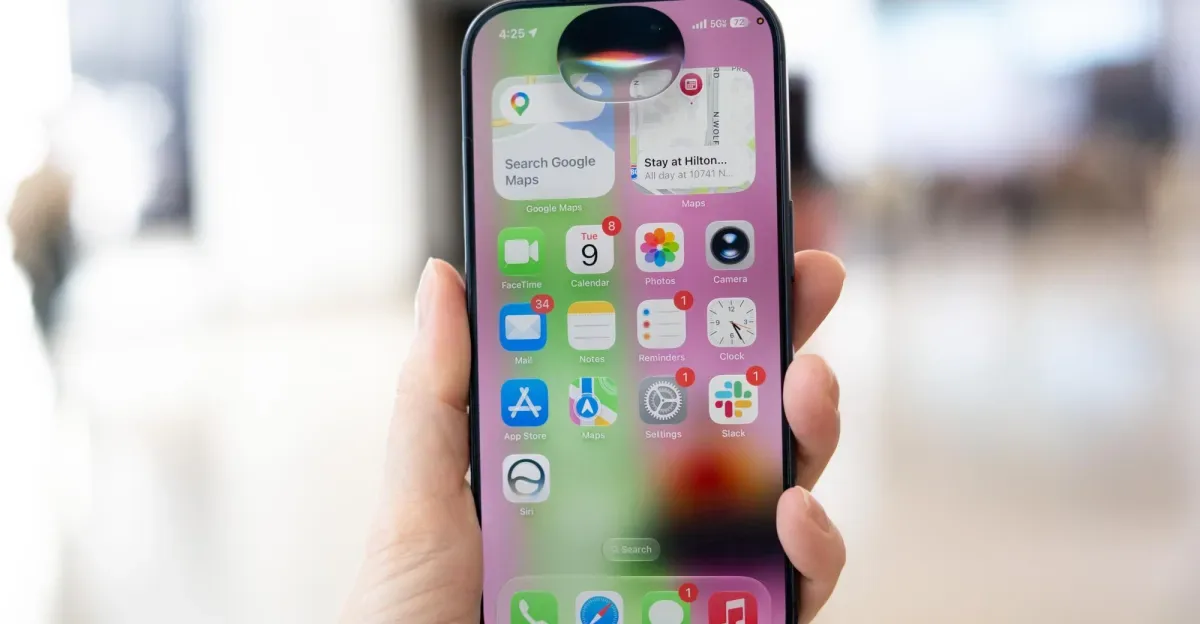
Apple's long-awaited AI-enhanced Siri is now demonstrating a crucial capability: the ability to efficiently manage personal schedules by extracting and organizing events from emails and digital flyers directly onto a user's calendar. Following a previous misstep with its initial AI rollout, the tech giant is relaunching its virtual assistant with significant upgrades, allowing Siri to engage in more complex conversations, diagnose potential gardening issues, and assist with tasks like creating shopping lists.
For iPhone users, particularly parents juggling numerous commitments, this new Siri can interpret information from emails or even poorly formatted flyers to populate a calendar in a single step. During initial testing, this feature proved reliable, accurately identifying and adding multiple events, a function that has been a significant gap in previous iterations. Beyond calendar management, the upgraded Siri can now offer advice on a wilting garden, generate a shopping list for a hardware store, and set reminders for seasonal maintenance.
Contextual Awareness and Privacy
The enhanced Siri draws its intelligence from Apple's proprietary systems, leveraging an on-device data pool that includes information from emails and messages. This indexed data allows Siri to retrieve relevant details contextually. For prompts that exceed on-device capabilities, data is routed to Apple's Private Cloud Compute, with only pertinent personal information transmitted. This approach contrasts with competitors like Google's Gemini, which typically requires explicit user opt-in to access specific personal data sources like Gmail or calendars directly. The success of this new Siri hinges significantly on its capacity for contextual understanding, a test it has reportedly passed in initial trials. For instance, when asked about the return date for rented camera gear, Siri successfully retrieved the information from both a calendar entry and an email, confirming the deadline as Friday.
The AI's ability to interpret commands like "add these events to my calendar" reliably triggers its contextual referencing capabilities. Early interactions suggest strong guardrails are in place, with Siri declining inappropriate or speculative requests by stating, "I can't help you with that." In terms of conversational style, the new Siri presents a more dispassionate tone compared to Gemini, which might offer more empathetically framed responses. When presented with the same query about wilting flowers, Siri provided a direct diagnostic approach, while Gemini began with a more sympathetic acknowledgement of the user's potential frustration.
The assistant also demonstrated adeptness in handling follow-up requests. When prompted to find a garden center "near home," it provided a relevant suggestion and proceeded to create a new reminder list with checklist items for garden rehabilitation, alongside adding a calendar event—all initiated from a single prompt. While these functionalities may seem basic, their successful implementation marks a significant advancement for Siri, especially after past unmet promises.
The integration of this AI-powered Siri is noticeable across the iPhone interface. A prominent "search or ask" prompt now appears with a blinking cursor when swiping down on the homescreen, a subtle invitation to engage with the assistant. Furthermore, long-pressing the wake button summons Siri directly from the Dynamic Island, a more integrated experience than the previous screen-bordering interface. These changes collectively foster a sense of constant, unobtrusive availability.
This iteration of Siri appears to be designed with a focus on reliability and delivering on core promises, avoiding the ambitious overreach that characterized earlier announcements. While it may not yet offer the full range of services seen in some competitor AI assistants, its ability to perform advertised functions accurately is a major step forward for Apple. For a company that faced skepticism after failing to deliver on previous Siri advancements, the confirmation that "it works" and "will actually ship to customers" are critical milestones. Currently in developer beta, this version of Siri feels more concrete and functional than its predecessor. Based on early observations, this development represents a crucial stride in Apple's effort to rebuild user trust in its virtual assistant technology.