
SpaceX Completes Triple Rocket Launch Milestone
SpaceX achieved a remarkable feat by launching three rockets within a 13-hour window, showcasing its accelerated launch cadence and expanding capabilities in both cargo and crewed missions.

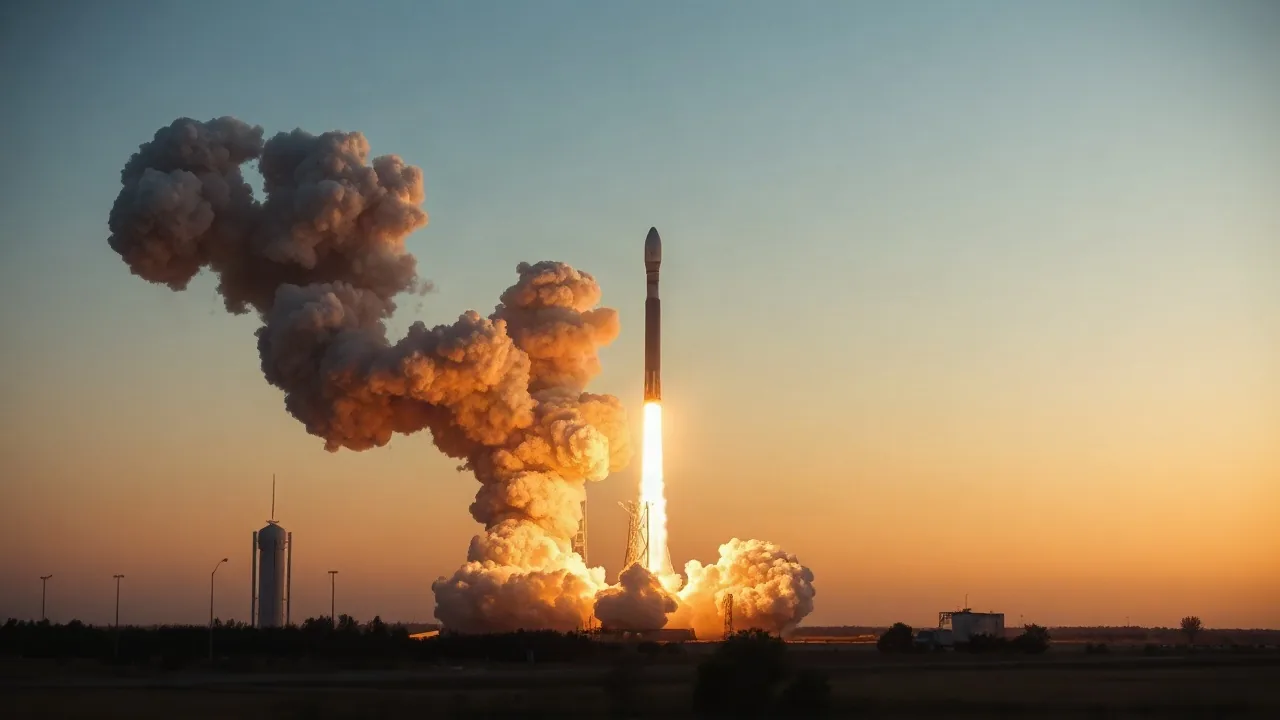
SpaceX executed a rapid succession of three rocket launches within a compressed 13-hour period, demonstrating an unprecedented operational tempo for the private aerospace company. The ambitious launch schedule included missions ferrying both cargo and astronauts to the International Space Station, underscoring SpaceX's growing capacity and efficiency in the spaceflight sector.
The first launch saw the company's Falcon 9 rocket lift off from Cape Canaveral Space Force Station in Florida, carrying a payload of vital supplies and scientific experiments to the orbiting laboratory. Shortly after, another Falcon 9 ascended from the same location, this time carrying the latest crew rotation for the station. This second launch was particularly noteworthy for its speed, marking one of the quickest crewed flights from the United States to the station in recent history.
The third and final launch in this series occurred within the 13-hour timeframe, further solidifying SpaceX's ability to manage multiple complex operations concurrently. This triple launch event highlights the company's advancements in reusable rocket technology and its sophisticated mission planning and execution capabilities. These successes are critical for maintaining a consistent presence in low Earth orbit and supporting ongoing scientific research aboard the space station.
SpaceX's Evolving Mission Profile
The strategic importance of these frequent launches extends beyond mere operational milestones. SpaceX, under the leadership of Elon Musk, has consistently pushed the boundaries of commercial spaceflight. Its reusable rocket technology has drastically reduced the cost of access to space, enabling more frequent and ambitious missions. The company's contracts with NASA for crew and cargo transport are vital to the agency's operations, ensuring the continuous staffing and resupply of the International Space Station. These recent launches are part of an ongoing effort to support the station's research activities, which span a wide range of scientific disciplines, from biology and human physiology to materials science and Earth observation.
The operational cadence achieved by SpaceX is a testament to its engineering prowess and its commitment to increasing launch frequency. This capability is not only crucial for NASA's long-term space exploration goals but also positions SpaceX as a dominant player in the global launch market, attracting commercial satellite deployment contracts and paving the way for future ventures like the Starship program. The ability to launch multiple missions in such a short span suggests a highly optimized ground support infrastructure and a robust manufacturing pipeline for its rockets.
Looking ahead, SpaceX is focused on expanding its capabilities further. The development of its massive Starship vehicle is intended to enable even more ambitious missions, including lunar and Martian exploration. The company's current launch success rate and its increasing operational tempo with the Falcon 9 and Falcon Heavy rockets provide a strong foundation for these future endeavors. Investors and industry observers will be closely watching how SpaceX leverages this accelerated launch capability to secure new contracts and advance its long-term vision for space colonization and resource utilization.