
SpaceX Stock Analysis: Aerospace Growth and Investment Outlook
SpaceX remains privately held in 2026, but its valuation and contracts shape the broader aerospace investment landscape. Analysts track the company's NASA partnerships and Starlink revenue as signals for the sector's future.

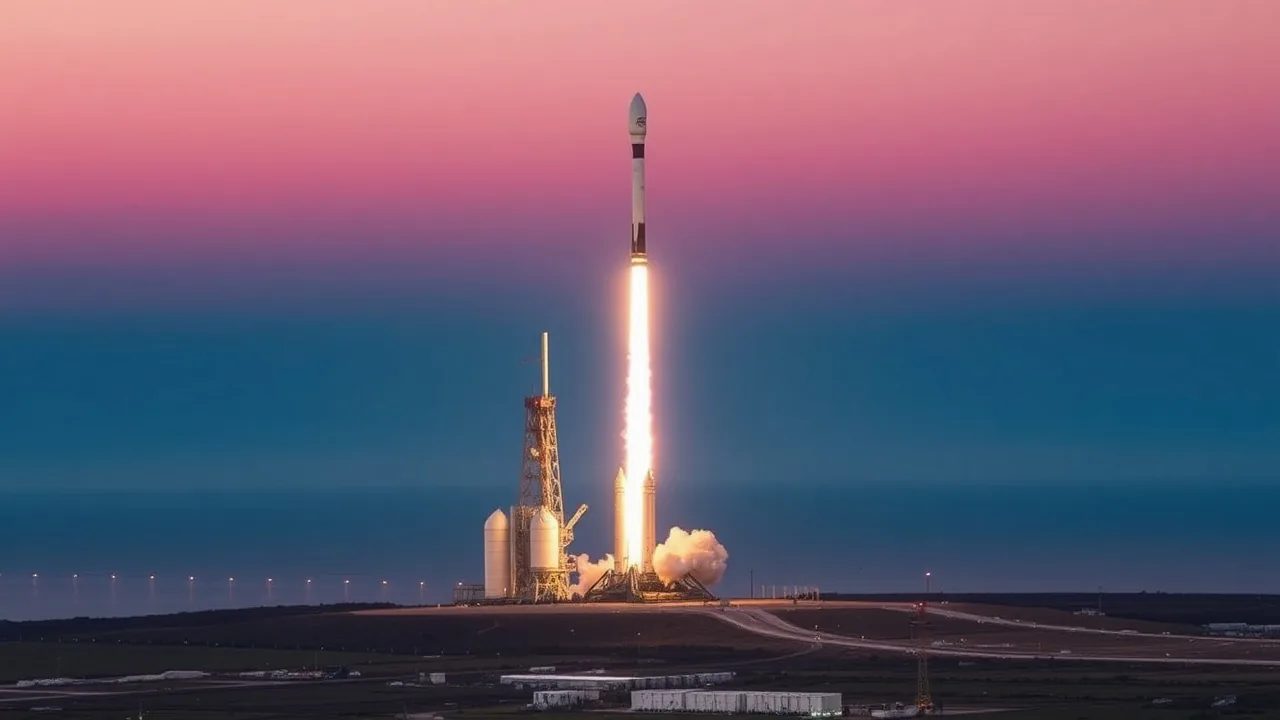
SpaceX has never gone public, and despite recurring speculation about an initial public offering, the company maintains its private status as of July 2026. Yet investors watching the aerospace sector closely monitor Elon Musk's rocket manufacturer because its contracts, launch cadence, and revenue milestones influence valuations across publicly traded aerospace firms and guide capital flows into the industry.
The company's influence on aerospace investment stems from its demonstrated ability to reduce launch costs and accelerate development timelines. SpaceX completed over 60 orbital launches in 2025 and has maintained that pace into 2026, far outpacing traditional providers. This operational momentum affects how Wall Street values competitors like Axiom Space, Relativity Space, and established defense contractors with space divisions.
"SpaceX's execution sets the bar for the entire commercial space sector," said Jonathan McDowell, astrophysicist and spaceflight analyst at the Harvard-Smithsonian Center for Astrophysics, in a June 2026 interview. "Their ability to land and reuse boosters has fundamentally changed how investors think about launch economics."
NASA Contracts and Government Revenue
SpaceX's relationship with NASA remains central to its financial model and, by extension, to aerospace sector dynamics. In early 2026, NASA renewed its crew transportation contract through 2030, committing an estimated $5.5 billion for human spaceflight missions to the International Space Station. This multi-year certainty underpins SpaceX's revenue projections and signals sustained government demand for commercial space services.
Beyond crew transport, SpaceX holds contracts for cargo resupply missions, national security launches, and military communications satellites. The U.S. Space Force and Space Development Agency have awarded the company contracts totaling over $10 billion across multiple programs since 2023, establishing a steady stream of government funding that extends through the 2030s.
For investors evaluating the broader aerospace growth narrative, these government commitments matter. They validate commercial space as a viable, profitable sector and reduce perceived risk in emerging launch providers and space infrastructure companies.
Starlink and Revenue Diversification
SpaceX's Starlink internet constellation has evolved from a speculative venture into a significant revenue generator. As of mid-2026, Starlink serves over 3 million active subscribers across more than 100 countries, with monthly recurring revenue estimated at approximately $200 million. This consumer-facing business diversifies SpaceX's income beyond government contracts and heavy-lift launches.
The Starlink subscriber base has grown roughly 40 percent year-over-year since 2024, driven by expansion into rural and developing markets. This growth trajectory matters to aerospace investors because it demonstrates SpaceX's ability to capture non-traditional space economy opportunities and generate cash flow independent of government funding cycles.
Industry analysts note that Starlink profitability hinges on launch costs, which SpaceX has reduced through rocket reusability. Each Falcon 9 launch now costs approximately $15 million in marginal expenses, down from estimates exceeding $65 million in the mid-2010s. This cost advantage directly improves Starlink margins and, in turn, supports SpaceX's valuation in private investment rounds.
IPO Speculation and Private Market Valuation
Musk has indicated multiple times that SpaceX will pursue a public listing once the company achieves profitability and sustainable growth metrics. As of July 2026, no IPO has materialized, though secondary market transactions have valued the company between $180 billion and $210 billion in recent private funding rounds. These valuations place SpaceX among the most valuable private companies globally, comparable to established defense contractors in market cap terms.
An eventual SpaceX IPO would reshape aerospace sector equities. A publicly traded SpaceX would likely command a valuation premium reflecting its market leadership in commercial launch and public trading investors' demand for direct exposure to space infrastructure growth. Existing aerospace stocks would face pressure as capital reallocates to capture SpaceX's growth directly.
Some analysts argue an IPO could arrive between 2027 and 2029 if profitability targets are met. Others remain skeptical given Musk's stated preference for long-term development cycles uninterrupted by quarterly earnings pressure.
The timing and structure of any IPO will influence valuations across the sector significantly. Companies like Northrop Grumman, Lockheed Martin, and emerging launch providers will face new competitive benchmarks and investor attention shifts.
Broader Aerospace Sector Implications
SpaceX's trajectory shapes investment analysis frameworks across aerospace. Traditional metrics like profit margins, development timelines, and launch reliability have been reset by SpaceX's performance. Investors increasingly apply SpaceX's benchmarks when evaluating competitors, funding startups, and assessing long-term sector growth.
The company's success in reusable rockets, orbital refueling, and point-to-point satellite internet has opened new market categories. Future of space economic models now assume rapid iteration, lower costs, and higher launch cadences than were standard assumptions five years ago. This shift benefits the entire sector by expanding addressable markets and attracting new capital.
Key factors driving investor interest in aerospace companies include:
- Increased government spending on space defense and infrastructure
- Commercial satellite demand for communications, imaging, and navigation
- Emerging markets for space tourism and point-to-point transport
- International competition in launch services and lunar exploration
- Private space station development and in-orbit servicing contracts
For 2026 and beyond, investors tracking the aerospace sector should monitor SpaceX's quarterly revenue reports (released through regulatory filings or investor documents), launch cadence, Starlink subscriber growth, and any announcements regarding Elon Musk's timeline for an IPO. These metrics offer leading indicators for sector-wide growth and competitive positioning.
While direct investment in SpaceX remains limited to accredited investors participating in secondary transactions, the company's performance drives valuations and investment thesis across publicly traded aerospace companies, emerging space entrepreneurs, and aerospace-focused ETFs. Understanding SpaceX's business model, financial trajectory, and strategic bets is essential for anyone evaluating exposure to commercial space and aerospace growth in 2026.