
SpaceX Starship Flight 14: Orbital Launch Set for Sept. 28
SpaceX is preparing for the 14th test flight of its Starship rocket on September 28, aiming for its first orbital launch. The mission carries significant implications for the future of space exploration.

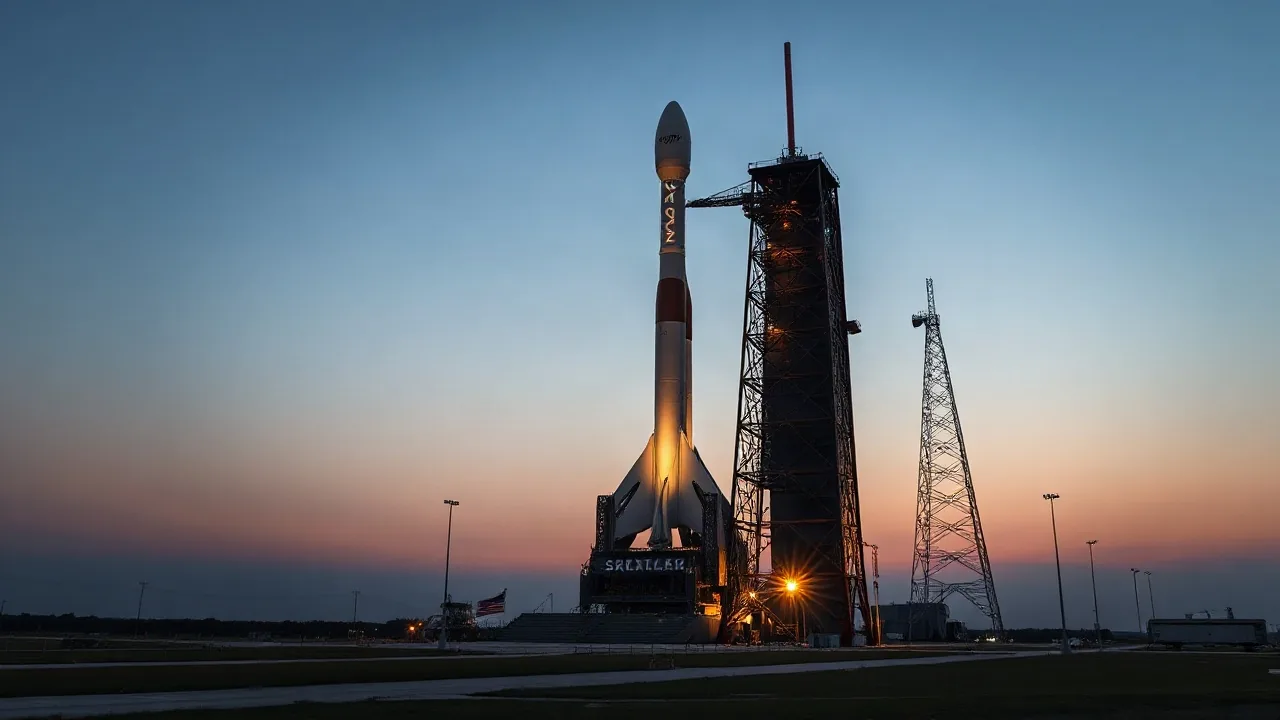
SpaceX is set to launch the 14th test flight of its Starship rocket, designated Flight 14, on September 28, marking a pivotal moment as the company attempts its first-ever orbital trajectory. This highly anticipated launch from Starbase in Boca Chica, Texas, carries immense weight for SpaceX's ambitious plans to revolutionize space travel and establish a permanent human presence on the Moon and Mars.
The success of Flight 14 is crucial for SpaceX, as it represents a significant step towards validating the full-flight capabilities of its massive Starship and Super Heavy booster system. Previous test flights have focused on various stages of ascent and descent, but this mission is designed to push the rocket to its orbital limits, demonstrating its capacity for interplanetary journeys. The company has been meticulously working through the data and lessons learned from each preceding flight to refine the vehicle's performance and ensure mission success.
Significant Implications for Future Space Missions
The Starship program, spearheaded by billionaire entrepreneur Elon Musk, is envisioned as a fully reusable transportation system capable of carrying large payloads and up to 100 people into Earth orbit and beyond. An orbital Starship flight would not only validate the rocket's design but also pave the way for future missions, including the deployment of Starlink satellites, lunar landings under NASA's Artemis program, and eventual crewed missions to Mars. The aerospace industry is closely watching, as a successful orbital launch could dramatically accelerate the timeline for deep space exploration and commercial space activities.
SpaceX has invested billions of dollars into the Starship project, aiming to drastically reduce the cost of space access. The vehicle's reusability is central to this strategy, promising to make spaceflight more sustainable and accessible than ever before. Engineers have been working around the clock at the Boca Chica facility, integrating new technologies and making improvements to the vehicle's hardware and software based on the results of earlier tests. The launch window for Flight 14 is expected to be announced soon, with final preparations for the Super Heavy booster and Starship upper stage nearing completion.
While previous tests have encountered various challenges, from rapid unscheduled disassembly during ascent to difficulties with landing burns, the iterative development process employed by SpaceX has led to incremental improvements. Flight 14 is expected to incorporate numerous upgrades, including enhanced thermal protection systems and updated control algorithms. The mission's success hinges on the flawless execution of a complex series of maneuvers, from the powerful ascent propelled by the Super Heavy booster to the orbital insertion and potential controlled reentry sequence.
The Federal Aviation Administration (FAA) has granted SpaceX the necessary launch license after a thorough environmental review, underscoring the regulatory oversight involved in such advanced aerospace endeavors. The implications of a successful orbital Starship flight extend beyond SpaceX, potentially ushering in a new era of space utilization, from asteroid mining to space-based solar power. SpaceX's commitment to rapid iteration and bold goals continues to push the boundaries of what is possible in space exploration.