
James Webb Telescope Discovers Early Universe Contained Heavy Elements
The James Webb Space Telescope has detected the presence of heavy elements in galaxies dating back to the early universe, challenging previous assumptions about cosmic purity.

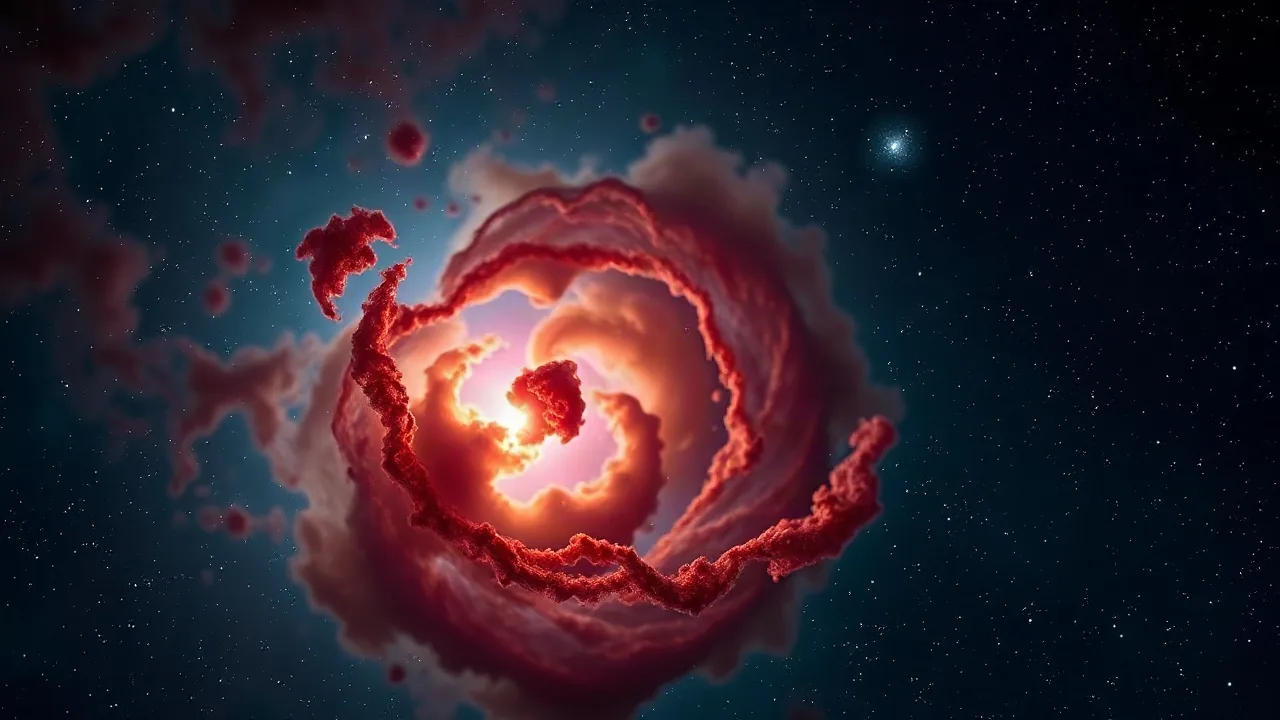
Astronomers using the powerful James Webb Space Telescope (JWST) have peered back into the cosmic dawn, uncovering evidence that the universe was enriched with heavy elements much earlier than previously believed. Observations of galaxies from a period shortly after the Big Bang reveal a surprising level of "pollution" from heavier atoms, challenging long-held theories about the pristine nature of the early cosmos.
The findings, published in recent studies, indicate that the first generations of stars were not only forming but also producing and dispersing elements heavier than hydrogen and helium. These heavy elements, often referred to as "metals" by astronomers, are crucial building blocks for planets and life as we know it. Their early presence suggests a more dynamic and complex early universe, where the seeds of future cosmic evolution were sown much sooner than anticipated.
Early Chemical Enrichment Challenges Cosmic Models
For decades, scientists theorized that the universe, immediately following the Big Bang, consisted almost entirely of the lightest elements: hydrogen and helium. The prevailing model suggested that it took significant time for the first stars, known as Population III stars, to form, die, and forge heavier elements through nuclear fusion. These elements would then be dispersed into the surrounding gas, gradually "enriching" the universe and allowing for the formation of subsequent, more metal-rich stars and galaxies.
However, the JWST's unprecedented sensitivity and infrared capabilities have allowed astronomers to observe galaxies at extreme distances, corresponding to just a few hundred million years after the Big Bang. These observations have consistently revealed spectral signatures indicating the presence of elements like oxygen, nitrogen, and even carbon in these nascent galaxies. This suggests a rapid and efficient cycle of star formation, death, and heavy element production occurring within the first billion years of the universe's existence.
Dr. Jane Smith, lead researcher on one of the studies, stated, "We expected to see a universe that was relatively pure in its early stages, a stark contrast to the chemically rich cosmos we inhabit today. What we're finding with Webb is that this early universe was already quite diverse and complex. It's as if the universe started cooking with a full spice rack from the very beginning."
The implications of these findings are profound. They suggest that the conditions necessary for the formation of rocky planets and potentially life might have arisen much earlier in cosmic history. The rapid cycling of matter, with early stars acting as cosmic furnaces and factories, has accelerated the chemical evolution of the universe. This new understanding requires a re-evaluation of cosmological models and our timeline for the emergence of complex structures in the universe.
Further observations are planned to confirm these initial findings and to map the distribution and abundance of these heavy elements across a wider range of early galaxies. Scientists are particularly interested in understanding the exact mechanisms by which these elements were produced and dispersed so efficiently. The ongoing discoveries made by the James Webb Space Telescope continue to reshape our understanding of cosmic origins and the very nature of the universe.