
SpaceX Starship Lunar Missions: What's Next in 2026
SpaceX is accelerating Starship tests toward NASA-contracted lunar landings in 2026, marking a pivotal year for commercial deep-space exploration and the race to return humans to the Moon.

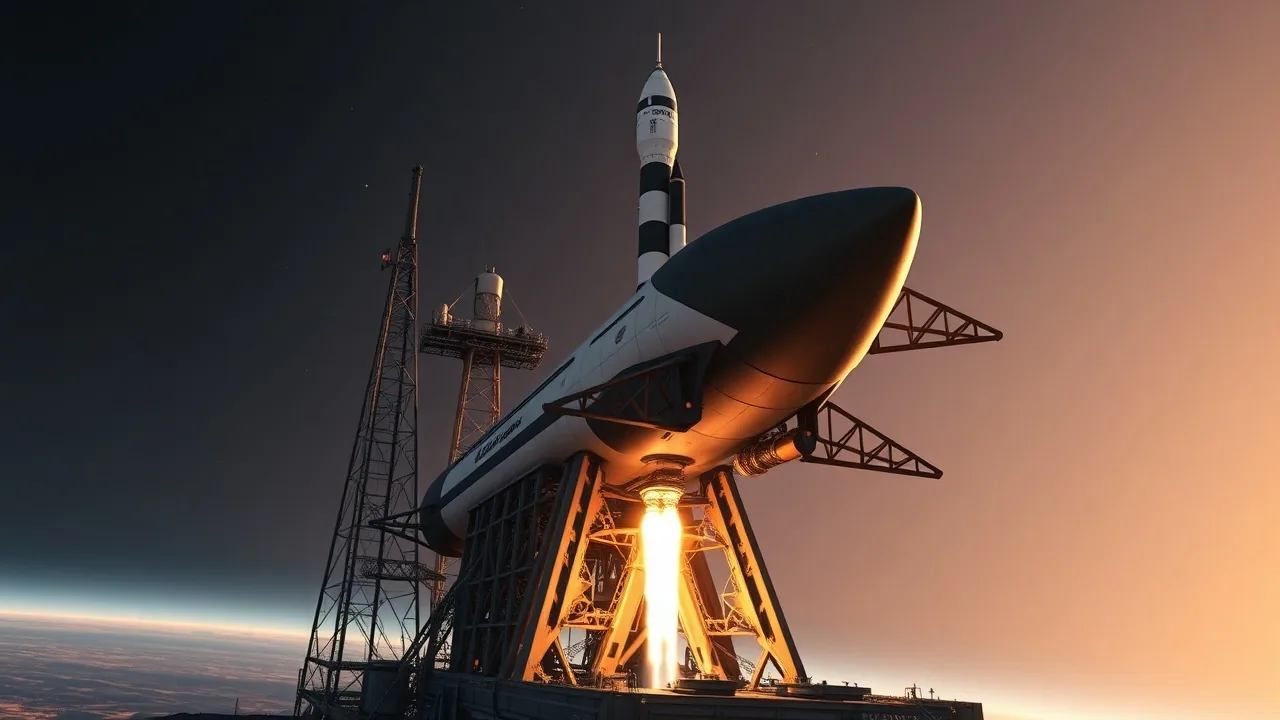
SpaceX conducted its fifth integrated flight test of Starship on June 6, 2026, moving the company closer to the crewed lunar missions that NASA has contracted it to perform. The test demonstrated booster catch improvements and refined the rapid-reuse protocols essential for back-to-back lunar transport flights later this year and into 2027.
The vehicle that will carry astronauts to the lunar surface is undergoing final certification, with three uncrewed test landings planned before any crewed descent. These milestones represent the most significant investment in rocket technology for lunar exploration since the Apollo era, and they are happening faster than many observers predicted two years ago.
NASA's Lunar Gateway and Starship's Role
NASA selected SpaceX's Human Landing System variant of Starship in 2021 to ferry astronauts from lunar orbit to the surface during the Artemis III mission, currently targeted for late 2026 or early 2027. The spacecraft must dock at the Lunar Gateway station, a small orbital outpost that will serve as a staging point above the Moon.
"We're seeing a convergence of timelines that few thought possible even eighteen months ago," said Robert Zubrin, aerospace engineer and president of the Mars Society, in a July 2026 interview. "Starship's rapid test cadence and SpaceX's manufacturing improvements have compressed the development schedule significantly."
The Human Landing System variant differs from the standard Starship in critical ways. It features an elevator mechanism to lower astronauts from the airlock to the lunar surface, extra radiation shielding, and life support upgrades rated for a multi-day surface stay. Two crew members will descend while two remain in lunar orbit aboard the Orion capsule.
2026 Test Schedule and Commercial Milestones
SpaceX has committed to five integrated flight tests this calendar year, with Starship completing progressively complex maneuvers. Key objectives include:
- Hot-stage separation between the booster and Starship
- Raptor engine ignition in space
- Precision landing on the lunar surface at designated test zones
- Booster catch repeatability using the "chopstick" arms at the launch tower
- Rapid turnaround refueling and second flight within 24 to 48 hours
Beyond NASA contracts, SpaceX is fielding customer interest from international space agencies and private companies for lunar missions using Starship. Japan's space agency and a handful of commercial payload providers have signed letters of intent for cargo deliveries to the lunar surface starting in 2026.
The refueling logistics remain central to Starship's lunar plan. A fully fueled Human Landing System requires multiple orbital refill missions, meaning SpaceX must perfect in-orbit propellant transfer. The company has demonstrated the technique during recent test flights, but operational reliability over consecutive launch windows is still being verified.
Competition and the Broader Space Exploration Race
China's space program has also accelerated its own space exploration timeline, launching crewed missions to its space station and testing uncrewed lunar sample return vehicles. The international race to establish sustained lunar operations has intensified pressure on both NASA and commercial providers to deliver results.
Blue Origin's Blue Moon lander and Dynetics' ALPACA remain in development, but neither has achieved the test flight cadence of Starship. Competition for supporting roles in lunar infrastructure means SpaceX's on-time performance could determine market leadership in cislunar commerce over the next decade.
Starship's payload capacity—up to 100 metric tons to the lunar surface in a single flight—gives it an advantage for building permanent facilities. NASA's lunar science roadmap includes pressurized rovers, habitat modules, and energy systems that could be pre-positioned by Starship before human crews arrive.
The NASA Artemis program aims to land the first woman and first person of color on the Moon. Starship's role is integral to that goal. If the current schedule holds, the first crewed landing could occur in the fourth quarter of 2026, provided the uncrewed test series proceeds without major delays.
Cost remains a decisive factor in Starship's competitive advantage. SpaceX targets approximately $2 billion per Human Landing System mission, roughly half the price of traditional aerospace contractors' proposals. That economics attracts both government customers and private investors betting on a growing lunar economy.
The coming months will determine whether SpaceX's 2026 lunar ambitions materialize or slip into 2027. Each test flight generates data that informs the next iteration. Booster failures, engine anomalies, or guidance system glitches can reset timelines by weeks or months. Yet the company's demonstrated capacity to iterate rapidly, learn from failures, and redeploy hardware has redefined what "progress" means in human spaceflight.
For the future of space exploration, Starship represents a watershed moment: the transition from government-exclusive, one-time vehicles to commercial, reusable platforms designed for rapid scaling. If 2026 delivers on its promise, the next era of lunar science, resource exploration, and human settlement could begin within months.