
SpaceX Starlink Launch Succeeds After Aborted Liftoff
SpaceX successfully launched 24 Starlink satellites from California on Tuesday after a launch attempt was aborted due to an engine ignition issue. The Falcon 9 rocket lifted off smoothly on its second try.

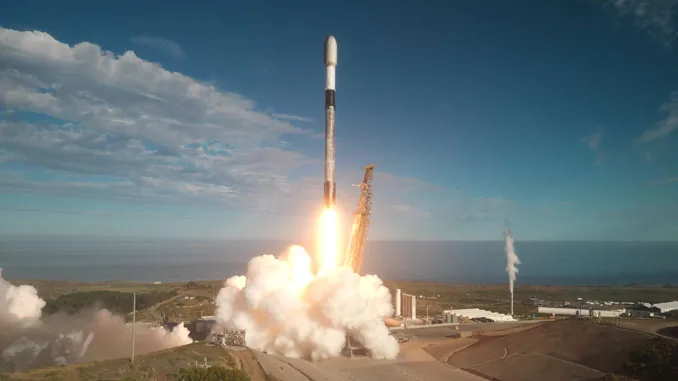
SpaceX successfully deployed 24 Starlink V2 Mini broadband internet satellites into orbit from Vandenberg Space Force Base in California on Tuesday, July 22, 2026. The launch occurred at 7:49 a.m. PDT (10:49 a.m. EDT), a day after the previous attempt was scrubbed due to a rare abort during the engine ignition sequence. This mission, designated Starlink 17-39, aims to expand SpaceX's massive low Earth orbit constellation.
The first launch attempt on Monday ended abruptly as the countdown reached zero. While all nine Merlin 1D engines on the Falcon 9 first stage appeared to ignite, they shut down almost immediately, producing a flash of fire and smoke. Mission control quickly identified the issue, leading to the abort and subsequent rescheduling. Tuesday's launch, however, proceeded without a hitch under mostly clear skies. The Falcon 9 ascended on a south-southwesterly trajectory, destined for a 97-degree inclination orbit.
Starlink Constellation Growth Continues
Just over an hour after liftoff, the 24 Starlink satellites were successfully released from the rocket's second stage. This deployment adds to the rapidly growing Starlink constellation, which now comprises more than 10,800 spacecraft. The ambitious project aims to provide high-speed internet access globally, particularly in underserved or remote areas. The successful launch marks the 85th flight for SpaceX's Falcon 9 rocket in 2026, with 67 of those dedicated to bolstering the Starlink network. This continuous expansion highlights SpaceX's dominance in the commercial launch sector and its commitment to its ambitious satellite internet service.
The first stage booster, identified as B1082, completed its 23rd mission, having previously supported significant launches such as NROL-145, USSF-62, and OneWeb Launch 20. Following stage separation, B1082 executed a flawless landing approximately eight minutes after liftoff. The booster touched down on the autonomous drone ship 'Of Course I Still Love You,' positioned in the Pacific Ocean. This marked the 212th landing on this particular vessel and the 640th booster landing overall for SpaceX, underscoring the company's expertise in rocket reusability and cost-efficiency.
The Starlink program represents a significant part of SpaceX's business model, complementing its human spaceflight and national security launch services. The company, founded by Elon Musk, continues to innovate in rocket technology and satellite deployment, pushing the boundaries of space exploration and commercialization. The resilience demonstrated by successfully launching after an abort showcases the company's operational agility and technical proficiency in handling complex space missions.