
SpaceX Delivers 6,300 Pounds of Cargo to ISS on CRS-35 Mission
SpaceX's Falcon 9 rocket is set to launch approximately 6,300 pounds of vital supplies and equipment to the International Space Station (ISS) on its 35th Commercial Resupply Services mission. The launch is scheduled for Tuesday, October 13, 2026.

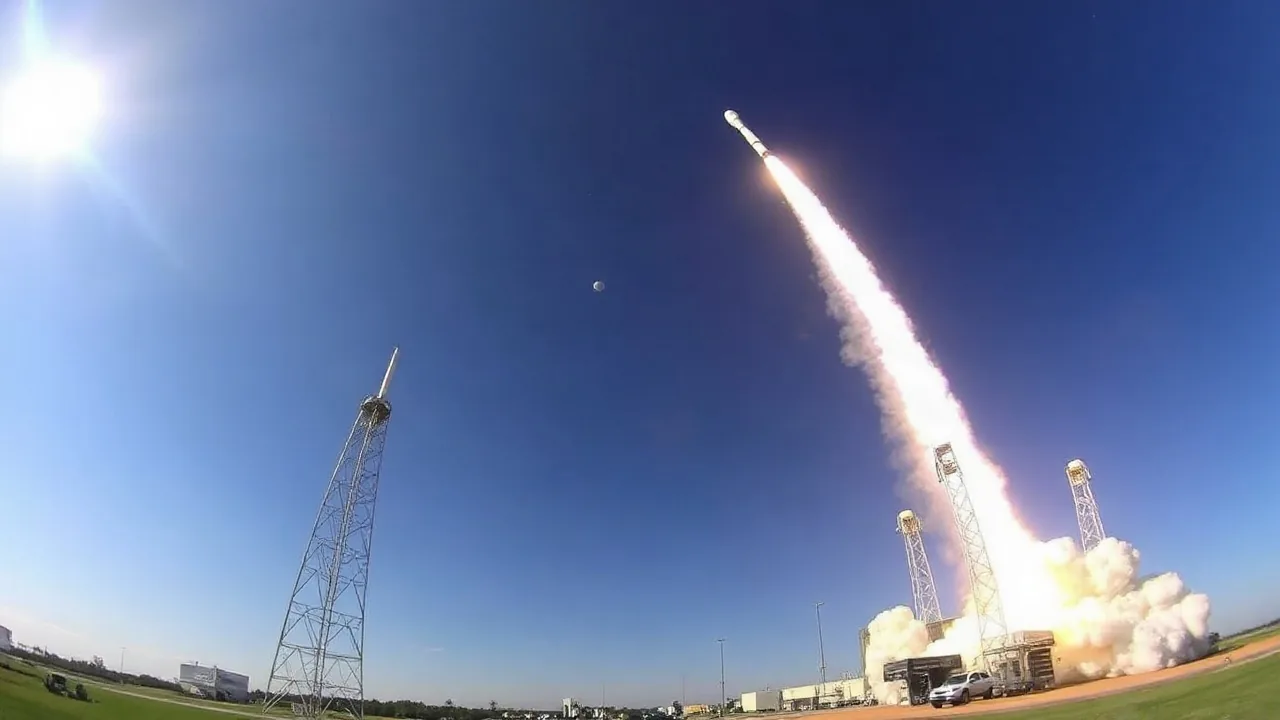
SpaceX is scheduled to launch 6,300 pounds of critical cargo to the International Space Station (ISS) on Tuesday, October 13, 2026, marking the 35th resupply mission for NASA under its Commercial Resupply Services contract. The Falcon 9 rocket carrying the Dragon spacecraft is slated to lift off from Launch Complex 39A at NASA’s Kennedy Space Center in Florida.
This mission, designated CRS-35, will deliver a variety of scientific experiments, essential crew supplies, and hardware upgrades to the orbiting laboratory. Among the key payloads are new advanced solar arrays, designed to significantly boost the station's power generation capabilities. These arrays are a crucial upgrade to maintain and expand the station's operational capacity for ongoing and future scientific research.
New Solar Arrays and Research Equipment
The Dragon capsule will carry over 2,000 pounds of scientific research, including experiments in biology, Earth science, and fundamental physics. Astronauts aboard the ISS will be tasked with unpacking and setting up these new investigations, which aim to push the boundaries of scientific understanding. Additionally, the cargo includes over 1,700 pounds of vehicle hardware, such as spare parts for life support systems and maintenance equipment, ensuring the continued safe operation of the ISS.
This latest resupply mission underscores the ongoing partnership between NASA and SpaceX, a collaboration that has become vital for sustaining human presence and research activities in low Earth orbit. The CRS-35 mission is part of a long-standing effort to ensure the ISS is continuously stocked with the necessary resources for its crew of seven astronauts.
The launch window opens at 12:42 p.m. EDT on October 13, 2026. Residents in parts of the eastern United States, from Florida to Maine, may have a chance to witness the rocket's ascent. A unique atmospheric phenomenon, sometimes referred to as a 'jellyfish cloud', can occur during certain launch conditions, creating a spectacular visual display as the rocket's exhaust interacts with the upper atmosphere.
SpaceX has a rigorous schedule of launches planned for 2026, including multiple cargo and crew missions to the ISS, as well as commercial satellite deployments. The company's reusable rocket technology, particularly the Falcon 9's ability to land and be reused, has dramatically reduced the cost of access to space, making more frequent missions economically viable. This efficiency is critical for maintaining the cadence of scientific research conducted aboard the ISS.
The Dragon spacecraft is designed to remain docked with the ISS for approximately one month before returning to Earth, carrying valuable scientific samples and completed experiments. The successful delivery of this cargo is essential for the continuation of hundreds of research projects that benefit life on Earth and prepare for future long-duration space exploration, including missions to the Moon and Mars.