
Perseid Meteor Shower Peaks: How to See the Dazzling Summer Sky Show
The annual Perseid meteor shower is peaking, offering up to 100 meteors per hour. Ideal viewing conditions this year include a new moon phase, enhancing visibility of these cosmic streaks.

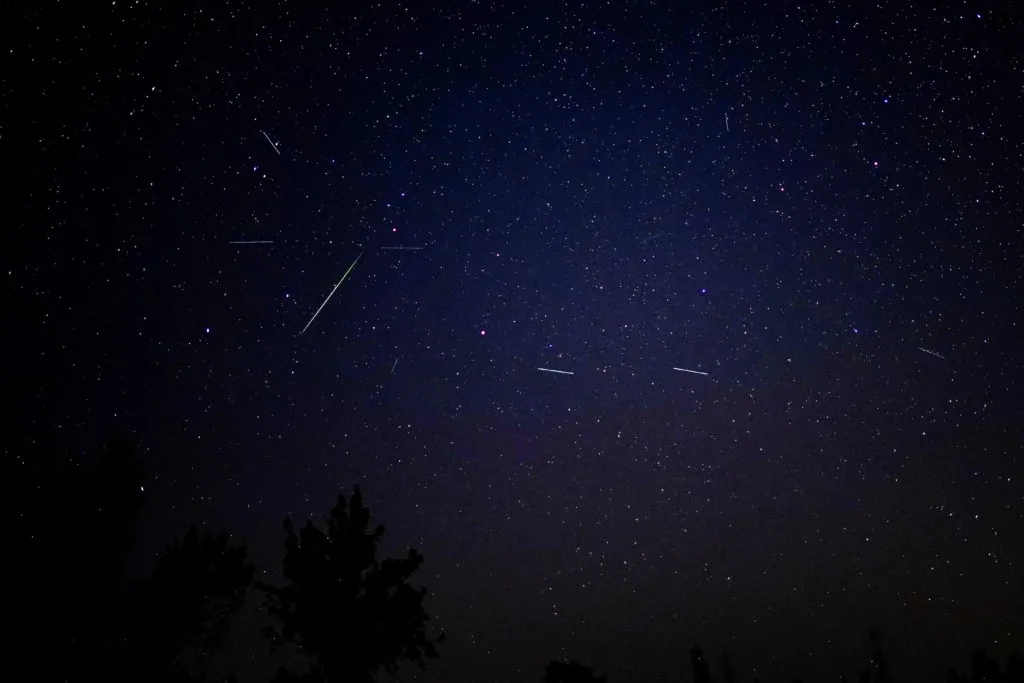
Stargazers across the United States are gearing up for the annual Perseid meteor shower, which reaches its peak this week, promising a spectacular celestial display. Under optimal conditions, skywatchers could witness between 50 to 100 meteors per hour, according to NASA. Even in less-than-ideal circumstances, estimates suggest 30 to 50 meteors per hour could be visible, particularly from rural areas far from city light pollution.
Meteor showers are a recurring astronomical phenomenon that occurs when the Earth passes through the debris trails left behind by comets or, occasionally, asteroids. As these remnants enter Earth's atmosphere at high velocities, they burn up, creating the fleeting streaks of light we call shooting stars. Astrophysicist Neil DeGrasse Tyson explained that comets often have orbits that intersect Earth's path. "As they get near the sun and the sun evaporates the ice, a lot of the dirt and crap that's frozen into the comet gets released, and continues in orbit around the sun," Tyson stated.
The Perseids specifically originate from the comet 109P/Swift-Tuttle, a massive ball of ice that completes a solar orbit every 133 years. This comet is not expected to return to the inner solar system until 2125. However, its lingering debris ensures a brilliant show for observers, a tradition dating back over 2,000 years. The Perseid shower is a perennial favorite not only for its reliability but also for the exceptionally bright fireballs it often produces.
Optimal Viewing Conditions Enhance the Show
This year's Perseid viewing is particularly fortunate due to favorable timing. Astronomer Zach Vanderbosch of the McDonald Observatory in Texas highlighted the advantage of summer viewing: "We don't have to suffer through a cold winter night to get a good view of meteors." Adding to the ideal conditions, the peak of the meteor shower coincides with the new moon phase. This means there will be minimal moonlight interference, allowing fainter meteors to become visible.
"The moon is beautiful, but it's such a diva," commented astronomer Aparna Venkatesan from the University of San Francisco. "New moon means we don't have moonlight flooding the sky, and you tend to see way more meteors as a result." This lunar phase significantly boosts the chances of seeing a higher number of meteors, especially the more subtle streaks.
To best observe the Perseid meteor shower, experts recommend venturing outdoors after dark, seeking locations that are clear of clouds and ambient city lights. Venkatesan plans to travel to the Sierra Nevada for optimal viewing. The prime time for observation is between midnight and dawn, when the radiant constellation Perseus is high in the northern sky. The meteors will appear to emanate from this point.
Patience is key for enjoying the meteor shower. It is advised to allow your eyes at least 30 minutes to adjust to the darkness. Vanderbosch suggests focusing on a specific patch of sky and waiting for the quick, bright flashes. "There's just something magical about it," he added, noting that even peripheral vision can catch the swift trails of light. He also advises against looking at smartphone screens, which can disrupt dark adaptation and diminish the viewing experience. The astronomy community eagerly anticipates this annual event, a reminder of the vast and dynamic cosmos above.