
Northern Lights Visible Across US as 4 CMEs Approach Earth
The aurora borealis may be visible in many northern U.S. states tonight and into the weekend. Four coronal mass ejections are Earth-bound, potentially triggering geomagnetic storms.

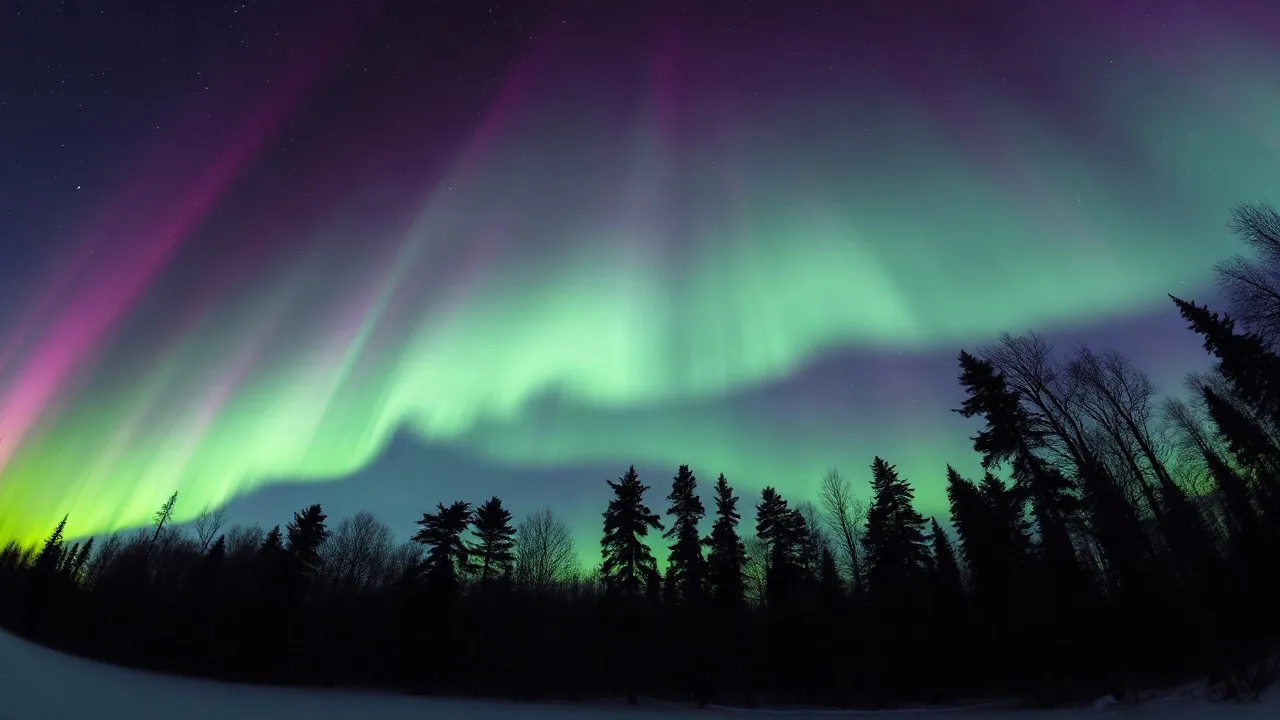
Stargazers across a wide swath of the United States may have a chance to witness the aurora borealis tonight and through the weekend. The spectacle, typically confined to higher latitudes, could become visible in northern states due to an anticipated geomagnetic storm. Four significant coronal mass ejections (CMEs) originating from the sun are currently heading toward Earth, with their impacts expected to begin as early as Friday, October 10, 2026.
The National Oceanic and Atmospheric Administration's Space Weather Prediction Center has issued a G2 (Moderate) Geomagnetic Storm Watch. This classification indicates a potential for disruptions to satellite operations and power grids, but also a heightened chance for auroral displays visible at lower latitudes than usual. Residents in states as far south as the northern tier of the U.S. are advised to look for the lights, particularly away from city light pollution.
Understanding Solar Eruptions and Auroras
Coronal mass ejections are massive bursts of plasma and magnetic field from the sun's corona. When these CMEs are directed toward Earth, they can interact with our planet's magnetosphere, creating geomagnetic storms. These storms, in turn, energize particles in the upper atmosphere, causing them to emit light in a phenomenon known as the aurora borealis in the Northern Hemisphere and aurora australis in the Southern Hemisphere.
The intensity of the geomagnetic storm is directly related to the strength and speed of the incoming CMEs, as well as their magnetic orientation. Experts at NOAA will be closely monitoring the situation to provide updated forecasts. The increased solar activity this week is a reminder of the dynamic nature of our sun and its profound influence on Earth's environment. This particular event is being closely watched by space weather scientists due to the number of CMEs involved.
While the aurora borealis is a stunning natural phenomenon, geomagnetic storms can also pose risks. The charged particles can induce currents in power lines, potentially leading to blackouts. They can also disrupt satellite communications and GPS signals. Space agencies and satellite operators implement protective measures when such storms are forecast. The last significant aurora display visible across much of the U.S. occurred earlier this year, captivating millions.
For those hoping to catch a glimpse of the aurora, clear skies will be crucial. The best viewing times are typically between midnight and the early morning hours. Checking local weather forecasts for cloud cover will be as important as monitoring space weather predictions. This weekend presents a unique opportunity for many Americans to witness the northern lights without traveling to extreme northern latitudes.