
Aurora Borealis Forecast: Northern Lights Possible in 10 US States
The aurora borealis may be visible in up to 10 U.S. states on Thursday night, according to a forecast from NOAA. Areas in the northern U.S. have the best chance to witness the natural light display.

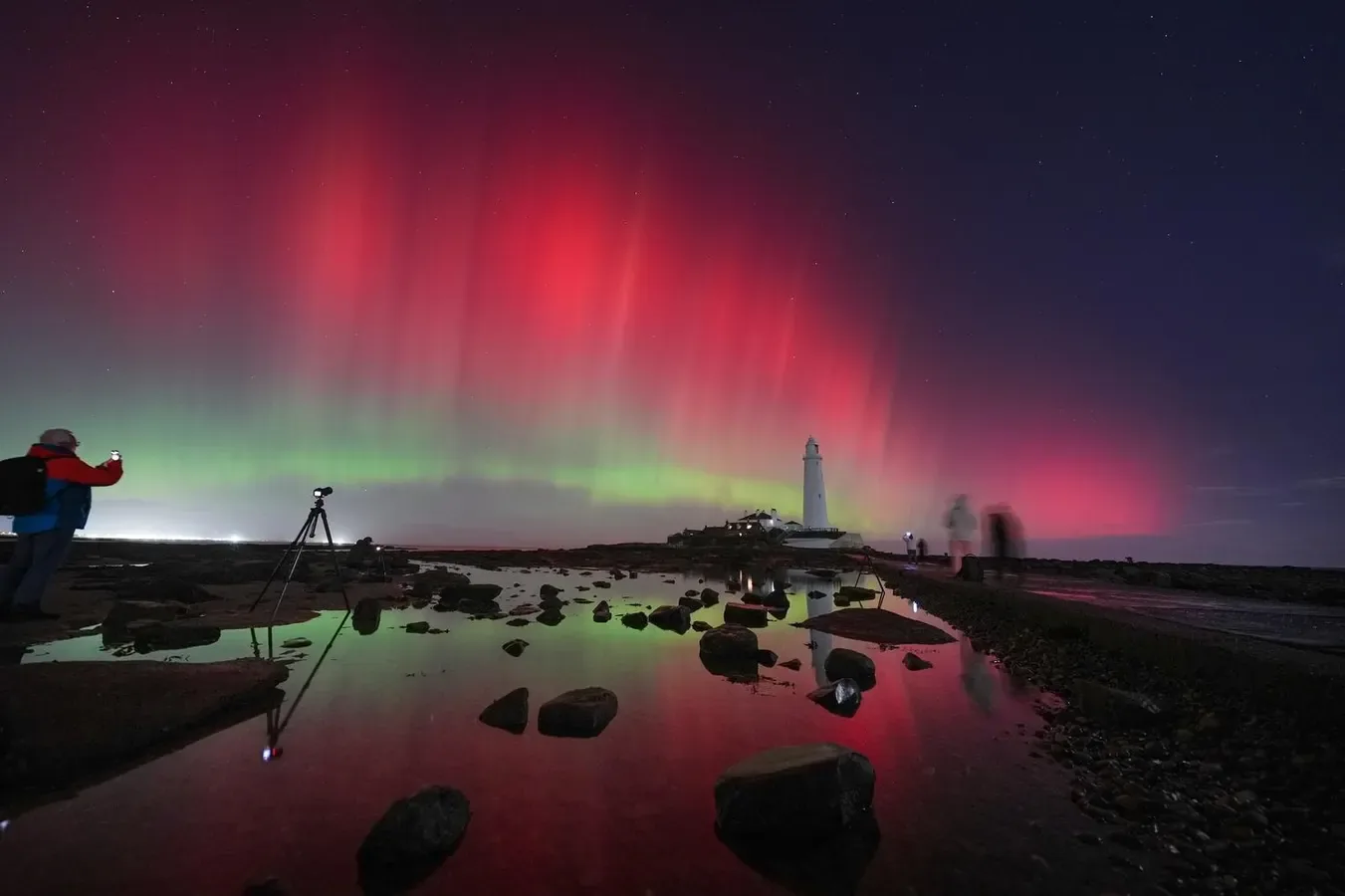
The mesmerizing spectacle of the aurora borealis, commonly known as the Northern Lights, could be visible in as many as 10 U.S. states on Thursday night. The National Oceanic and Atmospheric Administration (NOAA) has predicted mild auroral activity over the next two nights, offering a chance for many Americans to witness this natural phenomenon.
According to NOAA's forecast map, the aurora borealis may grace the skies in areas including northern Washington, the northern tip of Idaho, northern Montana, Wyoming near the Montana border, North Dakota, northern South Dakota, northern Minnesota, the northern tip of Wisconsin, the Upper Peninsula of Michigan, and northern Michigan. While these lower 48 states have a potential viewing opportunity, much of Alaska is expected to have a higher likelihood of seeing the Northern Lights.
For those hoping to catch a glimpse of the celestial display, NOAA recommends seeking out high vantage points away from light pollution. The optimal viewing window is typically between 10 p.m. and 2 a.m. local time, when the sky is darkest and the aurora is often most active.
Capturing the Cosmic Dance
Amateur photographers and enthusiasts looking to document the aurora borealis should prepare with specific camera settings. Experts suggest using cameras with low apertures and wide-angle lenses, mounted on tripods to ensure stability during long exposures. Many modern smartphones with night mode capabilities can also capture impressive images, though it is advisable to disable the flash to avoid overexposing the delicate lights.
The formation of the Northern Lights is a result of charged particles from the sun, primarily electrons and protons, streaming towards Earth and interacting with the planet's magnetic field. These interactions energize gases in the Earth's upper atmosphere, causing them to emit light. Solar storms, which are bursts of energy and particles from the sun, can significantly enhance the intensity and visibility of these auroral displays. In fact, auroral activity reached a remarkable 500-year high in 2024, coinciding with the peak of the sun's 11-year solar cycle. As the sun moves past this peak, auroral activity is expected to gradually taper off, making events like this Thursday's forecast particularly noteworthy.
Understanding the science behind aurora borealis can deepen the appreciation for this natural wonder. The interplay between solar activity and Earth's magnetosphere creates a dynamic and ever-changing light show. While major solar events can produce spectacular displays visible at lower latitudes, even mild auroral activity can offer a chance to witness the phenomenon in northern regions. NOAA's continuous monitoring and forecasting efforts play a crucial role in informing the public about potential viewing opportunities, allowing enthusiasts to plan accordingly.
The upcoming viewing opportunity serves as a reminder of the vast and dynamic processes occurring in our solar system. Even in the lower 48 states, the chance to see the Northern Lights provides a unique connection to the cosmos. Residents in the predicted viewing areas are encouraged to check local weather conditions and NOAA's latest forecasts for real-time updates.