
New Moon Crater Larger Than Football Field Discovered
NASA's Lunar Reconnaissance Orbiter has identified a massive new crater on the Moon, measuring 222 meters across, believed to have formed recently. The discovery offers insights into lunar geology and potential impacts on future moon bases.

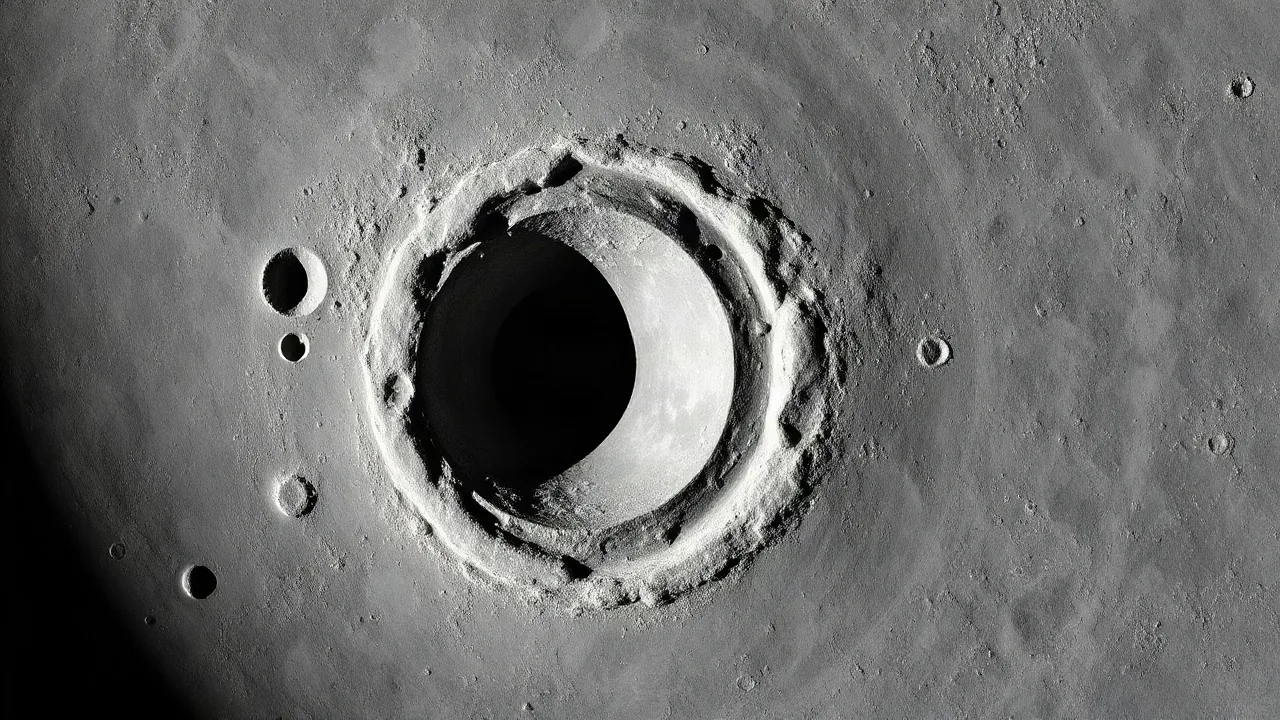
A NASA lunar orbiter has detected a colossal new crater on the Moon, estimated to be 222 meters (728 feet) in diameter, marking the largest newly formed impact crater ever observed in the solar system. The discovery was made during a routine quality check of lunar mapping data by scientists analyzing images from NASA's Lunar Reconnaissance Orbiter (LRO). This impressive celestial scar, characterized by a bright ejecta blanket and a dark halo, did not exist prior to spring 2024, making it a significant finding for lunar science.
The crater, unofficially named after geologist Gerfried McGetchin, who pioneered research into lunar impacts, is comparable in size to almost two American football fields laid end-to-end. Its brightness suggests it is geologically young, as lunar surface materials tend to darken over time due to continuous bombardment by micrometeorites and exposure to solar radiation. The specific timing of its formation, sometime between late 2023 and early 2024, was determined by comparing LRO images taken before and after that period.
Implications for Lunar Exploration
The discovery of such a substantial and recent impact site has considerable implications for future human endeavors on the Moon. Understanding the frequency and scale of these events is crucial for selecting safe landing sites and designing habitats for lunar bases. The ejected material, or regolith, surrounding the crater could also provide valuable scientific samples, offering a glimpse into the Moon's recent geological activity. Scientists are particularly interested in studying the composition of the ejecta and the impact melt, which could reveal details about the impacting body and the subsurface geology.
This finding underscores the dynamic nature of celestial bodies, even those seemingly inactive like the Moon. While large impacts are rare, the continuous bombardment by smaller objects is a constant factor shaping the lunar surface. The LRO mission, launched in 2009, has been instrumental in mapping the Moon in unprecedented detail, providing vital data for both scientific research and planning future crewed missions, such as those envisioned under the Artemis program. The mission's instruments, including the Narrow Angle Camera (NAC) and the LROC Wide Angle Camera (WAC), allow for high-resolution imaging of the lunar surface.
Researchers are now working to determine the precise trajectory and characteristics of the object that created the crater. While the exact size of the impactor is unknown, its impact energy can be estimated based on the crater's dimensions and the characteristics of the ejected material. The Moon, despite its apparent tranquility, remains a target of intense scientific interest, with ongoing missions like LRO continuing to reveal its secrets. The discovery of the McGetchin crater highlights that even familiar celestial neighbors can still surprise scientists with significant new features.