
NASA's X-59 Supersonic Jet Arrives at Kennedy Space Center
NASA's experimental X-59 supersonic jet has arrived at Kennedy Space Center in Florida, marking a new phase for the quiet supersonic technology demonstrator.

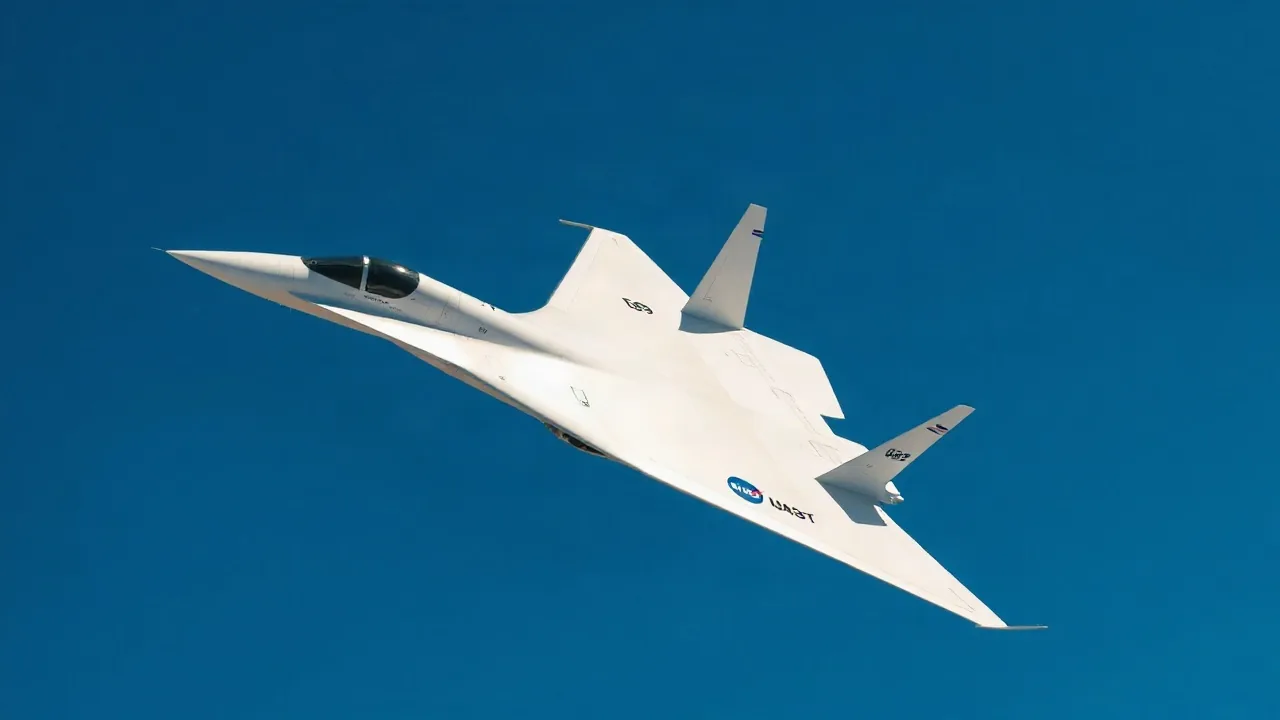
NASA's groundbreaking X-59 Quiet SuperSonic Technology (QueSST) aircraft has officially relocated to NASA's Kennedy Space Center in Florida. This significant move comes as the agency celebrates the one-year anniversary of the X-59's first flight, signifying a new chapter in the development of supersonic flight technology.
The X-59, developed by Lockheed Martin's Skunk Works division, is designed to demonstrate quiet supersonic capabilities, aiming to reduce the disruptive sonic boom associated with supersonic aircraft to a mere 'thump'. This innovation could potentially pave the way for the return of supersonic passenger travel over land, a capability that has been largely restricted since the Concorde's retirement.
During its first year of flight operations, which primarily took place at NASA's Armstrong Flight Research Center in California, the X-59 achieved several key milestones. These included reaching speeds of Mach 1.4 (approximately 932 mph) at altitudes of 55,000 feet, and successfully validating critical flight control systems. The aircraft's unique design, featuring a long, pointed nose and carefully shaped wings, is central to its ability to control shockwaves and minimize noise.
Community Validation Begins
The relocation to Kennedy Space Center is not just a change of scenery; it's a strategic move to prepare for the next critical phase of the X-59's mission: community validation. Once flight tests at Kennedy are complete, the X-59 will fly over select communities. Residents in these areas will provide feedback on the sound produced by the aircraft, helping NASA and its partners to assess public acceptance of the 'thump' sound.
This phase is crucial for NASA's goal of enabling a new era of supersonic aviation. "The data we gather from these community flights will be vital for regulators to set new rules for supersonic flight over land," said NASA's Low-Boom Flight Demonstrator Project Manager, Peter Coen, in a previous statement. The agency has been working closely with the Federal Aviation Administration (FAA) and international aviation authorities to establish the regulatory framework for future supersonic aircraft.
The X-59 program is a collaborative effort between NASA, Lockheed Martin, and various industry partners. The project represents a significant investment in aerospace research and development, with potential economic and societal benefits if quiet supersonic flight becomes a reality. The ability to travel at supersonic speeds without creating a significant sonic boom could revolutionize air travel, drastically reducing flight times for long-haul journeys.
The aircraft's distinctive features are the result of extensive computational fluid dynamics modeling and wind tunnel testing. Its forward-swept wings and the absence of a traditional forward-facing cockpit window, replaced by an external vision system, are key elements in achieving its low-boom characteristics. This advanced design aims to prove that the loud sonic boom can be transformed into a quiet sonic thump, making supersonic flight over populated areas feasible.
As the X-59 begins its operations at Kennedy Space Center, anticipation is high for the next steps in its flight test program. The successful demonstration of its quiet supersonic capabilities will be a landmark achievement for aviation, potentially ushering in a new age of faster, more efficient air travel.