
NASA Space Flight: 2026 Mission Outlook and Goals
NASA has lined up a robust calendar of space flights for 2026, including lunar missions, deep-space probes, and Earth-observation launches. Here's what to expect from the agency's most ambitious year.

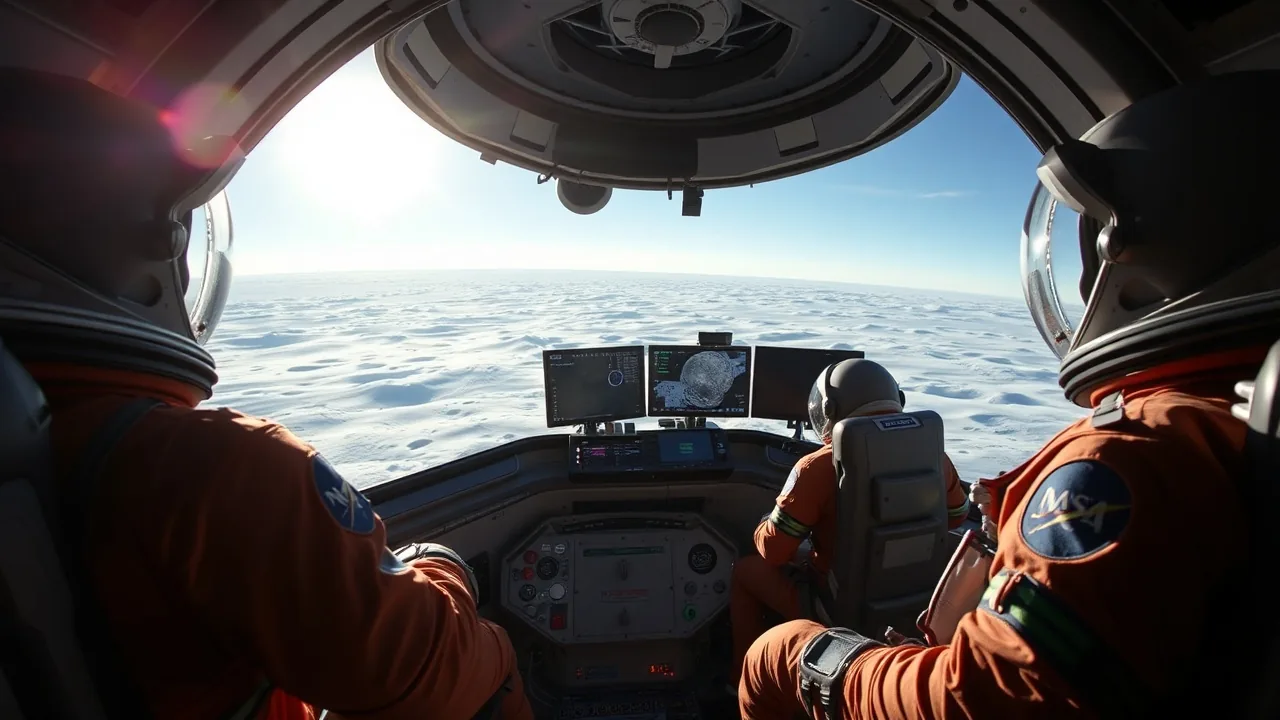
NASA's 2026 mission manifest includes dozens of planned launches, resupply flights, and scientific deployments across low Earth orbit, lunar space, and the outer solar system. The year marks a critical juncture in the agency's push toward sustained human spaceflight and long-duration exploration.
Starting in January, NASA expects to conduct its first crewed Artemis lunar missions beyond the International Space Station, targeting the lunar south pole region where water ice deposits offer both scientific and resource-extraction opportunities. These flights will carry astronauts aboard the Space Launch System (SLS) rocket and Orion capsule, vehicles tested extensively over the past 18 months.
"2026 is when the cadence of human spaceflight missions accelerates significantly," said Dr. Michael Griffin, NASA Associate Administrator for the Exploration Systems Development Mission Directorate, in a briefing to Congress in June 2026. "We're not just returning to the Moon; we're building the infrastructure to stay there."
Crewed Missions and Station Traffic
The International Space Station will continue to receive regular resupply and crew-rotation flights throughout 2026. SpaceX's Dragon spacecraft and Northrop Grumman's Cygnus vehicles are scheduled for at least eight combined visits to the orbiting laboratory, delivering experiments, spare parts, and fresh supplies to the resident crew of seven astronauts and cosmonauts.
Four crewed missions will depart for or return from the ISS in 2026. NASA has coordinated launch windows with Russian Space Agency (Roscosmos) partners to maintain continuity of occupancy, though political tensions have reduced the frequency of integrated planning sessions. Boeing's Starliner, after completing its orbital test flight in 2025, will begin operational crew rotations in the spring of 2026.
Beyond Earth orbit, Artemis II and Artemis III are the centerpieces of NASA's lunar ambitions. Artemis II, originally scheduled for late 2025, will carry four astronauts around the Moon in a 10-day flight. Artemis III will attempt the first crewed landing in the south polar region, a far more challenging target than the Apollo-era equatorial sites due to terrain complexity and permanently shadowed craters.
Robotic Explorers and Distant Probes
While human crews prepare for lunar return, space missions of unmanned robots continue expanding humanity's reach. The James Webb Space Telescope, now in its third full year of operations, will publish findings from its deep-field observations and exoplanet atmospheric studies. NASA and ESA (European Space Agency) data centers expect to release analysis of at least 200 new exoplanet candidates identified by Webb through mid-2026.
The Europa Clipper spacecraft, launched in October 2024, will enter Jupiter's orbit in July 2026 and begin its prime science mission. The probe will conduct 49 close flybys of Europa over four years, gathering data on the icy moon's subsurface ocean and potential habitability. Early gravity-field measurements in July 2026 will refine models of the moon's interior structure.
NASA's planetary science program includes continued operations of the Perseverance rover on Mars, now in its fifth year of surface exploration. The rover will continue drilling for samples in the Jezero Crater region, advancing the timeline toward a future Mars sample-return mission scheduled for the early 2030s. Orbiters circling Mars, Venus, and Mercury will deliver routine science data, with the BepiColombo mission to Mercury entering a critical phase of gravitational assists in 2026.
On Earth and in near-Earth space, NASA's climate and Earth-observation fleet includes the recently deployed NOAA-managed satellites and several new Earth Science Division missions. The SWOT (Surface Water and Ocean Topography) mission, launched in December 2023, will map global water resources with unprecedented precision. By mid-2026, SWOT data is expected to improve flood forecasting and drought-vulnerability modeling across the developing world.
Scientific Discoveries and Budget Pressures
Despite ambitious goals, NASA faces budget constraints that have delayed or reduced scope on some missions. The Habitable Worlds Observatory, originally planned for launch in 2027, has slipped to at least 2030 due to cost overruns and technical challenges. The Nancy Grace Roman Space Telescope, another flagship mission, is now projected for 2026 completion and 2027-2028 launch.
Astronomy and cosmic discovery remain central to NASA's brand and congressional mandate. The agency's astrophysics missions collectively search for potentially habitable exoplanets, study the earliest galaxies formed after the Big Bang, and detect gravitational waves through the Laser Interferometer Gravitational-Wave Observatory (LIGO) network, which includes international partners in Italy and Japan.
Key mission launches and milestones scheduled for 2026 include:
- January-March: Artemis II crewed lunar flyby
- April-June: Multiple Dragon and Cygnus resupply flights to ISS
- July: Europa Clipper Jupiter orbit insertion
- September-November: Artemis III crewed lunar landing attempt
- December: SWOT secondary mission continuation and climate data release
Industry analysts from the Aerospace Industries Association estimate that NASA's 2026 budget of $29.5 billion will fund approximately 15 active space missions and support 85,000 jobs across aerospace contractors, universities, and government centers. The agency operates 10 regional field centers across the United States, with Marshall Space Flight Center in Huntsville, Alabama, leading NASA space flight vehicle development.
The year ahead will demonstrate whether sustained investment in human spaceflight and robotic exploration can overcome technical, budgetary, and geopolitical obstacles. Success in 2026 will set the tone for NASA's decade-long effort to establish a permanent lunar presence and begin Mars preparation missions.