
NASA Names Artemis III Crew for Historic Moon Landing Mission
NASA has announced the crew for the Artemis III mission, marking a significant step towards returning humans to the Moon. The mission aims to land astronauts on the lunar surface by 2028.

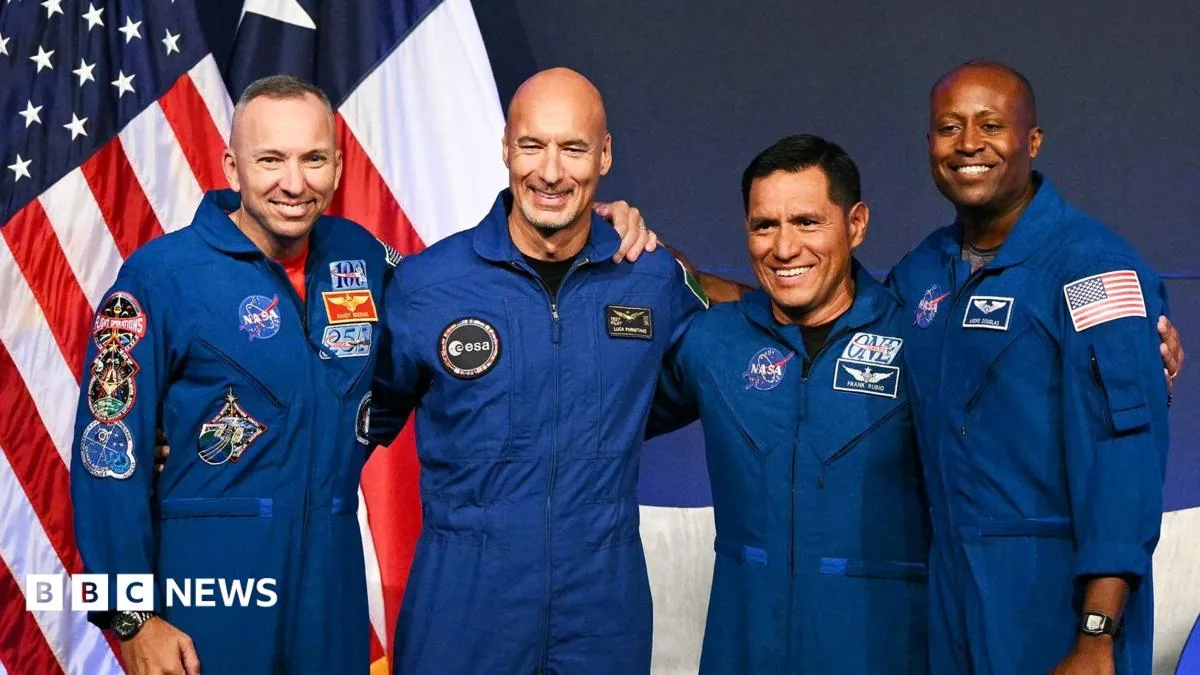
NASA has officially named the four-person crew that will embark on the Artemis III mission, the agency's ambitious plan to land astronauts back on the Moon, with an eye toward a 2028 target date. The announcement represents a critical milestone in the program, moving from planning to execution and building on the foundational flights of Artemis I and II.
The Artemis III mission is slated to be the first lunar landing since the Apollo program concluded in 1972. However, the program faces significant challenges. Private partners, including SpaceX and Blue Origin, are reportedly behind schedule in developing the necessary lunar landers. SpaceX has yet to demonstrate its ability to refuel its spacecraft in Earth orbit, while Blue Origin experienced a launch pad failure last month. Despite these hurdles, representatives from both companies have expressed confidence in their ability to meet future deadlines.
During the announcement in Houston, NASA officials emphasized the progress being made. Mission commander Randy Bresnik, a veteran astronaut with extensive flight experience, expressed his excitement. “We will again be the first to land humans on another celestial body, that celestial body being our neighbor in the sky,” Bresnik stated, referencing the Moon.
A Diverse Crew for a New Era
While the Artemis III mission is historic, it notably features an all-male crew, a departure from recent NASA missions that have included women. This composition mirrors earlier spaceflights and differs from the Artemis II mission earlier this year, which included astronaut Christina Koch. The crew members announced are: Mission Commander Randy Bresnik, Pilot Frank Rubio, Mission Specialist Victor Glover, and Mission Specialist Luca Parmitano representing the European Space Agency (ESA).
Frank Rubio, a family medicine doctor and former U.S. Army colonel, brings a wealth of experience, including a record-breaking 371-day mission aboard the International Space Station (ISS). Victor Glover, another seasoned astronaut, has served on previous space missions. Italian astronaut Luca Parmitano, a test pilot with the Italian Air Force, will represent the ESA, marking a continuation of international collaboration in space exploration. Parmitano has spent a total of 366 days in space across two long-duration missions to the ISS.
The development of new spacecraft and equipment is also a critical component. NASA is collaborating with Axiom Space on advanced spacesuits, known as the Axiom Extravehicular Mobility Unit (AxEMU). These suits are designed to withstand the extreme lunar environment and are being developed in partnership with Prada, known for its expertise in high-performance materials and design. The suits feature a Liquid Cooling and Ventilation Garment to manage astronaut body temperature during long spacewalks, a crucial element for operations on the lunar surface.
The Planetary Society, a leading non-profit organization focused on space exploration, has called for increased federal funding for the Artemis program. Casey Dreier, the organization's space policy chief, highlighted the importance of international partnerships and sustained investment. “Artemis stands as a testament to the achievements possible when America works closely with its allies in pursuit of a great challenge,” Dreier said. “Yet the agency faces some of its largest budget cuts in history, which undermine the very alliances, partnerships, and science needed to ensure our long-term success at the Moon.”
The success of Artemis III hinges not only on technological advancements but also on consistent governmental support and the effective collaboration between NASA and its private and international partners. The mission represents a significant step in humanity's ongoing quest to explore the cosmos and establish a sustained presence beyond Earth.