
NASA Names Artemis III Crew for 2027 Lunar Mission
NASA has announced the four astronauts selected for the Artemis III mission, a crucial test flight slated for 2027. The mission will prepare for future lunar landings and potential Mars expeditions.

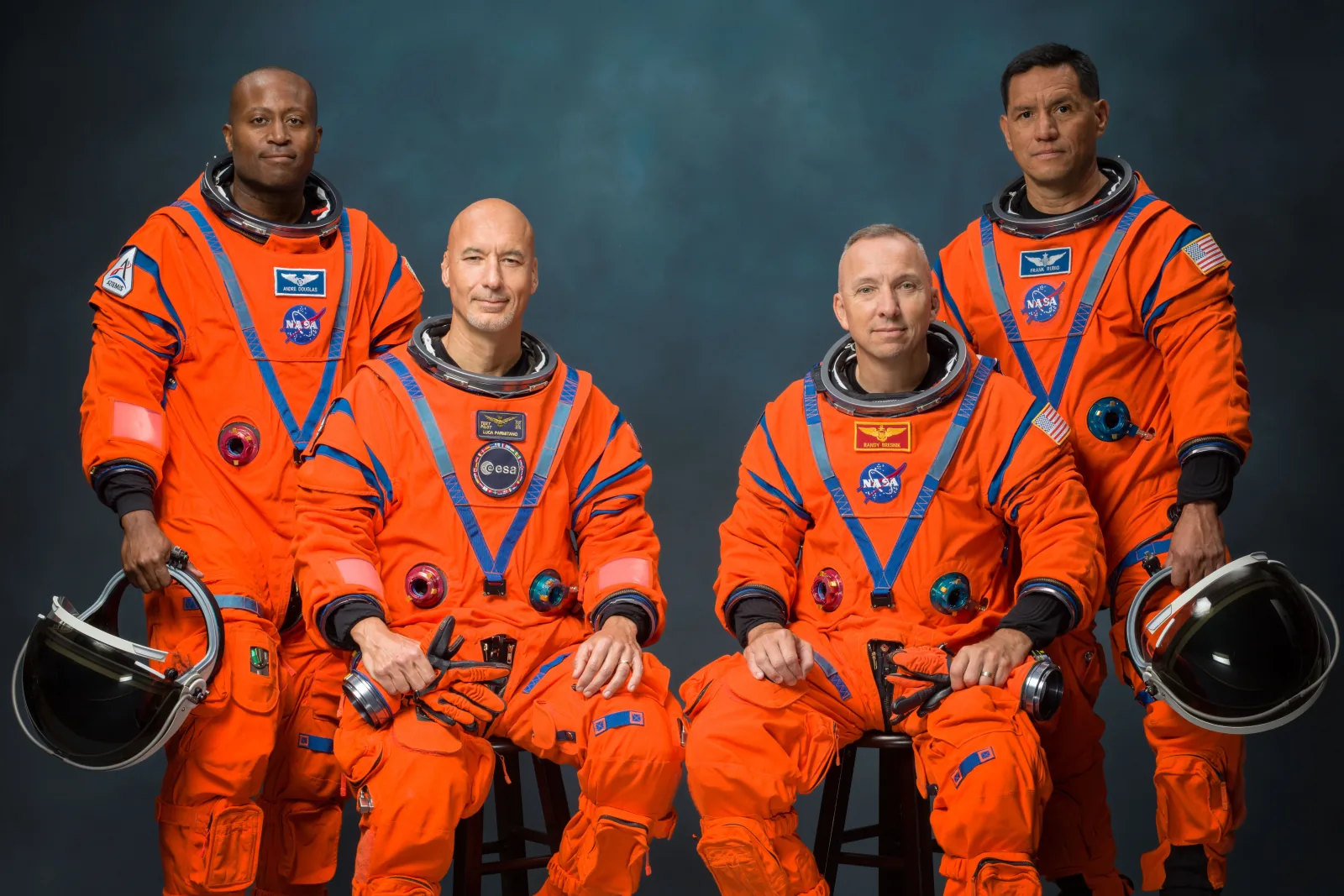
NASA revealed the prime and backup crew members for the ambitious Artemis III mission on Tuesday, a pivotal test flight scheduled for 2027 that aims to conduct challenging operations in Earth orbit in preparation for future lunar voyages. The mission's crew will include NASA astronauts Randy Bresnik (commander), Andre Douglas (mission specialist), and Frank Rubio (mission specialist), alongside European Space Agency (ESA) astronaut Luca Parmitano (pilot). NASA astronaut Bob Hines was named as the backup crew member.
The Artemis III mission is designed to test critical rendezvous and docking procedures between the Orion spacecraft, propelled by NASA's Space Launch System (SLS) rocket, and prototype human landing systems developed by commercial partners Blue Origin and SpaceX. This highly coordinated effort will involve multiple rocket launches and rigorous testing of integrated hardware, including software, propulsion, and communication systems, all essential for future crewed missions to the lunar South Pole, planned for Artemis IV in 2028.
The selected crew will immediately commence intensive training on Orion spacecraft systems and will also contribute to the development and operational testing of the Blue Origin and SpaceX lander prototypes. NASA Administrator Jared Isaacman emphasized the significance of this mission, stating, "Today we take another bold step in humanity’s return to the Moon, building on the extraordinary foundation laid by the Artemis II astronauts." He further highlighted that Artemis III will showcase "the power of American innovation and international partnership as we test complex rendezvous and docking operations and advance the technologies that will one day carry us deeper into the solar system." This mission marks a historic moment as it's the first time an ESA astronaut has been assigned to an Artemis mission, underscoring the depth of European expertise in human spaceflight.
Testing Complex Systems for Deep Space Exploration
Josef Aschbacher, ESA's Director General, commented on Parmitano's assignment, noting that it "reflects the depth of European expertise in human spaceflight and draws on his extensive operational experience in high-pressure situations." He also pointed out ESA's continued vital role through the European Service Module powering Orion, asserting that "Europe’s enduring role at the very heart of the Artemis program."
Significant progress is being made across all facets of the mission. Engineers are currently integrating Orion's crew and service modules, along with its crucial docking system, which will be flown for the first time. Rigorous heat shield testing is ongoing, with ultrasonic inspections of individual blocks completed and installation onto the heat shield structure underway. On the launch vehicle side, technicians are assembling the core stage of the SLS rocket, preparing for the installation of its four RS-25 engines. With all solid rocket booster segments at NASA's Kennedy Space Center and refurbishment of the mobile launcher on schedule, rocket stacking operations are slated to begin this summer. NASA is also developing a spacer that will substitute for the upper stage on the Artemis III rocket.
Both Blue Origin and SpaceX are actively developing their respective crewed lunar lander versions. Blue Origin is creating a variant of its Blue Moon lander, while SpaceX is developing a lunar lander version of its Starship. Both companies are building test articles specifically for the Artemis III mission, with NASA providing hands-on support throughout their design, development, testing, and evaluation phases. This collaboration leverages agency expertise and lessons learned from previous spaceflight endeavors.
The Artemis III mission is set to be a groundbreaking demonstration of capabilities. It will involve launching a Blue Origin lander pathfinder, designed for extended orbital stays, to await the crew. Subsequently, the SLS rocket will carry the astronauts in the Orion spacecraft to Earth orbit. There, Orion will rendezvous with the Blue Origin lander test article for approximately two days of docked operations, including crucial tests and technology demonstrations, such as astronauts entering the lander. Following the Blue Origin phase, Orion will detach and prepare for a similar rendezvous with SpaceX's Starship pathfinder, spending about a day connected for system checkouts and testing. After completing these docked operations, Orion and its crew will undock and initiate their return journey, culminating in a splashdown in the Pacific Ocean, where a joint NASA and U.S. Navy team will recover the astronauts. The entire mission is expected to last about two weeks, with the precise duration subject to real-time adjustments based on launch, rendezvous, and docked operations.
This mission builds upon the success of the Artemis II flight, completed earlier this year, and is a vital step in NASA's overarching goal to prepare for sending the first Americans to Mars. The Artemis III mission, by facilitating the launch of the world's most powerful rockets in close succession, will significantly advance the program's cadence, production capabilities, and supply chain efficiency for future deep space exploration endeavors.