
LHS 1140b Exoplanet Atmosphere Discovery Hints at Earth-Like Conditions
Astronomers have detected helium escaping the atmosphere of exoplanet LHS 1140b, suggesting it may possess an Earth-like atmosphere. This super-Earth is located approximately 49 light-years away.

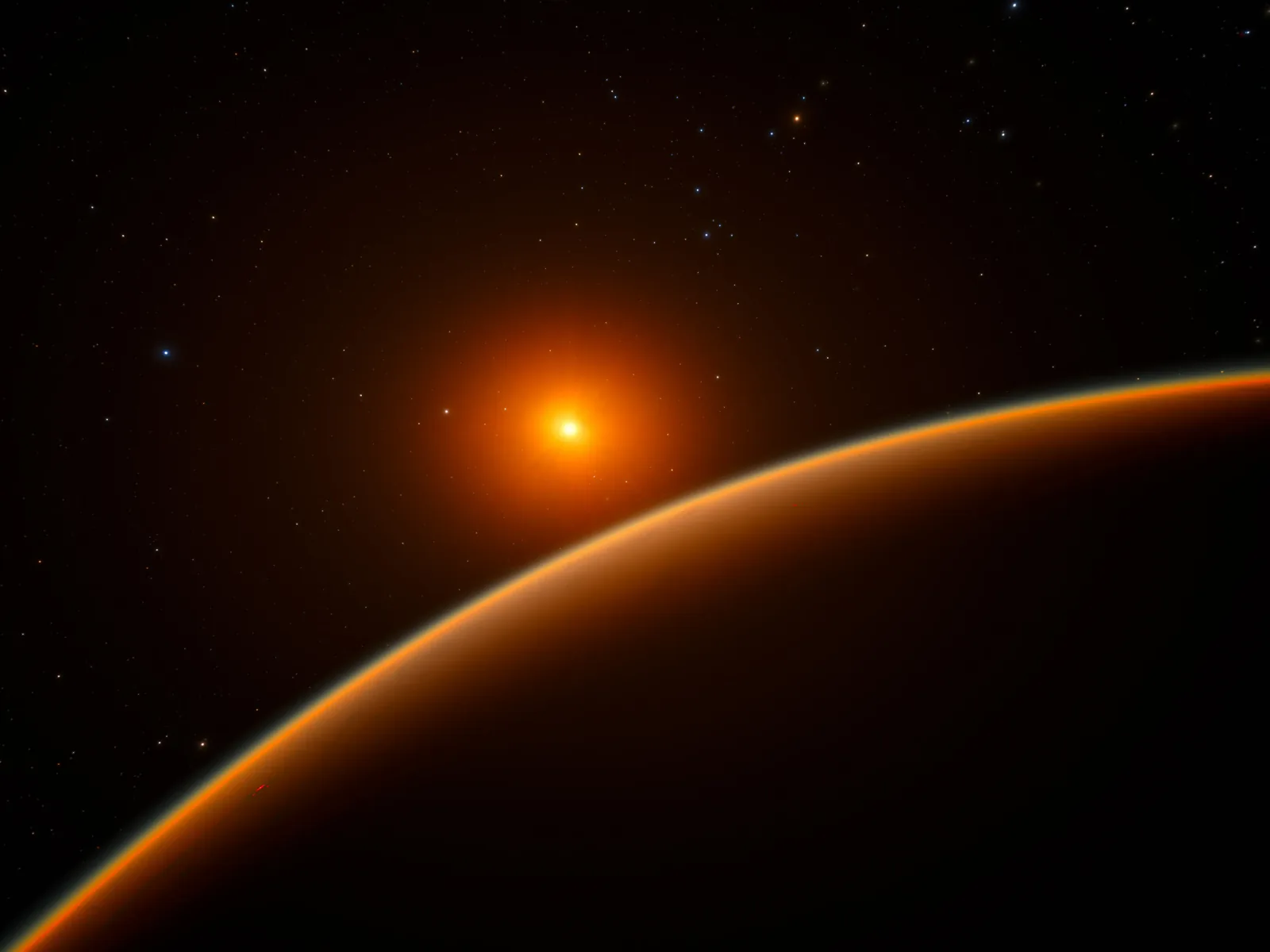
Astronomers have detected compelling evidence suggesting that the exoplanet LHS 1140b, located about 49 light-years from Earth, may possess an atmosphere akin to our own planet's. Recent observations indicate the escape of helium from its atmosphere, a phenomenon that points to a potentially hydrogen-poor, helium-rich upper atmosphere. This discovery, detailed in a study published in the journal Science, marks a significant step in the search for habitable worlds beyond our solar system.
The research, led by Collin Cherubim and his team, utilized advanced observational techniques to analyze the atmospheric composition of LHS 1140b. The detection of time-variable atmospheric escape of helium is particularly noteworthy. This suggests that the planet has retained a substantial atmosphere, and its composition is different from many previously studied exoplanets. Unlike gas giants, which are typically rich in hydrogen and helium, this finding implies a more differentiated atmospheric structure, possibly with a rocky surface underneath. The team's analysis indicates that the atmosphere is further depleted in hydrogen, which could be a key factor in its potential habitability.
Context on Exoplanet Atmosphere Research
Identifying and characterizing exoplanet atmospheres is a major frontier in astronomy. While thousands of exoplanets have been discovered, definitively confirming the presence and composition of their atmospheres remains a significant challenge. The techniques used often rely on indirect methods, such as analyzing the light that passes through an exoplanet's atmosphere during a transit. The detection of specific elements, like helium in this case, provides crucial clues about the planet's formation, evolution, and potential for supporting life. This breakthrough with LHS 1140b could pave the way for more detailed studies of similar worlds, advancing our understanding of planetary diversity in the galaxy.
LHS 1140b is classified as a super-Earth, meaning it is larger than Earth but smaller than Neptune. It orbits a red dwarf star, a type of star that is smaller and cooler than our Sun. The planet has a relatively short orbital period of approximately 25 days. Despite orbiting a dimmer star, its proximity suggests it receives less light than Earth does from the Sun, potentially resulting in a dim surface, even if temperatures are theoretically conducive to liquid water. The presence of proposed oceans, coupled with a potentially Earth-like atmosphere, makes LHS 1140b a prime candidate for future detailed investigation. Scientists are eager to conduct further observations using next-generation telescopes to confirm these findings and search for biosignatures.
The implications of confirming an atmosphere on LHS 1140b are profound. It would represent a major milestone in the quest to find life beyond Earth. While red dwarf systems present unique challenges for habitability, including potential stellar flares and tidal locking, the atmospheric findings on this exoplanet offer a glimmer of hope. The study's authors emphasize that while the current findings are strong, further observations are necessary for complete confirmation. Future missions aimed at characterizing exoplanet atmospheres will undoubtedly build upon this research, refining our search for Earth 2.0 and other potentially life-supporting celestial bodies. The findings underscore the rapid advancements in our ability to probe distant worlds and the exciting possibilities that await in the field of space exploration.