
165 Million-Year-Old Swimming Mammal Fossil Discovered in China
Paleontologists have unearthed a 165-million-year-old fossil in China, revealing a unique mammal-like creature with a broad, swimming tail and specialized throat structures.

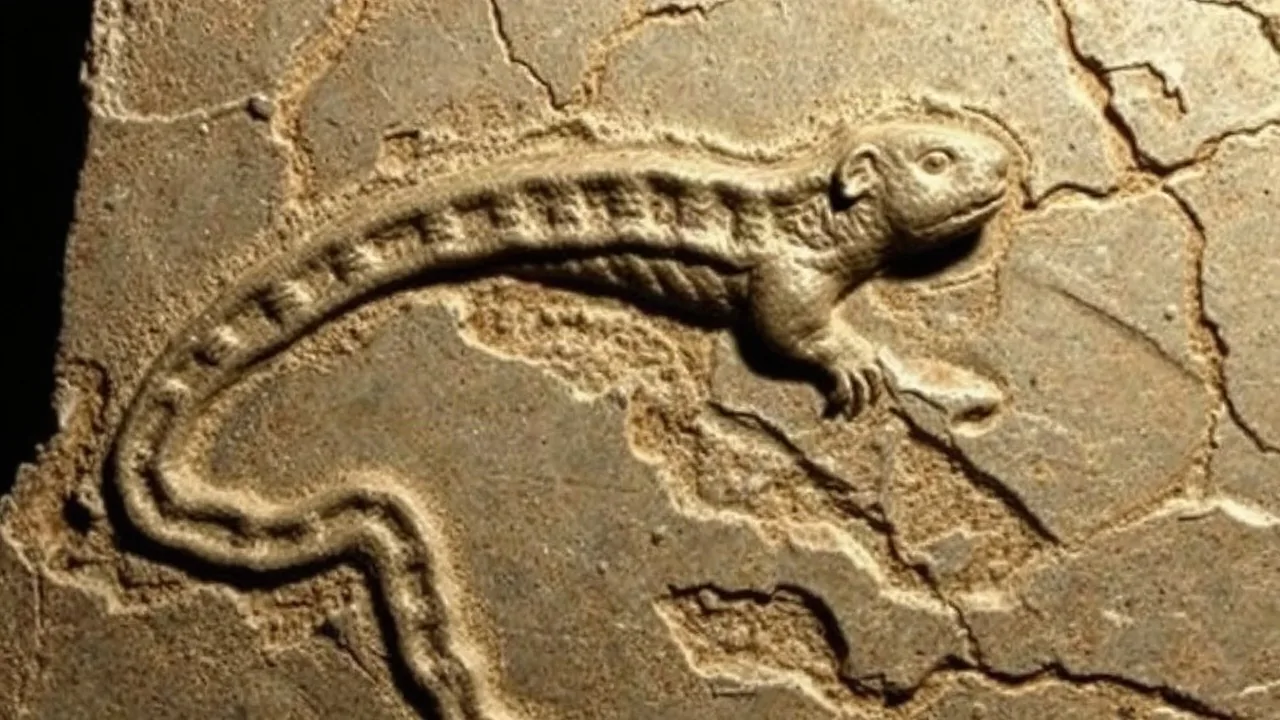
An exceptionally well-preserved fossil, dating back approximately 165 million years to the Jurassic period, has been discovered in China, offering unprecedented insights into the early evolution of mammal relatives. The find reveals a creature possessing a broad, paddle-like tail, strongly suggesting an aquatic or semi-aquatic lifestyle, and intricate bony structures in its throat that indicate sophisticated feeding capabilities.
Researchers from the Institute of Vertebrate Paleontology and Paleoanthropology (IVPP) in Beijing, who led the examination of the fossil, described the creature as a mammaliaform, a group closely related to modern mammals but not direct ancestors. The specimen, unearthed in the Inner Mongolia region, exhibits a morphology unlike any previously known creature from this era. Its broad, flat tail, supported by ossified cartilage, would have been highly effective for propulsion through water.
"This fossil is remarkable because it preserves soft tissues in ways we rarely see, allowing us to infer details about its diet and physiology," stated Dr. Zhe-Xi Luo, a paleontologist involved in the study. "The development of its pharyngeal apparatus, the structures in the throat, suggests it could manipulate food in its mouth and swallow in a manner more akin to modern mammals than its reptilian contemporaries."
Adaptations for an Aquatic Lifestyle
The discovery challenges previous understandings of early mammaliaforms, many of which were thought to be terrestrial or arboreal. The broad swimming tail, combined with other skeletal features, points to an animal that spent significant time in lakes and rivers, potentially preying on small aquatic organisms or insects. This suggests that ecological niches in aquatic environments were being explored by mammal relatives much earlier than previously believed, even during the age of dinosaurs.
The bony throat structures are particularly significant. They indicate a more complex mechanism for processing food, potentially involving chewing or manipulating prey before swallowing. This capability is a hallmark of mammalian evolution and provides a tangible link between these ancient creatures and their modern descendants. The presence of such adaptations suggests that key mammalian traits were developing independently in different lineages.
The Jurassic period (approximately 201 to 145 million years ago) was a time of significant diversification for both dinosaurs and early mammals. Finding a specialized aquatic mammaliaform like this one adds a crucial piece to the puzzle of how these early mammal relatives occupied diverse ecological roles. The fossil provides a window into the competitive landscape that may have driven the evolution of unique traits.
Further analysis of the fossil, which includes detailed CT scans and comparisons with existing vertebrate skeletons, is expected to reveal more about the creature's metabolism, sensory capabilities, and precise evolutionary position. Scientists hope to understand how this early swimmer navigated its environment and what role it played in the Jurassic ecosystem.