
World's First Nuclear Clocks Start Ticking in Vienna, Beijing
Scientists have activated the world's first nuclear clocks in Vienna and Beijing, utilizing the radioactive isotope Thorium-229. These clocks promise unprecedented accuracy, potentially revolutionizing fields like navigation and fundamental physics.

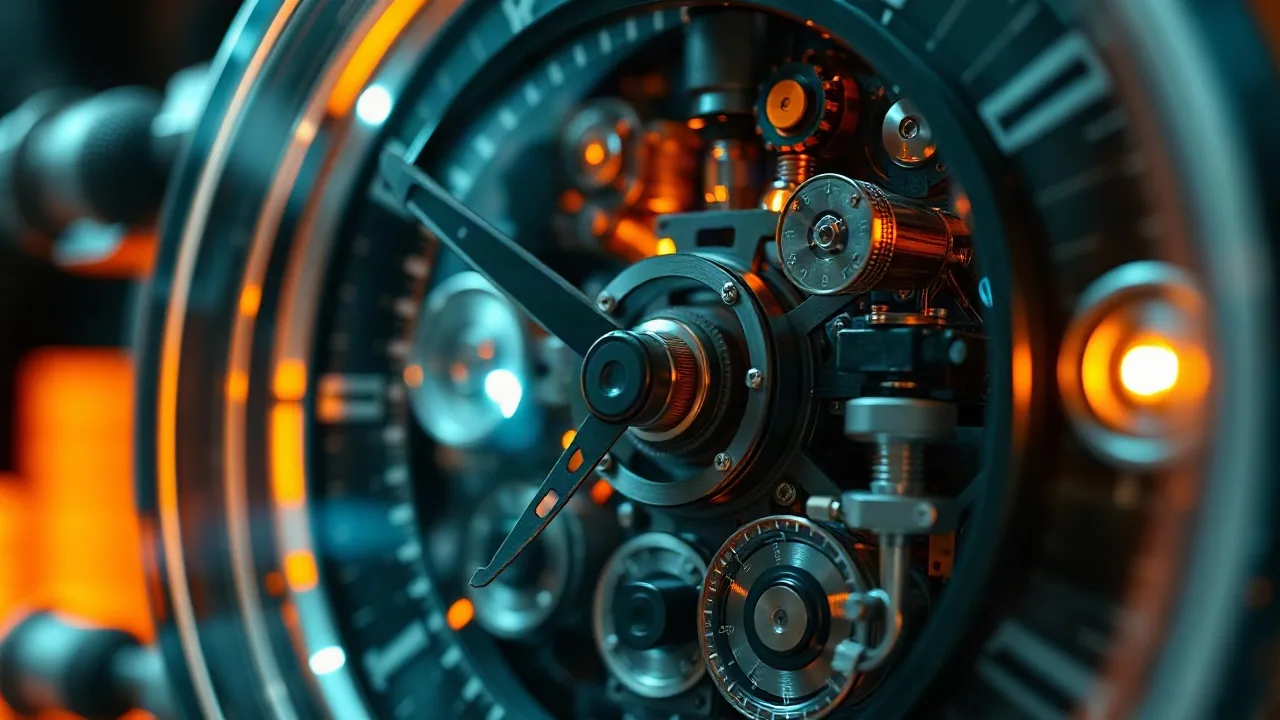
The dawn of a new era in timekeeping has arrived as scientists in Vienna, Austria, and Beijing, China, have successfully activated the world's first nuclear clocks. These groundbreaking devices leverage the unique properties of the radioactive isotope Thorium-229, promising a level of precision far surpassing current atomic clocks and potentially reshaping fundamental scientific understanding and technological applications.
Developed by international collaborations, including teams at the Austrian Academy of Sciences in Vienna and the Chinese Academy of Sciences in Beijing, these nuclear clocks are designed to measure time based on the transition of an atomic nucleus between its ground state and an excited state. The specific energy difference in Thorium-229 is exceptionally stable and predictable, making it an ideal candidate for ultra-precise timekeeping.
While atomic clocks, which rely on the electron transitions within atoms, have become indispensable for modern technology, nuclear clocks represent the next frontier. The oscillations within an atomic nucleus are expected to be orders of magnitude more stable than those of electrons. This enhanced stability translates directly into a dramatic increase in accuracy, allowing these new clocks to measure time with unprecedented fidelity.
A New Standard for Precision
The implications of such accuracy are vast. For instance, current GPS systems rely on atomic clocks, but their precision limits the accuracy of location data. Nuclear clocks could enable navigation systems that are accurate to within fractions of a millimeter over vast distances. Beyond navigation, these clocks could significantly advance research in fields such as general relativity, by allowing for more precise measurements of gravitational time dilation, and could even aid in the search for dark matter by detecting subtle gravitational waves.
Dr. Ulrik Uggerhøj, a physicist involved in the international research efforts, commented on the significance of the achievement. "This is not just an incremental improvement; it's a leap forward in our ability to measure time itself. The potential applications are truly transformative, and we are only beginning to explore them," Uggerhøj stated. The successful activation in both Vienna and Beijing marks a critical milestone in a long-term international scientific endeavor to harness nuclear transitions for timekeeping.
The journey to this point has been decades in the making, involving overcoming significant technical hurdles. Isolating and preparing usable quantities of Thorium-229, which has a relatively short half-life and emits alpha particles, has been a major challenge. Scientists have developed sophisticated methods to produce and utilize this isotope, ensuring its stability within the clock mechanism. The successful operation of these clocks signifies a triumph of both nuclear physics and advanced engineering.
The race to develop practical nuclear clocks began in earnest several years ago, with research groups worldwide vying to be the first to achieve this milestone. The parallel successes in Vienna and Beijing underscore the global nature of scientific progress and the collaborative spirit that drives innovation. Researchers anticipate that these initial prototypes will pave the way for even more advanced and potentially smaller nuclear clock devices in the coming years.
The potential impact on fundamental physics research cannot be overstated. These highly precise instruments could offer new ways to test the Standard Model of particle physics and search for deviations from established theories. The stability offered by nuclear clocks may also unlock new avenues for understanding the fundamental constants of nature. As these clocks begin their precise ticking, they herald a new era of scientific discovery and technological advancement, firmly anchored in 2026.