
July Buck Moon Peaks 2026: How to See Lunar Event
July's full buck moon reaches peak illumination on Wednesday, July 29, 2026. Skywatchers can observe the event from various locations, with potential atmospheric effects influencing its appearance.

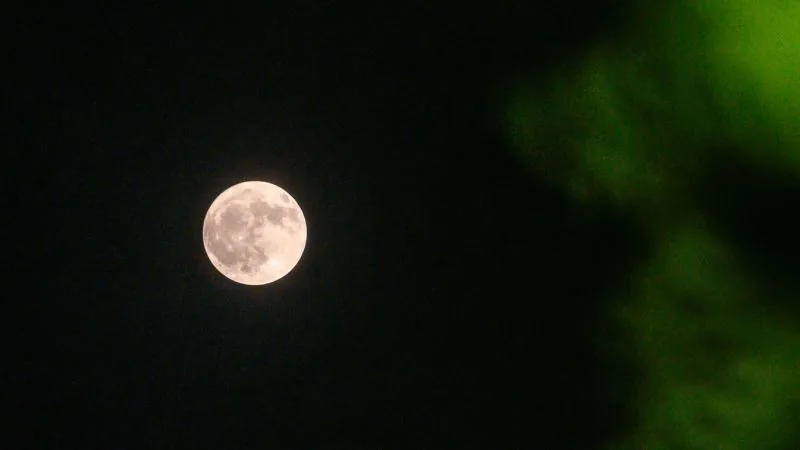
July’s full buck moon will be visible this week, reaching its peak illumination on Wednesday, July 29, 2026, at 10:36 a.m. ET. While the precise moment of peak brightness occurs during the day in the United States, the moon will appear full to observers in the evening hours and the nights surrounding the peak, according to The Old Farmer’s Almanac. Those hoping to catch a glimpse should seek out locations away from bright city lights with an unobstructed view of the sky.
Noah Petro, chief of the Planetary Geology, Geophysics and Geochemistry Lab at NASA’s Goddard Space Flight Center, noted that sky-gazers have "flexibility as long as you’re in a place that’s free of bright lights and you have a fairly clear view of the sky." For observers in the Northern Hemisphere, the moon will appear lower in the sky. Conversely, those in the Southern Hemisphere will see the moon higher, though not as high as the June full moon, according to EarthSky. The trajectory of the full moon often mirrors the sun’s path from six months prior and six months ahead. This means the buck moon’s arc across the sky will resemble the sun’s trajectory in January.
Understanding the Buck Moon’s Names and Appearance
The name "buck moon" traditionally refers to the full moon occurring when male deer, or bucks, are typically growing their new antlers. However, various Indigenous cultures have their own names for this lunar event, reflecting different seasonal observations. The Dakota people refer to it as the moon when the chokecherries are ripe, while the Cree know it as the feather moulting moon. These names highlight the deep connection between celestial cycles and natural events on Earth.
Residents in the Northeast and Upper Midwest of the United States might notice a more reddish or orange hue to the buck moon. This phenomenon is attributed to smoke from ongoing Canadian wildfires, which has significantly impacted air quality and atmospheric clarity. "The exact same thing is going to happen with moonlight," explained Pamela Gay, senior scientist at the Planetary Science Institute. "The smoke scattering sunlight" alters how celestial light reaches the ground, similar to how it affects the daytime sky’s color.
Observing the full moon is more than just a celestial spectacle; experts emphasize its role in fostering a connection with space exploration. As humanity’s reach into the cosmos expands, looking up at the night sky from Earth offers a moment for reflection on our place in the universe. Petro recalled the recent Artemis II mission, stating, "there’s a real connection with everyone here on Earth and what’s going on at the moon." This sentiment underscores how lunar events can serve as relatable touchpoints in our broader quest to understand the universe.
The appearance of the buck moon comes shortly after the 57th anniversary of the Apollo 11 mission, a pivotal moment in human history that marked the first lunar landing. "We’re so fortunate to have this moon as our neighbor," Petro added, "and we should really be celebrating that." The upcoming lunar phase serves as a reminder of humanity’s ongoing fascination with and exploration of Earth’s closest celestial companion. The next full moon, known as the Sturgeon Moon, is expected in August 2026.