
ISS Air Leak Prompts Astronauts to Seek Safety in Crew Dragon
Astronauts aboard the International Space Station were temporarily moved into a SpaceX capsule Friday morning due to ongoing repair work on persistent air leaks in the Russian segment.

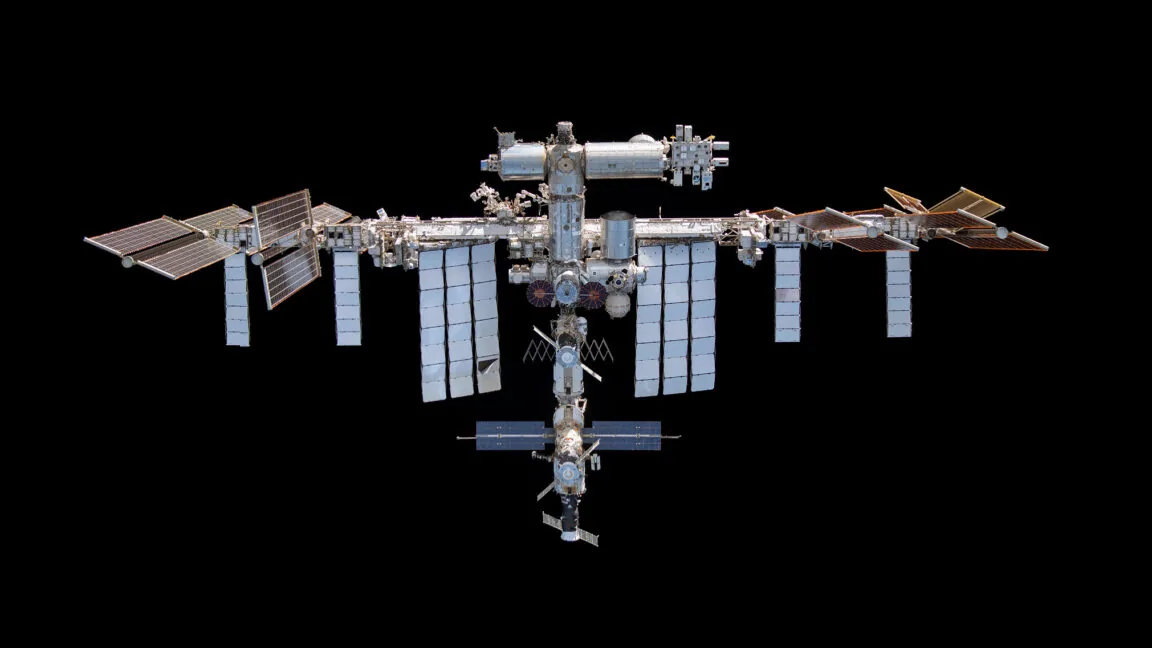
Five of the seven crew members aboard the International Space Station (ISS) briefly took shelter in a SpaceX Crew Dragon capsule on Friday, June 5, 2026, as Russian cosmonauts worked to address persistent air leaks within the station's Russian segment. NASA directed U.S. astronauts Jessica Meir and Jack Hathaway, French astronaut Sophie Adenot, and Russian cosmonaut Andrey Fedyaev into the Crew Dragon Freedom spacecraft, which serves as their lifeboat, as a precautionary measure. NASA astronaut Chris Williams, who arrived on a Russian Soyuz, also joined them.
The order came from NASA mission control around 9 a.m. EST (14:00 UTC), instructing the crew to execute "Emergency Procedure 3.4: Crew Dragon, establish Safe Haven." A NASA spokesperson later confirmed on X that the shelter order was issued due to a repair operation on air leaks located in the transfer tunnel of Russia's Zvezda Service Module. This area, known by the Russian acronym PrK, has been a persistent concern for engineers from Roscosmos and NASA for over half a decade, with microscopic cracks believed to be the cause.
Russian cosmonauts have undertaken numerous inspection and sealing attempts over the years, but a definitive solution has remained elusive. While the leak rate had stabilized for a few months earlier in 2026, Roscosmos confirmed in May that the leaks had returned. "Following new leaks, Roscosmos has elected to proceed with a more extensive repair operation on Friday, June 5," wrote Bethany Stevens, a NASA spokesperson, on X. "Out of an abundance of caution, NASA has directed all four of the agency’s SpaceX Crew-12 members and NASA astronaut Chris Williams to assume an elevated safety posture in the Dragon spacecraft while the repair is underway."
Repair efforts paused for further assessment
Approximately 90 minutes after the astronauts entered the capsule, mission control in Houston informed the crew they could exit the safe haven. The specific repair task that prompted the shelter order was apparently not completed as planned. "Our Russian colleagues have elected to perform measurements only today. So, with that, we are comfortable backing out of the safe haven config," mission control communicated. Crew-12 commander Jessica Meir inquired if assistance from their Russian counterparts was no longer needed, to which mission control affirmed. The Russian cosmonauts, Sergey Kud-Sverchkov and Sergei Mikayev, were working at the leak site, approximately 200 feet away from the Crew Dragon.
Stevens later updated on X that Roscosmos had "paused" the "structural repair efforts" within the PrK to gather more measurements and analyze the data. "We look forward to working with Roscosmos on a collaborative approach to address the leaks," Stevens added. Representatives from Ars Technica did not receive immediate answers from NASA spokespersons regarding the details of the proposed repair or the specific risks that necessitated the shelter order, but stated they would update the story as information became available.
The PrK is typically kept isolated from the main living and working areas of the ISS. This allows the tunnel to be maintained at a lower pressure. When access is required for cargo transfer via docked Progress freighters, inspections, or repairs, the PrK is pressurized to match the station's internal pressure. This procedure allows cosmonauts to safely enter and work in the area.
A statement from Roscosmos on Telegram indicated this pressurization was in progress early Friday when specialists detected the leak. "Upon inspecting the transfer chamber, cosmonauts identified two potential air leak sites," the statement read. "The first site was promptly sealed by applying an initial layer of the two-component sealant compound Germetall-1. The second site is located on the conical section of the transfer chamber; preparations to seal it are currently underway." Neither Russian nor NASA officials elaborated on what prompted the immediate repair attempt after the leak sites were discovered, nor did they specify when further repair efforts might occur or if future work could again require crew members to shelter. Roscosmos maintained that there is "no threat to crew safety or onboard systems," and the station's pressure remains stable.