
Blue Origin Accelerates Private Space Travel With New Glenn Rocket
Jeff Bezos's Blue Origin is expanding its orbital ambitions beyond suborbital tourism, advancing New Glenn development and competing for commercial space contracts in 2026.

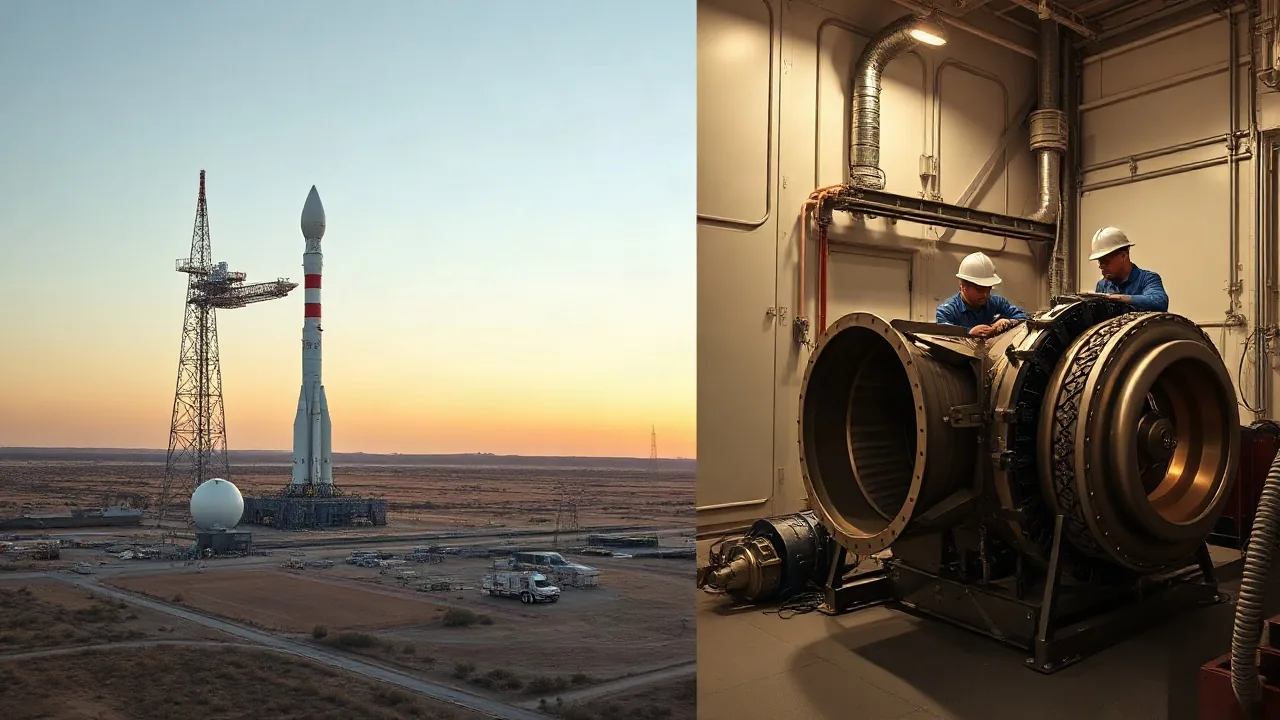
Blue Origin's newest orbital rocket is moving through final assembly at its West Texas facility as the company pushes toward its first crewed orbital flights by 2027. New Glenn, the heavy-lift vehicle that represents the next major phase of founder Jeff Bezos's space vision, is undergoing critical systems integration after years of design and component manufacturing.
The 365-foot-tall rocket will eventually compete with SpaceX's Falcon Heavy and Falcon 9 for commercial and government payloads. Unlike New Shepard, the company's suborbital private space travel vehicle that has carried dozens of passengers on brief trips to the edge of space, New Glenn is engineered for sustained orbital operations and satellite deployment at any altitude.
"Blue Origin's roadmap positions us as a serious player in the commercial launch market," said Phil Larson, a former SpaceX director of communications who now follows the sector independently. "The timing is critical as national security launch contracts remain highly competitive."
Expanding Beyond Suborbital Tourism
New Shepard flights have become Blue Origin's calling card for high-net-worth travelers seeking minutes of weightlessness and views of Earth's curvature. The company has completed over 35 commercial flights since 2021, with tickets priced around $300,000 per seat. However, this revenue stream alone does not drive the company's long-term strategy.
New Shepard operations will continue, but they serve a smaller market than the broader space tourism sector. Blue Origin has also announced plans for Blue Space Station modules, a privately operated orbital facility designed to host researchers, manufactures, and tourists beginning in the early 2030s. This pivot reflects the industry's understanding that sustained orbital presence requires infrastructure beyond any single vehicle.
The company is investing heavily in manufacturing capacity and engine production. Blue Origin's BE-4 rocket engines, which already power United Launch Alliance's Atlas V and Vulcan rockets, generate steady revenue and establish the company as a critical component supplier in the U.S. aerospace industrial base.
Competing in the Commercial Launch Economy
New Glenn development coincides with unprecedented demand for rocket development driven by satellite constellations, national defense priorities, and lunar exploration programs. The U.S. Space Force has allocated billions to multiple launch providers, and Blue Origin is pursuing National Security Space Launch Phase 3 contracts worth tens of billions across the next decade.
Success hinges on New Glenn's reliability, payload capacity, and cost per launch. The rocket is designed to carry up to 45 metric tons to low Earth orbit, rivaling vehicles currently available from international suppliers. Blue Origin has also committed to rapid turnaround capabilities, aiming to launch New Glenn multiple times per year once operational.
Technical milestones expected in 2026 and 2027 include:
- Completion of first-stage structural assembly and avionics integration
- Full-duration ground testing of BE-4 and new upper-stage engines
- Preparation of the launch facility at Cape Canaveral Space Force Station in Florida
- Initiation of uncrewed orbital test missions
These benchmarks are public statements from company leadership but remain subject to the typical delays that plague large rocket development programs. SpaceX's Falcon 9 took nearly eight years from initial testing to operational service; Blue Origin's timeline is not immune to similar pressures.
The Broader Implications for Space Commerce
Blue Origin's progress matters beyond the company itself. A successful New Glenn entry into service creates competitive pressure that can drive innovation across the industry. Multiple operational launch providers strengthen U.S. space capabilities and reduce reliance on any single vendor for critical national security missions.
The company also operates Blue Moon, a lunar lander program targeting cargo delivery to the Moon for NASA and commercial customers. Winning NASA contracts for the Artemis program has provided funding and validation, though schedule challenges have delayed initial crewed demonstrations into the late 2020s.
Blue Origin's total strategy spans multiple vehicles and customer segments. Aerospace analysts note that vertical integration, from rocket engines to spacecraft to operational facilities, mirrors the approach that made SpaceX competitive. Whether Blue Origin can execute at the same pace remains an open question heading into 2027.
The company employs over 12,000 people across seven facilities and continues hiring engineers and technicians for manufacturing and test operations. Investment announcements in 2026 indicate sustained confidence from Bezos and other institutional backers, even as development timelines extend beyond original targets.
For the broader private space travel and commercial launch sectors, Blue Origin's evolution from a tourism operator to an orbital infrastructure provider signals maturation of markets that barely existed a decade ago. The outcomes of New Glenn's test program and operational debut will influence investment and technology choices across the entire industry through 2030 and beyond.