
Artemis III: NASA's Most Complex Mission Involves 4 Astronauts, 3 Spacecraft
NASA's Artemis III mission, scheduled for next year, will be its most intricate spaceflight yet. The mission involves four astronauts, three distinct spacecraft, and complex orbital rendezvous over two weeks.

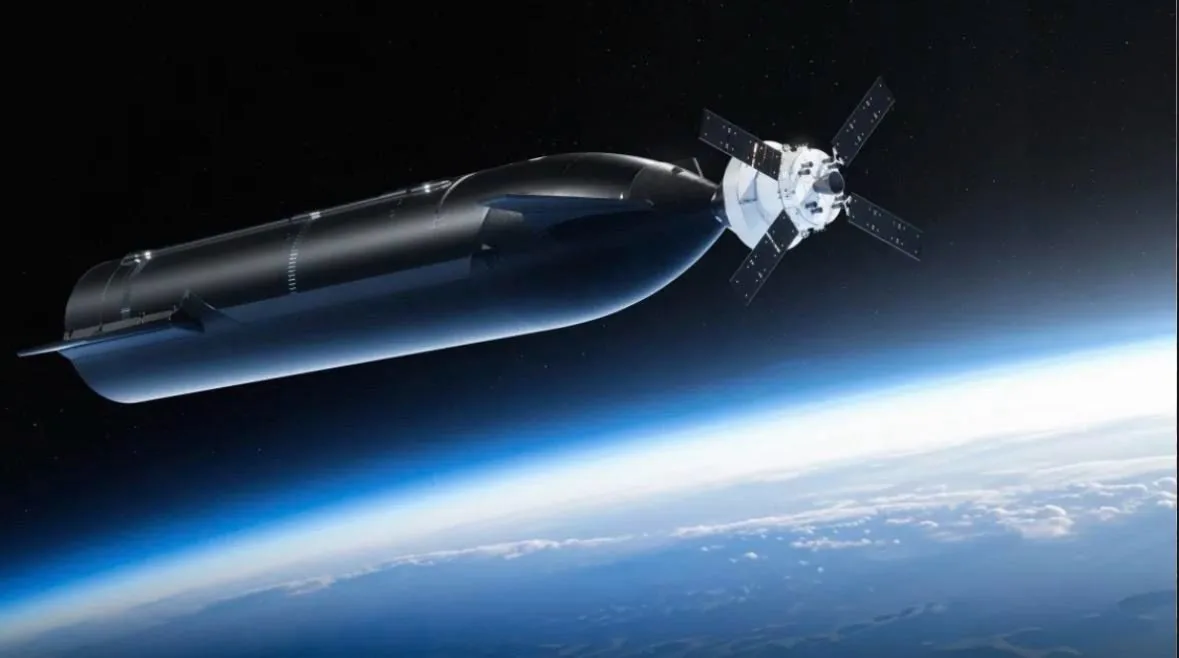
NASA is gearing up for Artemis III, slated for launch next year, a mission that promises to be one of the most elaborate and complex human spaceflights in history. This endeavor is designed to test critical systems for NASA's broader lunar program, including the first crewed rendezvous and docking with two different commercial lunar landers. The Artemis program aims to return astronauts to the Moon's surface, and Artemis III will serve as a crucial validation phase for NASA's Orion spacecraft and its partners' landing technologies.
The mission will send a crew of four astronauts into Earth orbit aboard the Orion spacecraft, launched by NASA's Space Launch System (SLS) rocket. Once in orbit, Orion will undertake a series of intricate maneuvers, rendezvousing separately with two commercial lunar landers over approximately two weeks. "Artemis III will be a highly choreographed dance with a demanding launch sequence across multiple launch pads and equally demanding mission operations for our ground and flight crews, making it one of the most complex and ambitious missions NASA has ever undertaken," said Artemis Program Manager Jeremy Parsons in a NASA update on July 15.
This mission pushes the boundaries of human spaceflight coordination. Historically, only one mission, Soyuz T-15 in 1986, involved cosmonauts rendezvousing with multiple stations. More recently, NASA's Gemini 10 mission in 1966 saw astronauts dock with one probe and then rendezvous with another. However, none of these missions required the sophisticated integration of multiple, separately launched spacecraft and launch vehicles that Artemis III demands.
Coordinating Multiple Launch Vehicles and Facilities
The complexity of Artemis III extends to the coordination of its three primary components: Orion, SpaceX's Starship lunar lander, and Blue Origin's Blue Moon lander. Each of these will launch on different rockets from separate launch pads at NASA's Kennedy Space Center (KSC) and Cape Canaveral Space Force Station (CCSFS). This necessitates extensive cross-agency and commercial collaboration to manage launch schedules, range availability, and resource constraints such as nitrogen gas. Blue Origin's Blue Origin Blue Moon lander is set to launch first on its New Glenn rocket from SLC-36. The lander is designed to remain in space for up to 30 days, allowing NASA and Blue Origin to verify its condition before the Artemis III crew is committed to a rendezvous.
Following the Blue Moon launch, the SLS rocket will lift off from KSC's Launch Complex-39B, carrying the Orion spacecraft. Orion will then rendezvous with Blue Moon in low Earth orbit (LEO) for approximately two days. This phase is critical for maturing the designs of both lunar lander providers, as the versions flying on Artemis III will not be the final, landing-capable models. Blue Origin is developing the Blue Moon Mark 2 (Mk2), an evolution of its smaller Mk1 cargo lander. This initiative faced a setback when a New Glenn rocket experienced an engine test explosion in May, though Blue Origin CEO Dave Limp expressed confidence in a return to flight by late 2026.
SpaceX's Starship, the other crucial lunar lander, will launch after Orion and Blue Moon undock. SpaceX is establishing launch infrastructure at KSC and CCSFS, though the specific pad for Artemis III is not yet confirmed. While NASA contracted SpaceX for a lunar lander version of Starship for Artemis IV, the vehicle has broader ambitions. SpaceX has been conducting test flights of its Starship system since 2023, aiming for full reusability and significantly increased payload capacity compared to its Falcon 9 rocket. However, Starship remains in a developmental stage and must meet stringent NASA requirements for crewed lunar landings.
For Artemis III, Starship will utilize its "Version 3" (V3) design, which includes a docking adapter for communications and maneuvering system tests with Orion, as there will be no crew cabin for astronauts to enter. The V3 upgrade incorporates hardware essential for future lunar missions, such as propellant transfer docking ports, a capability Starship needs to achieve for longer-duration missions beyond LEO. NASA estimates that at least 15 Starship refueling launches will be necessary for the Artemis IV mission alone. Demonstrating the safe transfer and storage of cryogenic fuels in space is another prerequisite for Starship and Blue Moon to be certified for crewed lunar landings.
"SpaceX and Blue Origin have put forward a list of aggressive objectives and goals intended to complement upcoming uncrewed demonstration missions at the moon so that we can gain both understanding and confidence in the spacecraft and launch vehicles prior to a crewed landing," said NASA's Steve Creech, Artemis' Human Landing System program manager. The Artemis III mission intends to give both landers ample operational time in orbit. "All three rockets will have more launch opportunities than are available for a lunar mission and will be able to reach the designated mission altitude in a single launch," the NASA update stated. After a day docked with Starship, Orion and its crew will detach to begin their journey back to Earth, marking a significant milestone in humanity's return to the Moon.