
Antarctica is World's Largest Desert, Devoid of Sand
Often pictured as sandy and hot, the world's largest desert is actually Antarctica, a frozen continent defined by extreme dryness and cold, receiving only about 2 inches of precipitation annually.

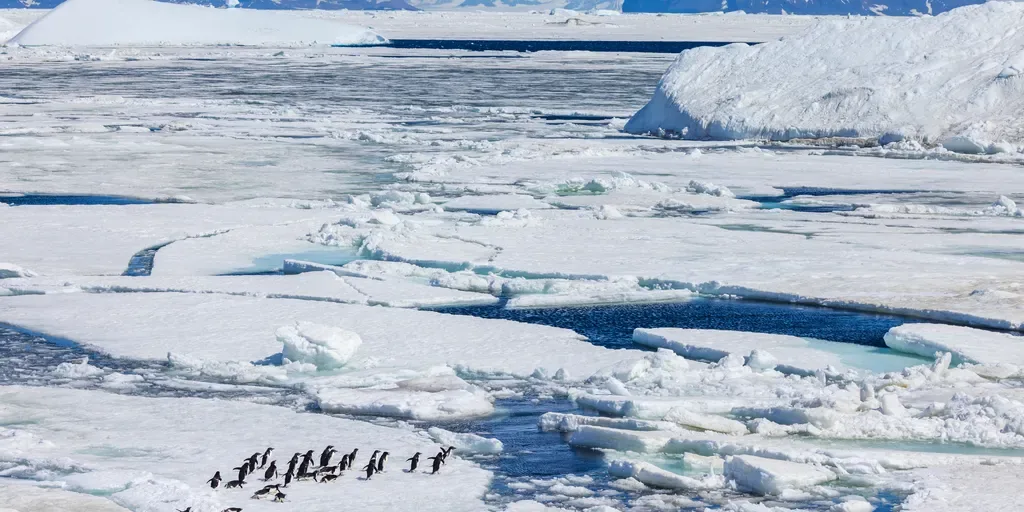
When most people envision a desert, images of scorching heat and endless sand dunes often come to mind, evoking places like the Sahara or Death Valley. However, the planet's largest desert defies this common perception. It is Antarctica, a vast, frozen continent characterized by immense ice sheets, relentless winds, and one of Earth's most unforgiving climates.
This frigid landscape fundamentally challenges our traditional understanding of a desert, demonstrating that the ultimate record-holder is defined not by temperature, but by extreme aridity. Geologists classify deserts based on precipitation levels, not heat. According to NASA, deserts are primarily defined by a severe lack of moisture, typically receiving 10 inches or fewer of precipitation annually.
Antarctica perfectly fits this scientific definition. It is not only the coldest and windiest continent but also one of the driest. Data from the United States Antarctic Program indicates that the continent receives approximately only 2 inches of precipitation each year. This makes the icy expanse a true desert, spanning about 5.4 million square miles—roughly 1.5 times the size of the Sahara Desert.
Ancient Ice Recycled by Fierce Winds
The snow that appears to blow across the Antarctic landscape is often not from a recent storm, but rather ancient ice crystals endlessly circulated by powerful winds. Paradoxically, despite receiving minimal new rainfall or snowfall, this immense landmass is covered by miles of thick ice, holding approximately 90% of the world's ice and 70% of its freshwater supply. The continent's extreme dryness and sub-zero conditions have led NASA to draw comparisons between Antarctica and Mars.
NASA has noted the similarities, stating, "The desert conditions in Antarctica are like the conditions on Mars. NASA tested robots in Antarctica that later landed on Mars." These comparisons highlight how Antarctica’s environment serves as a crucial analogue for planetary exploration, particularly for understanding conditions on the Red Planet. The resilience required to operate in such an extreme climate is vital for future space missions.
This unique environment not only reshapes our definition of a desert but also offers invaluable insights into Earth's climate history and the potential for life in extreme conditions elsewhere in the solar system. Understanding the processes that shape Antarctica, from its wind patterns to its ice dynamics, is critical for a comprehensive view of our planet and beyond. The continent’s dryness, combined with its immense ice reserves, presents a fascinating paradox for scientists studying climatology and glaciology.